Hidden in Plain Sight
Most of us walk past trees every day without really seeing them. We notice the path beneath our feet, the sky overhead, or the sound of traffic in the distance, but the rough bark of a tree trunk rarely asks for our attention. And yet, that’s exactly where one of Pennsylvania’s most familiar birds is quietly going about its day.
The Brown Creeper isn’t rare, exotic, or passing through by chance. In fact, it’s a year-round resident across much of our region. But because it’s small, softly colored, and perfectly blended into the bark it depends on, the Brown Creeper often goes unnoticed. It doesn’t flash bright colors or call loudly for attention. Instead, it moves with purpose and patience, climbing tree trunks in slow spirals as it searches for food.
Think of the Brown Creeper as a quiet neighbor, always nearby, rarely seen, and never in a hurry to be noticed. Spotting one often happens by accident, in the brief moment when movement catches your eye and you pause just long enough to realize something is there. It’s a reminder that some of the most interesting wildlife moments don’t announce themselves. They wait for us to slow down, look closer, and notice what’s been there all along.
Meet the Brown Creeper
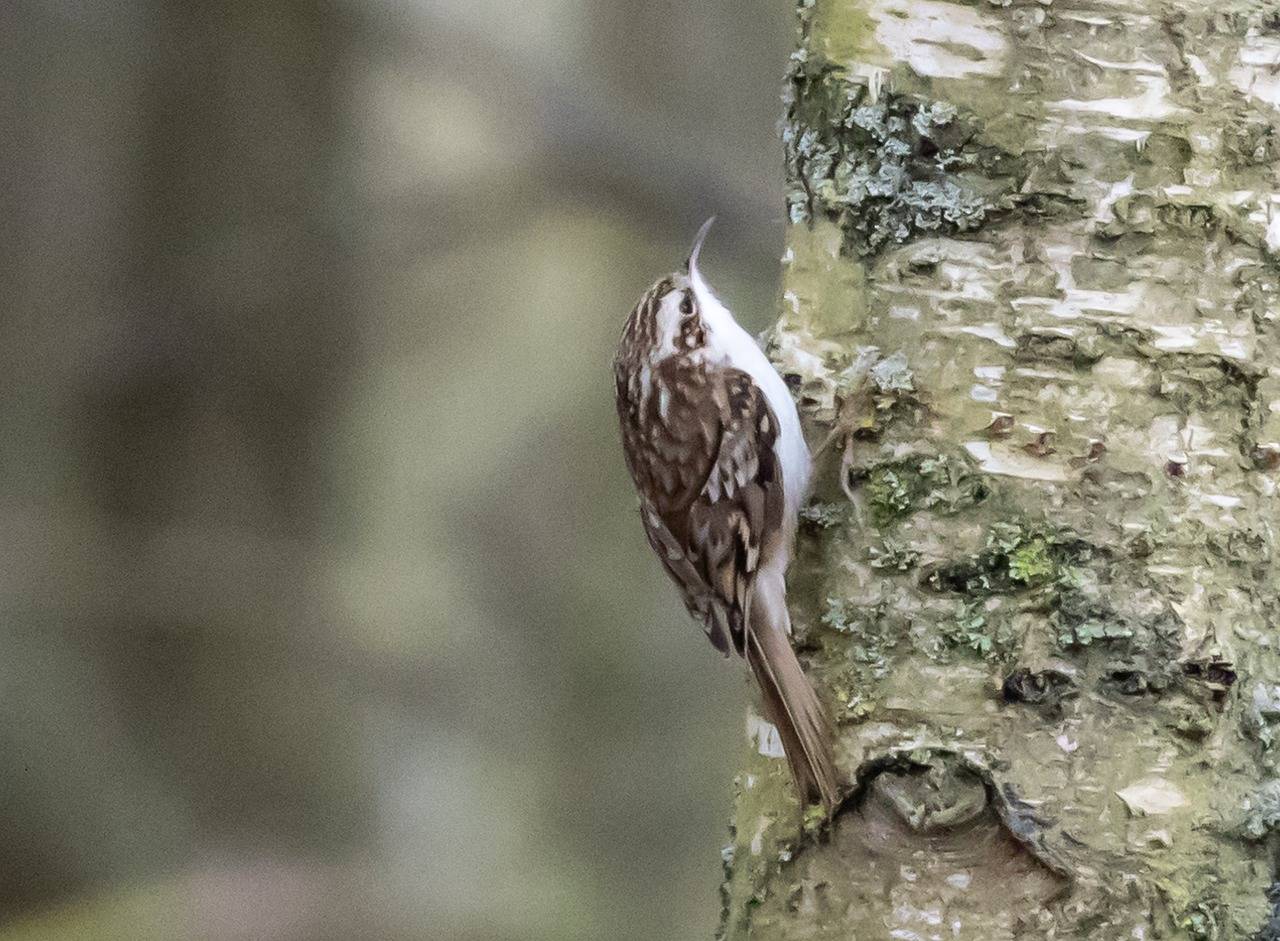
The Brown Creeper is one of the smallest birds you’re likely to encounter in Pennsylvania forests and backyards, smaller than a sparrow and easy to overlook at a glance. Its mottled brown, gray, and white coloring mirrors the texture of tree bark so closely that it can seem to disappear the moment it stops moving. This natural camouflage isn’t flashy, but it’s perfectly suited to a life spent on tree trunks rather than branches.
Look closely and you’ll notice features designed for a very specific job. The Brown Creeper’s thin, slightly curved bill is made for probing into cracks and crevices in bark, pulling out insects and spiders hidden from view. Its stiff tail feathers act like a built-in brace, helping it balance as it climbs, almost like a tiny tripod pressed against the tree.
Unlike many backyard birds, Brown Creepers aren’t built for feeders. You’re far more likely to glimpse one hitching its way up a trunk than perched at a seed station. Even then, sightings are often brief, a flicker of movement, a subtle shift against the bark, or a quick silhouette as it flutters to the base of the next tree. More often than not, people hear a Brown Creeper before they truly see one, catching its thin, high call just moments before it blends back into the forest.
Why So Many People Miss It
The Brown Creeper isn’t elusive because it’s rare, it’s overlooked because it fits so perfectly into its surroundings. Its streaked brown and white feathers match the texture and color of tree bark so closely that even when one is in plain view, it can be nearly invisible. Until it moves, a Brown Creeper often looks no different than the tree itself.
It also keeps a low profile. Brown Creepers are quiet birds, relying on soft, high-pitched calls that are easy to miss unless you’re already listening for them. They don’t chatter constantly or announce their presence the way some backyard favorites do. Instead, they move deliberately and efficiently, focused on foraging rather than being seen.
Their movement is another reason they slip past our attention. Unlike most birds that hop along branches or flit through open air, the Brown Creeper works its way upward in a slow spiral along tree trunks, pausing just long enough to check each crevice for food before moving on. Once it reaches the top, it quietly drops down to the base of the next tree and begins again, rarely stopping in open view or lingering long enough to be noticed.
The truth is, the Brown Creeper isn’t hiding from us at all. It’s simply living its life on a different scale, one measured in inches of bark, subtle motion, and moments that reward patience. When we slow down and adjust how we look, this unassuming bird suddenly becomes impossible to forget.
When You’re Most Likely to See One?
Brown Creepers are present in Pennsylvania year-round, but many people notice them for the first time in late fall and winter. As leaves drop from the trees and forests open up, the places where creepers spend their time become easier for us to see. With fewer visual distractions, that slow movement along a tree trunk suddenly stands out.
Winter is also when Brown Creepers often travel in loose mixed flocks. If you’re watching a group of chickadees, nuthatches, or woodpeckers moving through the woods, there’s a good chance a Brown Creeper may be quietly tagging along. While the more familiar birds move through branches and feeders, the creeper stays close to the trunk, working its way upward while the flock passes through.
You don’t need deep woods to spot one. Woodland edges, local parks, and even backyards with mature trees can provide perfect habitat. Old maples, oaks, and other rough-barked trees are especially good places to look. The key isn’t covering more ground, it’s slowing down and watching the trunks themselves.
In many ways, winter is a reveal season for subtle birds like the Brown Creeper. With less foliage, quieter landscapes, and fewer distractions, the small details become easier to notice. It’s a reminder that some of the best wildlife moments don’t arrive with fanfare — they show up when we take the time to look closely.
How It Moves: The Spiral Climb
Spotting a Brown Creeper often starts at the base of a tree. Rather than dropping in from above, it typically lands low on the trunk and immediately begins its climb. From there, it works upward in a slow, steady corkscrew pattern, circling the trunk as it searches for insects tucked into the bark. The movement is deliberate, almost methodical, never rushed, never flashy.
As it climbs, the Brown Creeper pauses just long enough to probe a crack or flake of bark before shifting a few inches higher. Its stiff tail feathers press against the trunk for balance, giving it a slightly upright posture as it moves. When it reaches the upper part of the tree, it doesn’t linger. Instead, it flutters off and drops down to the base of a nearby tree, ready to begin the same upward journey again.
To notice a Brown Creeper, it helps to change how you watch. Instead of scanning branches or open sky, focus your eyes on the trunks themselves. Look for subtle motion rather than color, a shape that seems to crawl instead of hop. Slowing down is key. When you give your eyes time to adjust, movement often reveals what camouflage keeps hidden.
This spiral climb is one of the most reliable ways to recognize a Brown Creeper once you know what to look for. And once you’ve noticed it, you’ll start seeing it everywhere, a quiet rhythm repeating itself from tree to tree, just waiting to be observed.
What the Brown Creeper Eats
The Brown Creeper’s diet is one of the main reasons it so often goes unnoticed at backyard feeders. Instead of seeds or suet, it specializes in finding insects and insect eggs tucked deep into the crevices of tree bark. Using its thin, curved bill, the creeper probes under loose flakes and into tiny cracks where other birds rarely look.
Spiders and larvae make up an important part of its meals as well, especially during colder months when insects are less active. By methodically working its way up tree trunks, the Brown Creeper helps keep these small invertebrate populations in balance. It’s quiet, precise work, and easy to miss unless you’re watching closely.
This feeding style plays an important role in maintaining healthy trees. By removing insects that live beneath the bark, Brown Creepers contribute to the natural system that keeps forests resilient. Their presence is often a sign of a well-functioning habitat with mature trees and a stable food supply.
Watching birds doesn’t always mean feeding them, and the Brown Creeper is a perfect example of that. Sometimes, the most rewarding wildlife moments come from simply observing how a species fits into the larger landscape, doing its job quietly, efficiently, and without asking for attention.
A Bird That Rewards Patience
The Brown Creeper isn’t a bird that performs for an audience. It doesn’t pose, linger, or demand attention. Instead, it reveals itself slowly, in small moments that only appear when we take the time to watch. A subtle movement on bark. A brief pause mid-climb. A soft call that almost blends into the background. These are the moments that reward patience.
The longer you spend observing, the more you begin to notice patterns, where the bird lands, how it moves, when it appears. What once seemed invisible becomes familiar. And in that shift, the Brown Creeper reminds us that wildlife isn’t always about spectacle. Often, it’s about presence. Small moments can be just as meaningful as dramatic ones when we allow ourselves to slow down.
This idea sits at the heart of what PixCams is about. Cameras don’t rush the experience, they slow it down. They let us rewind, rewatch, and catch details we might miss in real time. A bird that slipped past unnoticed suddenly becomes a story unfolding frame by frame, revealing behaviors that were there all along.
So this week, try watching a little differently. Look at tree trunks instead of branches. Listen for thin, high calls as flocks move through. And if you spot a Brown Creeper, or catch one on camera, we’d love to see it. Share your sighting, a clip, or even just the moment you realized something was there.
Have you ever noticed one climbing a tree near your home?
Sometimes, all it takes is a pause to discover what’s been quietly sharing the landscape with us the whole time.

 ByBill