
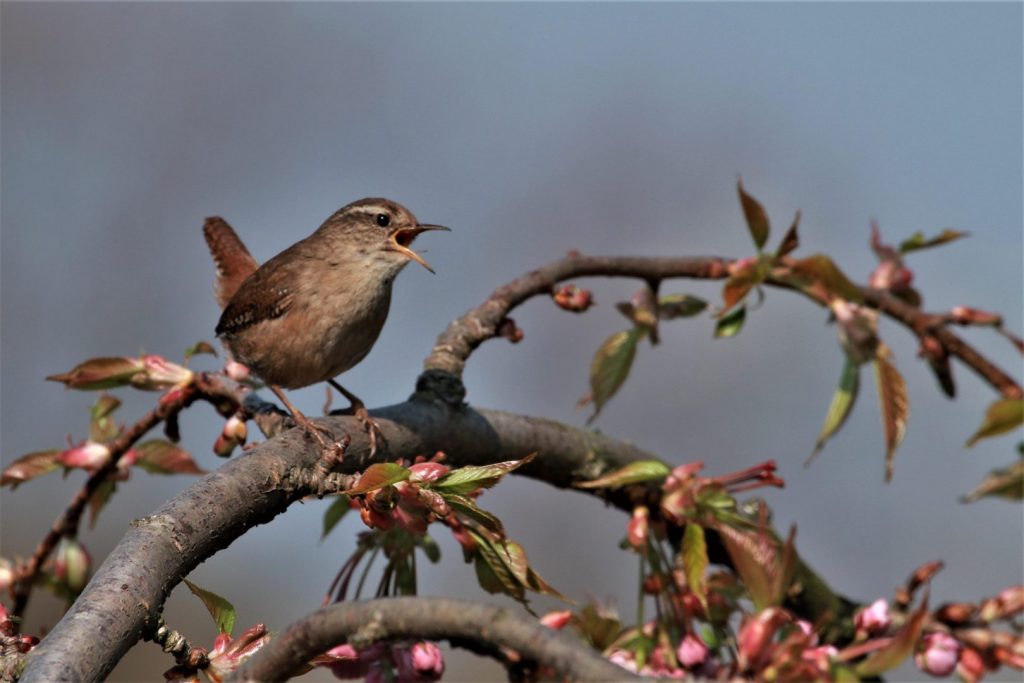
BirdNET-Cloud Bird Listening Stations
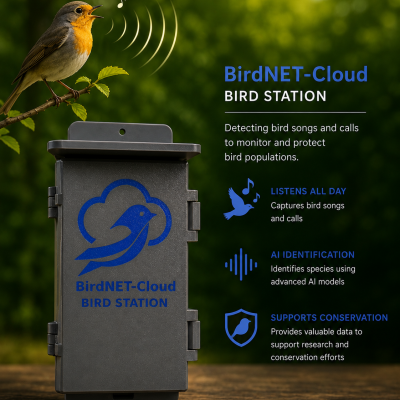
BirdNET-Cloud Bird Listening Stations
Discover the Birds Around Us—One Call at a Time
Birds are constantly communicating around us, but many of their songs and calls happen when we are not outside listening. Some birds sing before sunrise, others call briefly as they pass through during migration, and many species are heard long before they are ever seen.
Our BirdNET-Cloud Bird Listening Stations listen continuously, 24 hours a day, and use artificial intelligence to identify the birds calling nearby. These stations help us discover the birds visiting our backyards, feeders, parks, schools, wildlife areas, and conservation sites—even when nobody is there to hear them.
Think of it as having the sound-identification experience of the Merlin Bird ID app running outside all day and all night. Instead of opening an app only when you hear a bird, BirdNET-Cloud is always listening and automatically saves each discovery for you to explore later.
What Is BirdNET-Cloud?
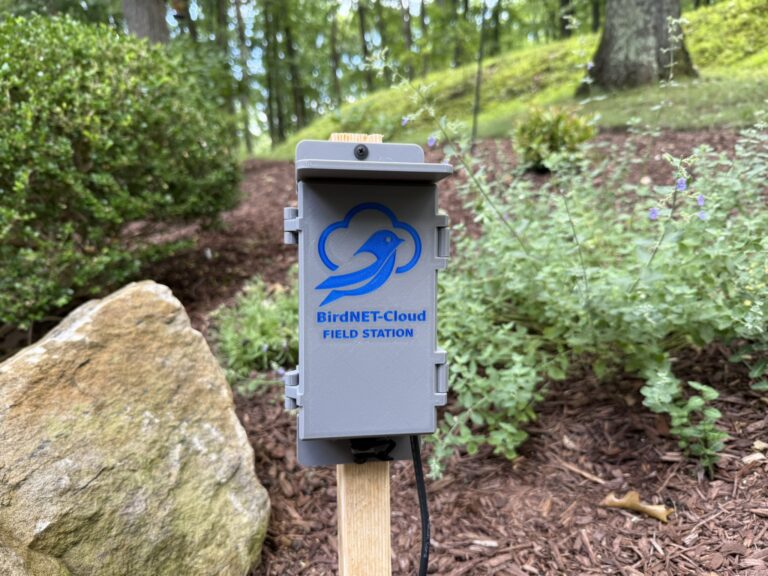
BirdNET-Cloud is a free acoustic wildlife-monitoring platform that turns an affordable Raspberry Pi computer and USB microphone into an always-on bird listening station.
The station records short audio clips, analyzes them using the BirdNET artificial-intelligence model, and identifies the bird species most likely responsible for each song or call. Every detection is uploaded to a secure online dashboard that can be viewed from a phone, tablet, or computer.
Each detection can include:
- The identified bird species
- The date and exact time it was heard
- The original sound recording
- A visual spectrogram of the call
- Detection confidence information
- Daily and long-term species activity
- Station location and sharing options
Over time, each station builds a searchable record of the birds heard at that location.
Like Merlin—But Always Listening
The Merlin Bird ID app is an amazing tool when you are outside and hear a bird you want to identify. BirdNET-Cloud takes that same idea and turns it into a permanent listening station.
Once installed, the station continues operating automatically. It can detect the dawn chorus before you wake up, record a migrating warbler stopping briefly in your yard, or identify an owl calling in the middle of the night.
When you return to the BirdNET-Cloud dashboard, you can see everything the station heard while you were away. It is like having a digital birdwatcher listening at your location around the clock.
PixCams BirdNET-Cloud Listening Station
PixCams operates bird listening stations at several wildlife-camera locations, bird-feeding areas, conservation properties, and educational sites.
Select one of the stations below to watch detections arrive, listen to recent recordings, view spectrograms, and discover which birds are currently calling.
PixCams, Murrysville, PA: Murrysville PA BirdNET
Migration Station, Murrysville, PA: Migration Station BirdNET
Westmoreland Bird and Nature Club, Murrysville, PA: WBNC BirdNET
Saint Vincent College, Latrobe , PA: Saint Vincent BirdNET
WLT St. Xavier, Latrobe, PA: St Xavier BirdNET
Glen Hazel, Pittsburgh, PA: Hays BirdNET
Migration Station Weather Station:
Murrysville, PA: Tempest Weather Station on Weather Underground
Majete Wildlife Reserve: Cam 5
More Than a List of Birds
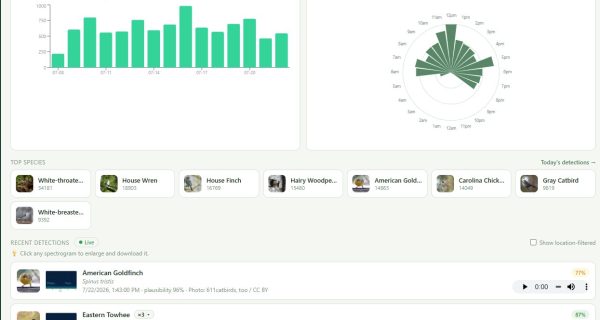
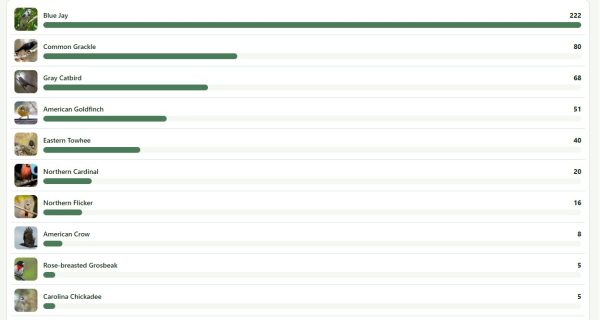
BirdNET-Cloud does more than tell you which species are present. Because every detection is time-stamped and stored, the station helps reveal patterns that can be difficult to notice through occasional birdwatching.
You may begin to see:
- Which species are most active around sunrise
- When seasonal migrants arrive and depart
- Which birds visit throughout the year
- How bird activity changes with weather and habitat
- Rare or unexpected species passing through
- The difference between daytime and nighttime activity
A backyard station can become a long-term record of the changing bird community around your home. A network of stations can provide an even broader view of migration, habitat use, and local biodiversity.

Listen to the Recordings
Every BirdNET-Cloud detection includes a short audio recording, allowing you to hear the call that triggered the identification.
Listening to these recordings is one of the best ways to improve your own birding skills. Over time, you may begin recognizing familiar birds by sound before you see their names on the screen.
The recordings also make it possible to review uncertain detections, compare similar species, and share interesting calls with other bird enthusiasts.
See Bird Sounds with Spectrograms
A spectrogram is a visual picture of sound. Time appears from left to right, while the pitch or frequency of the sound is displayed from bottom to top.
Different bird species produce recognizable shapes and patterns in their spectrograms. Clear whistles, rapid chips, trills, and complex songs all create different visual signatures.
BirdNET-Cloud automatically creates a spectrogram for each detection, allowing you to both hear and see the bird call. These images are especially helpful when learning how artificial intelligence distinguishes one species from another.

Build Your Own Bird Listening Station
You can build your own BirdNET-Cloud Bird Station using a Raspberry Pi, USB microphone, microSD card, power supply, and weather-resistant enclosure.
The installation guide walks you through preparing the Raspberry Pi, installing the free BirdNET-Cloud station software, connecting your microphone, and registering the station with your online dashboard.
Once the setup is complete, your station will begin listening and uploading detections automatically.
BirdNET and BattyBirdNET are released under the Creative Commons Attribution-NonCommercial-ShareAlike 4.0 International License (CC BY-NC-SA 4.0); Nighthawk is released under the Creative Commons Attribution-NonCommercial 4.0 International License (CC BY-NC 4.0). BirdNET-Cloud is an independent conservation project by PixCams and is not affiliated with or endorsed by the Cornell Lab of Ornithology.