Built on Trust: The Birds That Depend on Us to Survive
WildWatch Weekly Built on Trust: The Birds That Depend on Us to Survive Live Cams Latest Posts Store Facebook YouTube A Different Kind of Wild When we think about wildlife, we often picture something distant, deep forests, remote mountains, or places untouched by people. But some of the most fascinating stories in nature are happening much closer to home. In fact, there are species that haven’t just learned to tolerate us, they’ve adapted to live alongside us so completely that their survival...
When we think about wildlife, we often picture something distant, deep forests, remote mountains, or places untouched by people. But some of the most fascinating stories in nature are happening much closer to home. In fact, there are species that haven’t just learned to tolerate us, they’ve adapted to live alongside us so completely that their survival now depends on it.
Look a little closer at the everyday spaces around you. The quiet rafters of a barn. The underside of a bridge. The brick walls of a chimney. A row of gourds hanging in a backyard. These aren’t just human structures, they’ve become habitat. Over time, certain birds have shifted from natural cliffs and hollow trees to the spaces we’ve built, finding opportunity in the world we’ve created. What once was wild has, in a way, woven itself into our daily lives.
This isn’t a story of intrusion, it’s a story of partnership. These birds aren’t simply using our structures; they’re trusting them. And in many cases, they’re trusting us. Whether we realize it or not, our choices, how we build, what we allow, what we protect, shape whether these species continue to thrive or quietly disappear.
Three remarkable birds tell this story especially well. Purple Martins, Barn Swallows, and Chimney Swifts each share a common thread of colony living and close ties to human spaces, but each has taken a slightly different path to get there. Together, they reveal a different kind of wild, one that lives right beside us.
Purple Martins: A Colony That Can’t Go It Alone
In much of the eastern United States, the story of the Purple Martin is no longer one of wild independence, it’s one of partnership. These sleek, iridescent birds once nested in natural tree cavities, often old woodpecker holes scattered across open landscapes. But over time, that option faded. Competition from aggressive, non-native species like the European Starling and House Sparrow pushed martins out of those natural spaces. What remained was a new path forward, one that led them directly to us.
Today, Purple Martins in the East rely almost entirely on human-provided housing. Backyard martin houses and hanging gourds have become their primary nesting sites, maintained by dedicated enthusiasts often known as “martin landlords.” These setups aren’t just conveniences, they’re essential. Without them, many Purple Martins simply wouldn’t have a place to raise their young. It’s a remarkable shift: a species that once followed the rhythms of natural cavities now depends on carefully tended structures in our yards and fields.
At the heart of their behavior is a deep-rooted need for community. Purple Martins are highly social, preferring to nest in colonies where dozens of pairs can live side by side. A healthy colony is alive with motion and sound, birds sweeping through the air, chattering back and forth, constantly aware of one another. This group living provides safety in numbers and creates a shared vigilance against predators. But it also adds to their appeal, there’s something captivating about a thriving martin colony that feels both lively and connected.
That connection extends directly to us. Successful colonies don’t happen by accident, they require ongoing care. Landlords clean out old nests, monitor for invasive species, and help protect against predators. Without that intervention, nests can quickly be overtaken or fail entirely. In many ways, the Purple Martin represents one of the clearest examples of a species that has evolved not just alongside humans, but with them. Their survival now rests, quite literally, in the structures we provide and the care we choose to give.
Barn Swallows: Life on the Ledge
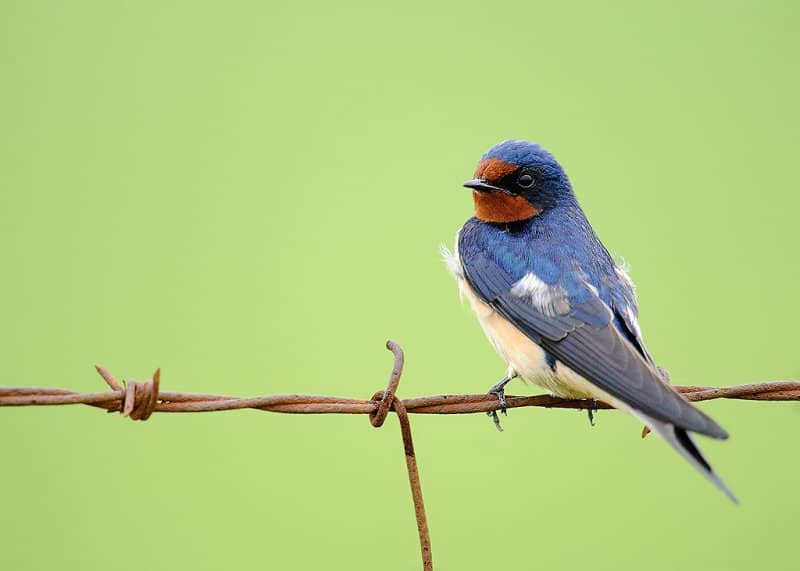
There was a time when Barn Swallows traced cliff faces and rocky outcrops, tucking their nests into natural ledges shaped by wind and time. But as human structures spread across the landscape, these birds adapted in a way few species have. Today, barns, bridges, and porch overhangs have replaced those cliffs, offering the same kind of sheltered ledges, only closer to us. What began as a shift in opportunity has become a defining part of their identity.
Their nests are unmistakable, carefully crafted cups of mud and grass, pressed against beams and walls under the protection of an overhang. Each one is built piece by piece, sometimes requiring hundreds of trips to gather mud. These nests often appear in clusters, especially in barns or under large structures, where multiple pairs settle into a shared space. Barn Swallows aren’t as tightly packed as some colonial birds, but they clearly prefer the presence of neighbors. Living in loose colonies allows them to stay alert together, responding quickly to predators and sharing the rhythm of daily activity.
But this relationship with human structures is more fragile than it might seem. As buildings have modernized, many no longer include the exposed beams, ledges, or open access points that swallows need. Clean architectural lines often come at the cost of nesting space. In other cases, nests are removed due to concerns about droppings or a misunderstanding of their presence. When these small footholds disappear, so do the colonies that depended on them.
And yet, Barn Swallows continue to return, drawn back year after year to the same places, often to the very same nests. Unlike Purple Martins, they aren’t entirely dependent on us, but they have chosen to live alongside us. A quiet barn or a shaded porch can become a generational home, a place where new broods are raised each season. Their presence is a reminder that sometimes, coexistence isn’t forced, it’s simply accepted, one ledge at a time.
Chimney Swifts: The Sky Dwellers That Need Our Chimneys
Few birds live as much of their lives in motion as the Chimney Swift. With long, curved wings and a constant, chattering presence overhead, they seem almost untethered from the ground, feeding, drinking, and even bathing on the wing. But despite their life in the sky, they depend on something very specific when it comes time to rest and raise their young: tall, enclosed vertical spaces. Long ago, that meant hollow trees in old-growth forests. Today, for most Chimney Swifts, that place has become our chimneys.
As natural nesting sites disappeared with the loss of large, hollow trees, swifts adapted in a remarkable way. Brick chimneys offered a nearly perfect substitute, dark, vertical, and sheltered. Inside, nesting pairs construct small half-cup nests made of twigs, carefully glued to the wall using their own saliva. It’s a delicate arrangement in a seemingly unlikely place, but one that has supported generations of swifts in a rapidly changing landscape.
Their social behavior is just as striking. Chimney Swifts are highly colonial, especially outside of the nesting season. On summer evenings and during migration, groups gather overhead before spiraling down into a single chimney in a mesmerizing funnel of motion. Dozens, sometimes hundreds, of birds disappear one by one into the same narrow opening, settling in together for the night. It’s one of the most dramatic, and often overlooked, wildlife spectacles happening right in our neighborhoods.
But this relationship with human structures is becoming more uncertain. Modern chimney designs often include metal liners or caps that make them inaccessible, and fewer buildings are constructed with open chimneys at all. At the same time, the loss of old forests means their original nesting habitat is no longer widely available. As a result, Chimney Swift populations have declined steadily in recent decades, raising concern about their future.
In response, conservationists have begun building swift towers, purpose-built structures designed to mimic the conditions of traditional chimneys. These towers offer a lifeline, but they also highlight a deeper truth: the fate of Chimney Swifts is now closely tied to our choices. Whether it’s preserving an open chimney where safe, supporting conservation efforts, or simply recognizing their presence, their survival depends on whether we continue to leave space for them in a world that’s rapidly closing in.
Why Colony Living Matters
Across Purple Martins, Barn Swallows, and Chimney Swifts, one thread ties their stories together: they are not meant to live alone. Colony living isn’t just a preference, it’s part of how these birds survive. In a group, there are more eyes watching for danger, more voices sounding the alarm, and a shared awareness of everything happening in the space around them. That constant exchange, of movement, sound, and vigilance, creates a kind of living network that helps each individual bird succeed.
There’s also a deeper rhythm to colony life. These birds feed together, return together, and often migrate in loose coordination. The presence of others signals safety and stability. A lone structure might go unnoticed, but an active colony becomes a hub, drawing birds back year after year. It’s not just about nesting space; it’s about community. Without that sense of togetherness, even suitable habitat can remain empty.
What makes their situation unique today is that the places supporting these colonies are no longer natural. The cliffs, hollow trees, and rock faces they once depended on have largely been replaced by barns, bridges, chimneys, and carefully maintained housing. These human-made spaces now serve as the foundation for entire colonies. When they’re available, colonies can thrive. When they’re lost, the impact is immediate and far-reaching.
Because these birds are so tied to group living, the loss of a single structure doesn’t just affect one pair, it can ripple through an entire colony. A capped chimney, a sealed barn, or the removal of nesting sites can mean dozens of birds suddenly have nowhere to go. In some cases, they don’t relocate—they simply disappear from that landscape. It’s a quiet loss, but a significant one.
In the end, colony living magnifies both success and vulnerability. When conditions are right, these birds fill the air with motion and sound, creating some of the most dynamic wildlife moments we can witness. But when those conditions change, the silence that follows tells its own story.
The Westmoreland Land Trust Meadowlark Barn is home to Barn Swallow and Big Brown Bats!
What We Can Do: Small Spaces, Big Impact
The encouraging part of this story is that helping these birds doesn’t require vast land or complex effort, often, it starts with small, intentional choices. The spaces these species need aren’t far away or hard to create. In many cases, they’re already part of our homes, our yards, and our everyday surroundings. By recognizing that, we have an opportunity to turn ordinary places into meaningful habitat.
For those interested in supporting Purple Martins, providing properly designed housing can make a real difference, but it comes with responsibility. Successful martin colonies rely on active management: keeping houses clean, monitoring for invasive species, and maintaining a safe environment throughout the season. It’s a hands-on commitment, but one that connects people directly to the life cycle of a species that now depends on that care.
Barn Swallows ask for something simpler, tolerance and a little space. Allowing them to nest under an eave, in a barn, or on a porch can support generations of birds returning year after year. Where natural nesting spots are limited, even adding a small ledge can give them a foothold. Their presence may come with a bit of mess, but it also brings constant motion, soft chatter, and a glimpse into a life lived just overhead.
For Chimney Swifts, the need is more specific but just as achievable. When it’s safe to do so, keeping a chimney uncapped during the nesting season can provide critical habitat. In areas where that’s not possible, supporting or installing swift towers offers an alternative that can sustain local populations. These efforts may seem small, but to a species with shrinking options, they can be the difference between presence and absence.
In the end, one of the most impactful things we can do is simply choose coexistence. Not every action requires building something new, sometimes it’s about allowing space, accepting a shared environment, and recognizing the value of what’s already there. These birds have adapted to live alongside us. When we make room for them, even in the smallest ways, we become part of their story.
Built on Trust
In the end, these birds don’t just live near us, they’ve placed a part of their survival in our hands. Whether it’s a row of Purple Martin gourds in a backyard, a mud nest tucked beneath an eave, or a quiet chimney used as a nightly refuge, each one represents a decision these birds have made to trust the spaces we’ve created. It’s not a loud or obvious connection, but it’s a powerful one.
There’s something remarkable about that kind of relationship. These species didn’t just adapt to our presence, they leaned into it. Over time, what we build has become part of their natural world. And with that comes a quiet responsibility. The choices we make, what we allow, what we maintain, what we remove, can shape whether these birds continue to return or slowly fade from the places they once filled with life.
This is where watching matters. At PixCams, we’ve seen how slowing down and observing these moments reveals a deeper story. A bird arriving at the same nest year after year. A colony growing, then suddenly gone. Patterns that only become visible when we take the time to look. These aren’t just isolated events, they’re connections, unfolding in real time, often just outside our doors.
And maybe that’s the most important reminder of all. The wild isn’t always somewhere distant or untouched. Sometimes, it’s something that has chosen to live right beside us, built not on distance, but on trust.

 Byadmin