From Collapse to Comeback: The Team Behind Pittsburgh’s New Bald Eagle Cam
WildWatch Weekly From Collapse to Comeback: The Team Behind Pittsburgh’s New Bald Eagle Cam Live Cams Latest Posts Store Facebook YouTube A Long Wait, Worth Every Moment For more than a year, Pittsburgh’s eagle watchers have been waiting. Waiting for a familiar pair to return. Waiting for a new nest to take shape along the river. Waiting for the moment when the quiet hum of a live camera would once again connect us to one of the region’s most beloved wildlife families. But this story was...
For more than a year, Pittsburgh’s eagle watchers have been waiting.
Waiting for a familiar pair to return. Waiting for a new nest to take shape along the river. Waiting for the moment when the quiet hum of a live camera would once again connect us to one of the region’s most beloved wildlife families.
But this story was never just about turning a camera back on.
It was about patience, giving the eagles the space they needed to recover and rebuild. It was about trust, earned through cooperation, respect for wildlife, and careful planning. And above all, it was about teamwork, dozens of people and organizations coming together with a shared goal: protecting these eagles while inviting the community back into their world.
What followed was a months-long effort, built step by step, across neighborhoods, riverbanks, and organizations, proof that when many hands work together, even the longest wait can lead to something worth watching.
Hays Bald Eagles Nest Collapse
A Nest Lost, A New Beginning Across the River
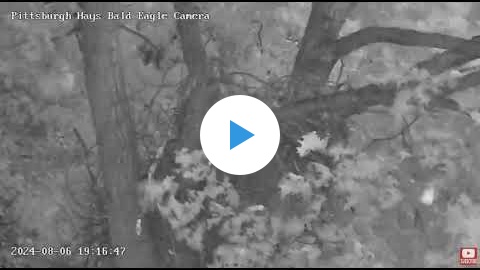
On August 6, 2024, many of us watched with heavy hearts as the longtime Hays Bald Eagle Nest collapsed. In a single moment, a place that had become familiar and comforting, one we checked in on during coffee breaks and quiet evenings, was gone. Soon after, the livestream went dark. For viewers who had followed this pair through seasons of courtship, eggs, and fledglings, the silence felt personal.
But while the camera went offline, the eagles themselves never disappeared.
Glen Hazel Bald Eagle Nest
True to their nature, the Hays pair adapted. Rather than rebuilding in the same spot, they crossed the Monongahela River and began again. Over time, a new nest took shape in Glen Hazel, quietly, patiently, and largely out of view. For those watching from afar, it was a reminder that eagles don’t cling to what was lost. They assess, adjust, and move forward.
This is the rhythm of wild lives. Nests fail. Storms happen. Trees fall. And still, eagles endure. The story so many of us thought had ended at Hays didn’t end at all, it simply shifted locations. The river became a crossing, not a boundary, and what followed was not an ending, but a continuation shaped by resilience, instinct, and renewal.
For longtime viewers, this chapter honors everything that came before. And for new readers, it’s a reminder that following wildlife means following change, sometimes heartbreaking, often hopeful, and always worth the wait.
Permission, Trust, and a Willing Partner
Before a single camera could be mounted or a cable could be run, the most important step happened quietly: asking for permission. The new Glen Hazel nest sits on property owned by the Housing Authority of the City of Pittsburgh, and access to that tree was never something we took for granted. Conservation work, especially in urban spaces, begins with respect for the people and organizations who steward the land.
From the very first conversations, the Housing Authority proved to be an enthusiastic and thoughtful partner. They understood that this project wasn’t about disturbance or spectacle, but about education, awareness, and fostering a deeper connection between residents and the wildlife sharing their neighborhood. Their openness to supporting a bald eagle camera reflected a shared belief that nature belongs in the city, and that learning from it can be a powerful community experience.
We are especially grateful to Chuck Rohrer, who served as our primary contact throughout the process. Chuck helped navigate internal approvals, answered countless questions, and consistently championed the value of the project. His support turned what could have been a lengthy and uncertain process into a collaborative one built on trust and mutual respect.
Access like this is never automatic. It’s earned through transparency, patience, and shared values. Long before wires, cameras, or livestreams came into play, there was cooperation, and it was that foundation that made everything else possible.
Doing It the Right Way — State Permits & Protection
With land access secured, the next step was making sure everything was done the right way, for the eagles. Because bald eagles are a protected species, installing a camera near an active nest requires formal approval from the Pennsylvania Game Commission. This process exists for a reason: to ensure that any human activity near a nest puts the birds’ well-being first, especially during sensitive periods of nesting and breeding.
In June of 2025, we submitted a detailed permit application outlining the camera equipment, installation methods, viewing angles, and timing. The review process was thorough, and rightly so. Every aspect of the project was evaluated with one guiding principle in mind, minimizing disturbance while still allowing for responsible public education. When the permit was approved, it confirmed that the plan met strict state wildlife protection guidelines.
This step may not be the most visible part of the project, but it may be the most important. Eagle cams only work when they are done ethically. The goal is never to get closer at any cost, but to observe from a distance that keeps the birds safe, undisturbed, and behaving naturally. That standard guided every decision that followed.
For viewers tuning in now, or returning after a long wait, it’s worth knowing that the livestream exists because it respects the eagles first. The camera is a window, not an intrusion, and its presence reflects a commitment to protection, responsibility, and long-term stewardship over short-term views.
Powering a Camera Takes More Than a Plug
Once the camera plan was approved, a new challenge came into focus—power. Streaming a high-quality, always-on eagle cam isn’t as simple as running an extension cord. The Glen Hazel nest is in a location where permanent, safe electrical infrastructure had to be carefully planned, coordinated, and approved. This is where another key partner stepped in and changed what was possible.
We owe a tremendous thanks to Don German, whose involvement helped bridge the gap between vision and reality. Beginning in July of 2025, Don connected PixCams with both U.S. Steel and Duquesne Light Company, setting in motion a series of conversations that would ultimately make permanent power at the site achievable.
What followed was a reminder that infrastructure work is rarely quick or simple. Power drops, safety requirements, utility coordination, and long-term reliability all had to be considered. This wasn’t just about getting electricity to a camera, it was about doing it safely, legally, and in a way that would support years of uninterrupted wildlife viewing.
The impact of corporate partners in projects like this can’t be overstated. By lending expertise, relationships, and time, Don and his partners demonstrated how industry and conservation can work together in meaningful ways. Without that behind-the-scenes coordination, the camera would still be a great idea on paper, rather than a live window into the lives of Pittsburgh’s eagles.
Up the Tree — Installing the Cameras
By early December 2025, everything was finally in place on paper, but one of the most delicate steps still lay ahead. Installing cameras in an active eagle nest tree is highly specialized work, requiring not only technical skill, but an understanding of wildlife behavior, safety, and precision at height. Under normal circumstances, this is work handled by our longtime tree climber, Rob Kruljac. This time, however, Rob was sidelined with an injury, and finding a qualified replacement was no small task.
Arch Autenreith
Tree climbers capable of safely working near a bald eagle nest are rare, and trust is everything. In a moment that perfectly reflects the spirit of this project, Rob didn’t just step aside, he helped ensure the work would still be done right. He personally recommended Arch Autenreith, owner of Northwood Tree Care, as someone with the experience, calm judgment, and respect for the birds that the job demanded.
Arch approached the installation with remarkable care and professionalism. Working high above the ground in winter conditions, he methodically placed two pan-tilt-zoom cameras in the nest tree, carefully selecting angles that would provide excellent viewing while keeping a respectful distance from the nest itself. Every movement was deliberate, no rushed steps, no unnecessary disturbance, just steady, thoughtful craftsmanship.
Watching this phase unfold was a powerful reminder that moments we experience effortlessly on a livestream often depend on unseen expertise and trust. The cameras now quietly observing the Glen Hazel nest are there because skilled hands, shared responsibility, and mutual respect guided every step of the climb.
Don German and the U. S. Steel Team
The Permit Puzzle — City Power and Community Help
With the cameras installed and the power plan in place, one of the most challenging hurdles still remained: city electrical permits. Anyone who has worked through municipal permitting knows this part can be slow, complex, and filled with unfamiliar requirements. Progress stalled not because of a lack of effort, but because navigating the process itself became a project within the project.
That’s when an unexpected hero stepped in. Ryan Giegucz of Giegucz Mechanical Services volunteered his time and expertise to help guide the project through the permitting maze. Ryan took on the heavy lift of paperwork, inspections, and technical coordination, work that requires patience, experience, and persistence. He did all of this not for recognition, but because he believed in the value of the eagle cam and what it brings to the community.
Support also came from familiar partners who had been with the project from the start. The Housing Authority leveraged internal connections, and with help from Pittsburgh City Council, the permit review process was given the attention it needed to move forward. That collective push made a real difference, turning weeks of uncertainty into tangible progress.
This phase of the project was a powerful reminder that conservation efforts often succeed not because systems are easy, but because people step up when things get hard. The Glen Hazel eagle cam moved forward because individuals donated time, shared knowledge, and used their connections to help something good take flight.
Duquesne Light Installing The Transformer
Steel, Power, and the Final Switch
With permits finally secured, everything moved quickly, and decisively. Once again, U.S. Steel stepped up in a big way. Their crew came out to the Glen Hazel site and installed the power pole needed to bring permanent electricity to the nest tree. Not only did they donate the labor, they also donated all of the required materials. It was a generous, tangible contribution that turned months of planning into visible progress on the ground.
The final step belonged to Duquesne Light Company. With the pole in place, their team installed the transformer and completed the electrical connection, officially bringing power to the site. It was the last piece of a long and carefully assembled puzzle, and the moment everything had been leading toward.
When the power came on, the system came alive. Cameras booted up. Signals flowed. After more than a year of waiting, coordination, and problem-solving, the Glen Hazel bald eagle cam was finally ready to stream. The quiet work behind the scenes gave way to that familiar, magical moment: a live window back into the lives of Pittsburgh’s eagles.
This was the “we made it” moment, and it belonged to everyone who helped along the way. Steel, power, persistence, and partnership all came together, flipping the final switch and welcoming the community back to the nest once again.
Carol Holmgren of Tamarack Wildlife Center with Don German releasing Rosie the Eaglet – Photo by Diana German
A New Educational Partner Takes Flight
As the Glen Hazel eagle cam comes back online, the project also enters a new chapter in its educational mission. This year, we’re proud to welcome Carol Holmgren, Executive Director of Tamarack Wildlife Center, as our educational partner for the livestream. Tamarack brings decades of hands-on experience in wildlife rehabilitation, raptor care, and public education, expertise that deepens the learning opportunity for everyone watching.
Many longtime viewers may remember Tamarack’s connection to this eagle family through the care of Rosie, an eaglet from the U.S. Steel nest who required rehabilitation after fledging injuries. That experience reflects Tamarack’s long-standing commitment to giving injured wildlife a second chance and helping the public better understand the challenges birds face beyond the nest. It’s a history rooted in care, science, and compassion.
This year, Tamarack Wildlife Center joins the project as our educational partner, bringing decades of hands-on raptor rehabilitation and public education experience to the livestream. Their role will help provide thoughtful context around eagle behavior, development, and recovery, grounded in real-world experience and focused on respect for the birds themselves.
Looking ahead, this partnership strengthens the heart of the Glen Hazel eagle cam: education first, wildlife always. With Tamarack’s guidance, the livestream becomes more than a viewing experience, it becomes a chance to learn, ask questions, and better understand the lives of these remarkable birds we’re privileged to watch.
More Than a Camera
When we look back on the long road to bringing the Glen Hazel bald eagle cam online, what stands out most isn’t the equipment or the technology, it’s the time, patience, and collaboration it took to get here. This project moved forward step by step, shaped by people who were willing to wait, problem-solve, and work together in service of something larger than themselves. The camera may be the visible result, but the real achievement is the community behind it.
At PixCams, our mission has always been about connection, using respectful, responsible technology to bring people closer to wildlife while putting the animals first. This eagle cam exists not to rush nature, but to observe it as it unfolds. It’s a reminder that meaningful conservation happens when curiosity is paired with care, and when education is built on trust.
Now, the invitation is open once again. Watch as the eagles settle into their new home. Learn from their behaviors, their successes, and their challenges. Share the experience with friends, family, classrooms, and fellow wildlife watchers. Every view is a chance to deepen appreciation for the wild lives living alongside us.
The eagles are back, and so is the community, watching together. Thank you for your patience, your support, and your belief in the power of shared stewardship. The story continues, and we’re grateful to experience it with you.
 Byadmin