
Majestic Bald Eagles: Nature's Wonders and Their Online Presence
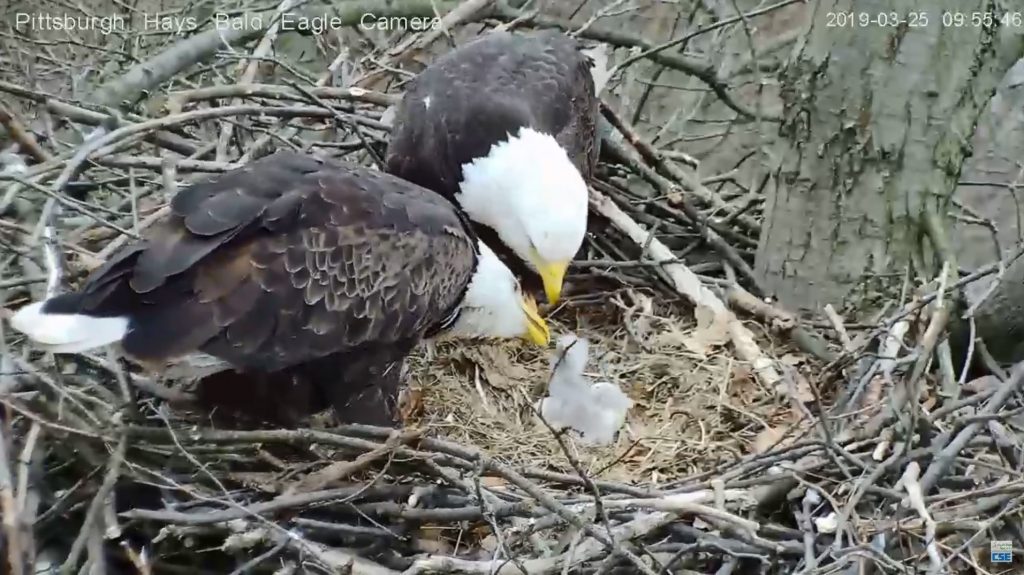
Bald eagles, renowned for their regal appearance and formidable hunting skills, have captured the fascination of birdwatchers and nature enthusiasts alike. With advancements in technology, particularly the proliferation of bald eagle live streams, individuals can witness these majestic creatures in their natural habitats without disturbing them. A notable example is the Pittsburgh Hays Bald Eagle Cam, offering unparalleled insights into the daily lives and behaviors of bald eagles.
These live cam setups serve not only as a window into the world of these birds but also as a dynamic tool for wildlife observation and wildlife education. Streams from places like Missouri’s sole bald eagle camera or the Big Bear Valley Nest Cam, where audiences can watch eagles Jackie and Shadow rear their eaglets, provide educational benefits. Observing the process from nest-building to the awe-inspiring moment of hatching eaglets, viewers are imbued with an enhanced appreciation for nature conservation efforts.
The rise of such educational platforms not only fosters community connection and environmental awareness but also highlights the symbiotic relationship between nature awe and mental health. The captivating scenes broadcasted encourage prosocial behavior, an essential component in promoting active engagement in conservation and ecological initiatives. Through these observational experiences, the audience gains a deeper understanding of the ecological significance of bald eagles and the intricate details of their lives.
As we delve into the realm of digital connectivity and its implications, these live streaming initiatives showcase how technology bridges our understanding of nature with the virtual world. Much like digital platforms such as online casinos, which utilize online connectivity to reach global audiences, wildlife live streams demonstrate the power of digital media in enhancing and extending educational outreach.
- Benefits of eagle live cam for education and awareness
- Impact of wildlife photography in fostering global engagement
- Role of organizations like the Missouri Department of Conservation and Friends of Big Bear Valley in supporting these initiatives
- Correlations between birdwatching, nature watching, and mental health
Bridging Nature and Entertainment: How Wildlife Cams and Online Casinos Coexist
In the digital age, entertainment has taken diverse forms, blending the charm of nature with the excitement of gaming. One of the intriguing trends that have captivated audiences worldwide is the use of wildlife webcams to bring the wonders of the natural world into our homes. Simultaneously, online casinos have carved out their space as thrilling avenues of digital engagement. This article explores how these seemingly disparate forms of entertainment are bridging the gap between nature and gaming, offering unique experiences to a wide array of audiences.
During periods of isolation, such as the recent pandemic, live streaming wildlife cams provided solace and connection to the natural world. Various institutions, like aquariums and zoos, broadcast real-time views of fascinating animals such as penguins and sea otters, creating a living connection with nature. These HD wildlife feeds not only entertain but also educate, tapping into a growing audience interested in experiencing nature from the comfort of their homes.
In parallel, online casinos have grown in popularity, offering a different kind of digital thrill. Games of chance and strategic gameplay offer users a blend of adventure and escapism. Interestingly, the strategic engagement found in both viewing wildlife and gaming suggests potential for cross-promotion between these digital forms. For those seeking calm, the serene experience of animal watching online offers a calming distraction akin to the gaming experience.
Both platforms thrive on their ability to engage users through dynamic interactions. The success of digital interaction lies in creating emotional connections, whether it's the heartwarming sight of a baby panda or hitting the jackpot in a game of blackjack. User engagement is heightened by offering remote wildlife viewing in conjunction with gaming, acknowledging viewers’ desires for accessible experiences with nature and entertainment.
In this vibrant landscape, online casinos zonder cruks review serves as a notable point of interest for players seeking reliable gaming platforms. By providing audiences with diverse experiences—from captivating nature feeds to thrilling gaming—it enriches the digital entertainment ecosystem. Explore more about this trend online casinos zonder cruks review.
Online Safety in Modern Digital Platforms
In today's interconnected digital age, ensuring online safety is paramount as individuals increasingly engage with digital platforms for various activities, including entertainment, education, and financial transactions. From wildlife streaming services to online casinos zonder cruks review, the spectrum of modern digital platforms demands advanced protective measures to safeguard user data and experiences.
One of the fundamental aspects of maintaining online safety is employing robust cybersecurity practices. These include using strong passwords, enabling multi-factor authentication, and ensuring secure internet connections. Users are advised to regularly update software and employ reliable antivirus solutions to protect against malicious software and online threats.
- Implementing encryption technologies to secure sensitive data.
- Backing up data regularly to prevent loss from cyber incidents such as ransomware attacks.
- Setting up firewalls and using VPNs when accessing public Wi-Fi networks.
Trust and Safety practices are essential for fostering secure online spaces. They involve a combination of proactive and reactive measures, including child safety tools during platform development, known as the Safety by Design principle. Organizations adhere to regulations such as GDPR and CCPA to ensure digital privacy and compliance, thereby building trust with users and ensuring ethical standards.
Moreover, content moderation and user moderation are vital in preventing online abuse and fake news propagation. Platforms need robust systems to detect and manage harmful behavior, enhancing user protection and platform integrity.
Wildlife Observation: A Gateway to Digital Learning
Wildlife cameras, often dubbed as trail or game cameras, are at the forefront of educational tools that merge technology with nature observation. These cameras enable users to delve into wildlife research by documenting animal behaviors, migration patterns, and habitat use, offering unparalleled insights into the dynamic world of wildlife.
The integration of specific camera features such as high-definition picture quality, quick trigger speeds, and versatile lighting options ensure a rich digital photography experience. These characteristics are instrumental in enhancing the learning derived from wildlife observation, providing both hands-on and digital learning opportunities.
For the youth, trail cameras offer more than just photographic experiences—they facilitate hands-on learning that supplements traditional educational methods. By engaging young learners through technology, there's a significant potential for fostering an enduring appreciation and understanding of nature. This model promotes nature engagement and bolsters critical thinking skills, driving home the essence of active, experiential education.
Security cameras have revolutionized animal monitoring, giving researchers precise insights into animal behaviors, populations, and welfare across both wild and captive environments. Their strategic use aids in two vital areas: conservation technology and poaching prevention. The advent of AI and advanced technologies extends their effectiveness, ushering in new paradigms in AI in wildlife research.
Beyond their roles in research and education, wildlife cameras enable communities worldwide to experience and participate in environmental education. They bridge geographical gaps, drawing real-time connections between learners and diverse habitats, ranging from the African savannah to local wildlife reserves. This holistic approach to digital learning leverages not only cameras but also other technologies such as drones and video games, creating immersive platforms that inform and educate.
- Comprehensive digital scouting tools enrich property management plans through precise wildlife activity monitoring.
- Resources like game cameras are pivotal in revealing the intricate beauty of wildlife diversity, thus enhancing conservation efforts.
- Camera features can be tailored to specific educational objectives, furthering individual and communal learning aspirations.
- Augmenting outdoor education experiences connects learners with their environment, stimulating proactive environmental stewardship.
Navigating the Virtual Ecosystem: Lessons from Nature
In today's rapidly evolving digital age, the alignment between natural and virtual ecosystems reveals insightful parallels, particularly through the lens of wildlife cameras. These devices, strategically placed in areas such as the Saddle Mountain Open Space Preserve, provide an unfiltered view into the organic ecological balance observed in pristine habitats. The captured footage not only underscores the interconnectedness of species but also serves as an educational tool promoting biodiversity awareness.
Just as wildlife corridors are crucial for maintaining biodiversity, online ecosystems in casinos and gaming platforms demand a similar appreciation of balance and environmental stewardship. Here, the essence of conservation translates into a duty to foster digital biodiversity. This encompasses promoting a harmonious interaction among various virtual entities, akin to the seamless co-existence of species in nature.
- Wildlife Corridors: These are integral in facilitating safe passage for animals, ensuring genetic diversity and population sustainability, which can inspire protocols for sustainable futures online.
- Virtual Wildlife Monitoring: By leveraging real-time data from cameras, conservationists like Lukas Steinrueck, Marina Montes, and Simon Apostol advocate for the adoption of similar monitoring methodologies within digital platforms.
By drawing inspiration from nature, digital spaces can evolve into robust virtual environments that uphold the values of ecological integrity. The integration of these lessons, recognizing the power of interconnected ecosystem services, paves the way for enriched interactions and responsible gaming ultimately nurturing both human and environmental well-being.
Welcome to the Pittsburgh’s Hays Bald Eagle Cam in collaboration with PixCams.com and the Audubon Society of Western Pennsylvania.
This live video feed has been granted a Special Permit by the Pennsylvania Game Commission for educational purposes. The Game Commission’s mission is: To manage wild birds, wild mammals and their habitats for current and future generations.
Nest Camera Update: This year the camera is now powered by Duquesne Light Company with the help of U. S. Steel Corporation. Thank you for your donation!
Hays Nest Updates: Click Here
Are you and educator? Click here for Bald Eagle Lesson Plans
𝗛𝗶𝘀𝘁𝗼𝗿𝘆 𝗼𝗳 𝘁𝗵𝗲 𝗛𝗮𝘆𝘀 𝗘𝗮𝗴𝗹𝗲 𝗡𝗲𝘀𝘁
A pair of Bald Eagles are now nesting within 5 miles of downtown Pittsburgh, Pennsylvania along the Monongahela River. The Hays bald eagle pair first started nesting along the Monongahela River in Pittsburgh in 2013. A nest was observed by workers at the Keystone Iron and Metal Company. The pair successfully hatched one eaglet but on June 6, 2013 a strong storm blew the nest down and the parents successfully fledged the eaglet on the ground. The following year the Hays eagle pair built a new nest in the location it is today. A camera was installed on this new nest in December of 2013.
𝗡𝗶𝗴𝗵𝘁𝗯𝗼𝘁 𝗖𝗵𝗮𝘁 𝗖𝗼𝗺𝗺𝗮𝗻𝗱𝘀: Type “!commands” into the chat box for a list of common questions/answers about this live stream.
𝗖𝗮𝗺𝗲𝗿𝗮 𝗦𝘆𝘀𝘁𝗲𝗺
This camera system is powered by batteries and solar charged. The video is transmitted via cellular, the camera is a 30X optical zoom pan-tilt-zoom camera streaming in Quad HD 1440P with audio MIC and the EZ Streamer IP Camera YouTube video encoder https://www.ezstreamer.com/
𝗥𝗨𝗟𝗘𝗦: 1. Be nice to everyone; if it’s not nice, don’t say it. 2. Keep it clean and privacy-safe for all. 3. Use common sense. No controversial topics, no offensive remarks, racial, gender or other stereotypes, no posts that are political, religious or excessive in personal detail. No post related to adult beverages or substances. 4. Go easy on the emoji; one is fine; three is getting close to a flock. 5. Turn off the CAPS locks key. 6. Make friends and enjoy the company of others. Wander a bit in conversation, but not too far off the path for too long. 7. No self-promoting of your YouTube channel or other social media account without permission. 8. No talk of killing the animals/birds seen on camera.
𝗣𝗥𝗢𝗕𝗟𝗘𝗠𝗦: No drama please. Should someone ruffle your feathers, let water roll off a duck’s back. Pretend that trolls are invisible; we don’t encourage feeding them. Leave moderation to the moderators. We block trolls, solicitors, spammers and those with disruptive agendas.
𝗣𝗥𝗢𝗠𝗢𝗧𝗜𝗢𝗡: Please promote only PixCams and our official partners or sponsors. We ask that you not redirect to other channels. We thoroughly enjoy being able to use our technology to share these educational experiences and unique insights into nature with our viewers. We are constantly looking for new opportunities to broadcast wildlife to our viewers!
© PixCams Unauthorized use and/or duplication of this material without express and written permission from PixCams is strictly prohibited.
Hays Eagles 2020-2021
Hays Eagles Feedings
Hays Eagles Intruders
Hays Eagles Feedings
2022 Nesting Season
Another successful nesting season with three eaglets!
H16 Egg laid 2/11/2022, hatched 3/21/2022, fledged 6/10/2022
H17 Egg laid 2/14/2022, hatched 3/22/2022, fledged 6/10/2022
H18 Egg laid 2/17/2022, hatched 3/25/2022, fledged 6/15/2022
2021 Nesting Season
This year we have three eaglets in the nest. The first time since 2014 we have had three eaglets. Hatch dates: H13 hatched 3/23 4:21am, H14 hatched 3/23 21:57pm, H15 hatched 3/27 5:33am.
2020 Nesting Season
Egg #1: Laid 2/13/2020, Hatched 3/21/2020, Fledged 6/11/2020
Egg #2: Laid 2/16/2020, Hatched 3/23/2020, Fledged 6/6/2020
2019 Nesting Season
Egg #1: Laid 2/12 @ 6:45 PM, Egg not viable – did not hatch
Egg #2: Laid 2/15 @ 3:47 PM, Hatched 3/23 @ 1:14 PM, Fledged 6/11
Egg #3: Laid 2/18 @ 5:02 PM, Hatched 3/25 @ 3:51 PM, Fledged 6/16 @ 11:41 AM
2018 Nesting Season
We currently have one eaglet (H8) that hatched successfully. Current hatch information:
• Egg 1, laid 2/12, broke 3/14
• Egg 2, laid 2/15 @2:48 PM EST, hatched 3/23 @10:01 PM EST
• Egg 3, laid 2/19 @5:53 PM EST, did not hatch
2017 Nesting Season
• 2/10/2017 @ 5:49 PM the first egg was laid.
• 2/12/2017 @ 9:30 PM the nest tree blew down in a wind storm and egg #1 is lost. Click here to see video
• 2/15/2017 The eagle pair starts construction on a new nest about 100 yards from old nest site.
• 2/19/2017 A group of citizen scientist viewed incubation behavior which suggested the female laid her 3rd egg in the new nest with the assumption the 2nd egg was laid elsewhere by the female.
2016 Nesting Season
• Egg dates: Egg 1, 2/13 (early AM), Egg 2, 2/16 @ 1:45 PM, and Egg 3, 2/20 @ 2:02 PM. Egg 3 was not viable and did not hatch.
• H5 Hatch date 3/21 @ 12:37 AM
• H6 Hatch date 3/22 @ 9:40 PM
2015 Nesting Season
• The 2015 nesting season was unsuccessful. We assume this was due to the unusually cold weather conditions in Pittsburgh.
• First Egg laid February 17, 2015 at 7:37 PM, on March 13 the first egg was broken
• Second Egg laid February 20, 2015 at 4:40 PM, on March 27 the second egg was broken
2014 Nesting Season (new nest – camera installed)
• First egg laid on February 19, 2014 at 4:45 PM – Hatch date: March 28, 2014 at 3:36 PM – H2 fledge date: June 21 at 8:45 PM
• Second egg laid on February 22, 2014 at 4:18 PM – Hatch date: March 30, 2014 at 7:17 AM – H3 fledge date: June 20
• Third egg laid on February 25, 2014 at 6:39 PM – Hatch date: April 2, 2014 at 4:54 PM – H4 fledge date: June 27 at 10:14 A
2013 Nesting Season
• March 11 – Incubating behavior was observed indicating an egg had been laid in the nest.
• April 14 – Behavior indicated that an egg had hatched.
• May 13 – The eaglet is seen high in the nest stretching its wings. Only one eaglet was ever seen in the nest.
• June 6, 7 & 8 – There was a strong storm with heavy winds on June 6. The eaglet left the nest sometime between June 6 and June 8 as observers on June 8 and June 9 did not see the eaglet in the nest.
• June 9 – The eaglet is spotted about 20 to 30 feet below the nest on top of some vines. The eaglet is too young to fly but is old enough to survive as long has it is fed by its parents. The parents are seen feeding the eaglet in the vines around 5:30 PM on June 9. For the next two weeks the eaglet is seen in the vines under the nest from the new part of the trail.
• June 29 – After not being seen for a week the eaglet is seen and makes its first observed short flight.
• July 2 – Adults are observed landing with food far from the eaglet forcing the eaglet to make long flights to obtain food from its parents. The adult eagles will be teaching the eaglet to find food on its own for about a month or two after the eaglet began flying.
• July 7 – Eaglet is seen on the roost for the first time.
• July 10 – All three eagles are seen on the roost.
• Aug 4 – Last time the eaglet (H1) was seen.
| Eaglet | Egg Date | Hatch Date | Fledge Date | |
| H1 | ~3/11/2013 | ~4/14/2013 | ~6/29/2013 | |
| H2 | 2/19/2014 @ 4:45 PM | 3/28/2014 @ 3:36 PM | 6/21/2014 @ 8:45 PM | |
| H3 | 2/22/2014 @ 4:18 PM | 3/30/2014 @ 7:17 AM | 6/20/2014 | |
| H4 | 2/25/2014 @ 6:39 PM | 4/2/2014 @ 4:54 PM | 6/27/2014 @ 10:14 AM | |
| H5 | 2/13/2016 (early AM) | 3/21/2016 @ 12:37 AM | 6/10/16 @ 7:38 PM | |
| H6 | 2/16/2016 @ 1:45 PM | 3/22/2016 @ 9:40 PM | 6/11/16 @ 2:36 PM | |
| H7 | 2/19/2017 @ ~9:00 AM | 3/27/2017 @ ~12:00 PM | 6/13/2017 @ ~7:00 AM | |
| H8 | 2/15/2018 @ 2:48 PM | 3/23/2018 @10:01 AM | 6/11/2018 @ 3:48 PM | |
| H9 | 2/15/2019 @ 3:47 PM | 3/23/2019 @ 1:14 PM | 6/11/2019 | |
| H10 | 2/18/2019 @ 5:02 PM | 3/25/2019 @ 3:51 PM | 6/16/2019 | |
| H11 | 2/13/2020 | 3/21/2020 | 6/11/2020 | |
| H12 | 2/16/2020 | 3/23/2020 | 6/6/2019 | |
| H13 | 3/23/2021 @ 4:21 AM | |||
| H14 | 3/23/2021 @ 21:57 PM | |||
| H15 | 3/27/2021 @ 5:33 AM |
[ventus width=”100%” height=”450px” radius=”20px” lat=”40.420233″ lon=”-79.656996″ zoom=”8″ layer=”radar” scale=”F” units=”miles” pressure=”true” marker=”false” time=”12″ ]