Nature’s Oddball: The Curious Case of the American Woodcock
WildWatch Weekly Nature’s Oddball: The Curious Case of the American Woodcock Live Cams Latest Posts Store Facebook YouTube Meet the Forest’s Most Unusual Bird If you were to design a bird from scratch, round body, extra-long bill, and eyes set high and far back on its head, you might end up with something that looks a lot like the American Woodcock. At first glance, it almost doesn’t look real. This small, chunky bird seems out of place among the more familiar shapes we see at feeders and in...
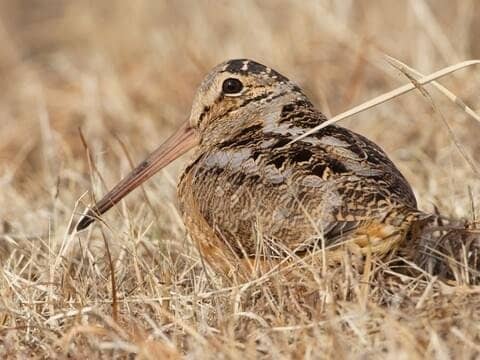
If you were to design a bird from scratch, round body, extra-long bill, and eyes set high and far back on its head, you might end up with something that looks a lot like the American Woodcock.
At first glance, it almost doesn’t look real.
This small, chunky bird seems out of place among the more familiar shapes we see at feeders and in treetops. But the woodcock isn’t built for branches or open skies, it belongs to the forest floor, where subtlety and specialization matter more than appearance.
And while it may look unusual, every part of this bird serves a purpose.
For many people, the American Woodcock is a species they’ve never noticed, until the moment they do. And once you see one, it’s hard to forget.
Right Here at Home: A Hidden Resident of Pennsylvania
The American Woodcock is quietly at home across Pennsylvania, especially in areas that don’t always draw attention, young forests, brushy fields, and damp woodland edges.
These are places in transition. Areas where forests are regrowing, where sunlight reaches the ground, and where the soil stays soft enough for probing.
In western Pennsylvania, woodcock begin returning in late winter, sometimes arriving while snow still clings to the shaded edges of fields. It’s an early sign that the seasons are beginning to shift, even if it doesn’t feel like spring just yet.
The challenge is that they are masters of remaining unseen.
Their mottled brown, gray, and black plumage blends perfectly with leaf litter. Stand still in the woods long enough, and you might realize one has been there all along, completely invisible until it moves.
Built for a Life You Rarely See
Everything about the woodcock reflects the life it leads.
Its long bill is more than just distinctive, it’s a finely tuned tool designed to probe deep into soft ground in search of earthworms. Even more remarkable, the tip of the bill can open independently while underground, allowing it to grasp prey it can’t even see.
Its eyes, set high and far back on its head, provide an almost all-around field of vision. This allows the bird to stay alert for danger while feeding with its head down, a rare and highly specialized adaptation.
And then there’s the movement.
If you’ve ever seen a woodcock walking, you may have noticed a slow, rhythmic rocking motion, almost like a gentle bobbing dance. Scientists believe this behavior may help the bird detect subtle movements below the surface… or possibly help it remain less noticeable as light shifts across the forest floor.
It’s a bird that doesn’t rush. It doesn’t need to.
It’s built for patience.
The Sky Dance: A Performance Most People Never See
For a bird that spends most of its time hidden, the American Woodcock has one of the most dramatic courtship displays in the natural world.
It begins at dusk.
In an open field near the edge of the woods, a male stands quietly before giving a nasal, almost buzzy call known as a “peent.” He pauses, calls again, and then, without warning, launches into the air.
What follows is something few people expect.
The bird spirals upward into the fading light, climbing higher and higher until it becomes a small silhouette against the sky. As it rises, air moving through its wings creates a soft, musical twittering sound.
Then, just as suddenly, it zigzags back down, dropping toward the field in a controlled, fluttering descent before landing near where it started.
And then… it does it again.
And again.
This “sky dance” can continue for minutes at a time, often going unnoticed by anyone not actively looking or listening.
It’s one of those moments in nature that feels almost hidden in plain sight.
A Life Close to the Ground
After mating, the female woodcock keeps things simple, and remarkably effective.
She nests directly on the ground, choosing a spot where fallen leaves and natural cover provide everything she needs. There’s no constructed nest in the traditional sense, just a shallow depression that blends seamlessly into the forest floor.
Typically, she lays four eggs.
When the chicks hatch, they are ready to move almost immediately, following their mother as she leads them through the woods. From the very beginning, their survival depends on staying still when needed, blending in, and learning quickly.
It’s a quiet, ground-level life, one that depends more on remaining unseen than anything else.
Why You Might Miss It—and How to Find One
The American Woodcock isn’t rare.
It’s simply easy to overlook.
If you want to increase your chances of seeing one, timing and place matter more than anything else. Early spring evenings are best, especially at the edges of fields where young woods begin.
Arrive just before sunset. Stand quietly. Listen.
That soft, nasal “peent” call is often the first clue.
If you’re lucky, you might catch sight of the spiraling flight against the dimming sky. Or, during the day, you may experience the sudden burst of wings as a woodcock flushes from the ground, weaving quickly through the trees before disappearing again.
More often than not, though, the bird remains hidden, right where it has always been.
A Reminder That Nature Still Holds Surprises
The American Woodcock is a perfect example of why we watch.
It’s not flashy. It doesn’t visit feeders. It doesn’t spend time perched where it can easily be seen.
And yet, every year, it returns quietly to the same fields and forests, performing one of the most remarkable displays in the bird world, often within a short distance of our homes.
It reminds us that nature isn’t always loud or obvious.
Sometimes, it’s subtle. Sometimes, it’s strange. And sometimes, it’s happening right in front of us, we just need to slow down enough to notice.
Because the more time we spend watching, the more we begin to see.
And once you know the American Woodcock is out there… you may never look at a quiet field at dusk the same way again.

 Byadmin