New Year, New Neighbors: Who’s Visiting Your Feeders Now?
WildWatch Weekly New Year, New Neighbors: Who’s Visiting Your Feeders Now? Live Cams Latest Posts Store Facebook YouTube A Quiet Reset in the Backyard The calendar has flipped, fireworks have faded, and the rush of the holidays has finally given way to quieter days. Out in the backyard, though, there’s been no real pause at all. Winter life has been unfolding steadily wings arriving at dawn, soft landings at feeders, familiar shapes moving through the cold with purpose and routine. As our own...
The calendar has flipped, fireworks have faded, and the rush of the holidays has finally given way to quieter days. Out in the backyard, though, there’s been no real pause at all. Winter life has been unfolding steadily wings arriving at dawn, soft landings at feeders, familiar shapes moving through the cold with purpose and routine.
As our own schedules settle back into place, feeders become small gathering points in an otherwise still landscape. The birds that appear now may feel familiar, yet they’re often a slightly different cast than the ones we watched just months ago. Some have moved in from farther north, others have shifted their habits, and a few that were once background visitors suddenly become daily companions.
The New Year offers a gentle invitation to slow down and notice these moments. To look out the window with fresh eyes. To ask a simple question: who’s here now? Winter brings neighbors we don’t always see birds that only share our yards for a short stretch of the year, quietly enduring the cold and making the most of what the season provides.
In this quieter time, observation feels easier and more meaningful. Without leaves on the trees and with fewer distractions, even the smallest movements stand out. The backyard becomes a place not just of feeding, but of reflection, a reminder that while our calendars reset, the natural world carries on, steady and alive, inviting us to watch more closely.
Why Winter Brings a Different Cast
Many of the birds visiting your feeders now weren’t part of the summer soundtrack just a few months ago. Winter reshuffles the deck. Some species migrate south only as far as they need to, stopping when they find conditions they can tolerate. Others remain year-round but change how they move, feed, and socialize once cold weather sets in. What results is a noticeably different mix of visitors, familiar faces, but in new roles.
Winter also concentrates wildlife in ways other seasons don’t. Natural food sources like insects, berries, and seeds become scarce or buried beneath snow. At the same time, birds burn more energy simply staying warm. Reliable food becomes essential, and backyard feeders suddenly stand out as dependable refueling stations in an otherwise demanding landscape.
Because of this, birds tend to visit more frequently and stay a little longer. Flocks form. Feeding patterns become predictable. Individuals you spot in early January are often the same ones you’ll see again and again through February. While the total number of species may be lower than during migration seasons, the consistency makes winter one of the most rewarding times to observe behavior, interactions, and daily rhythms.
In many ways, January and February offer some of the best bird watching of the year, not because there’s more variety, but because there’s more opportunity to truly get to know the birds that are here. Winter turns quick glimpses into ongoing stories, inviting us to notice details we might otherwise miss.
Start a Simple 2026 Winter Bird List
You don’t need fancy tools, apps, or expert knowledge to take part in winter bird watching, just a little curiosity and the willingness to notice what’s happening outside your window. A simple Winter Bird List can turn everyday feeder visits into a quiet, rewarding habit that builds throughout the season.
Start small. Write down the very first bird you notice this year, whether it’s a bold cardinal at dawn or a chickadee darting in for a quick bite. As winter unfolds, add new species as they appear. Some may only show up once, while others will become familiar, daily visitors. Over time, your list becomes a snapshot of this winter in your backyard.
Beyond names, pay attention to behavior. Are birds arriving in flocks or alone? Do some prefer the ground beneath the feeder while others grab and go? Which ones linger, and which ones seem perpetually in motion? These details reveal patterns that are easy to miss unless you’re looking for them.
If you watch PixCams livestreams, you can take this a step further by noting timestamps of interesting moments, a repeated visit, a brief interaction, a sudden burst of activity. Winter is full of subtle, repeatable rhythms, and keeping track of them helps transform passive watching into active discovery. Over the course of the season, your simple list becomes a personal record of winter’s quiet stories, unfolding one visit at a time.
Watch Closely — Winter Reveals Behavior
Winter strips the landscape down to its essentials. With leaves gone and movement easier to see, birds become more visible, not just as flashes of color, but as individuals following daily routines shaped by cold and necessity. At the same time, conserving energy becomes critical, and that makes behavior slower, clearer, and easier to observe.
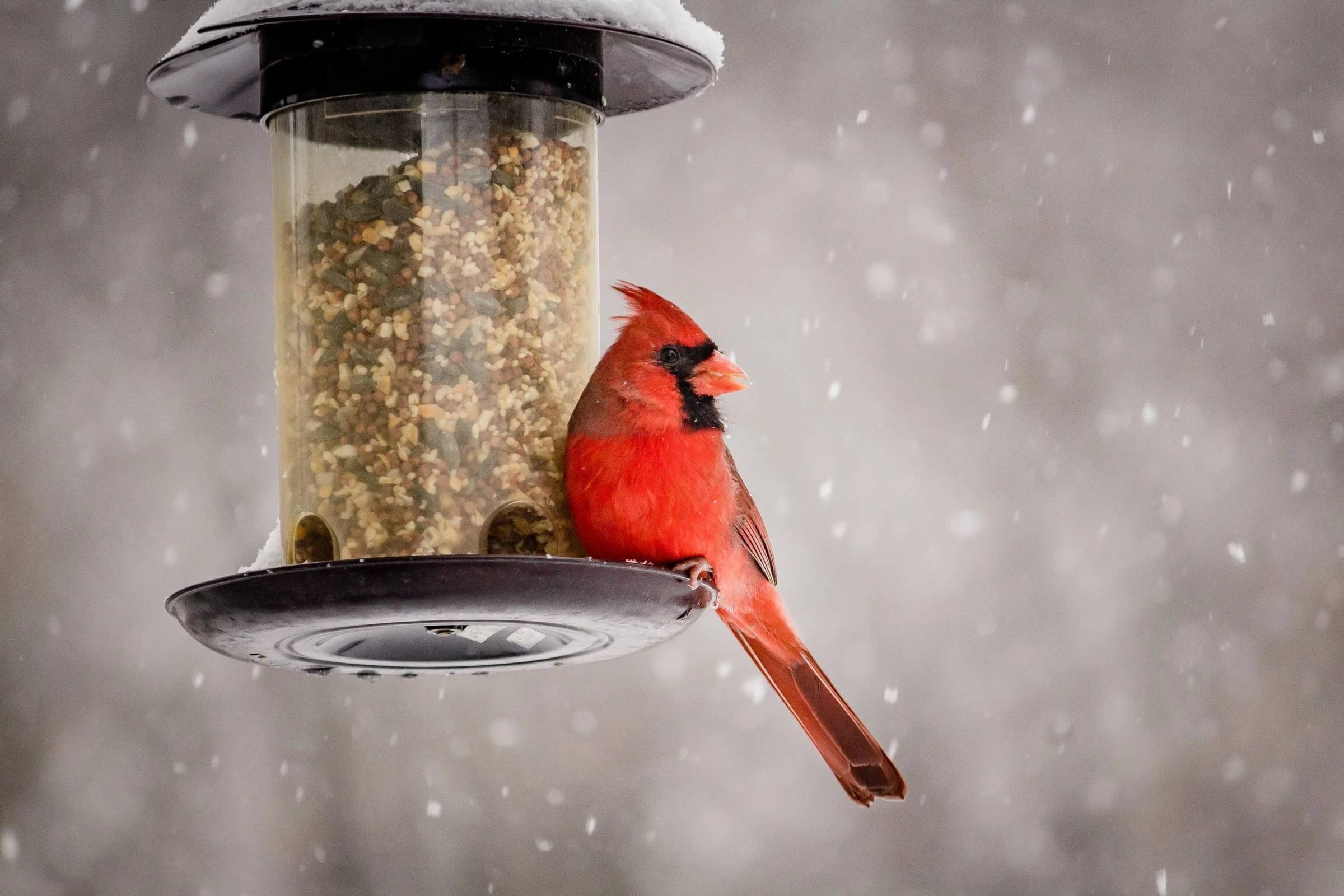
Chickadees offer a perfect example. Watch closely and you’ll often see them grab a single seed, then disappear briefly into nearby cover to stash it away for later. Cardinals, especially in winter, frequently appear in pairs, feeding side by side in a quiet show of long-term bonding that helps them navigate the toughest months together. On the ground below, flocks of dark-eyed juncos move almost like ripples, advancing and retreating in loose unison as they search for scattered seed.
These moments may seem small, but they tell powerful stories. Each behavior reflects a finely tuned strategy, how to balance risk and reward, when to feed, where to rest, and how to survive another cold night. Winter invites us to slow down and notice these patterns, revealing resilience not through dramatic displays, but through consistency, cooperation, and quiet persistence.
A New Year Invitation: Watch, Share, Belong
As the New Year begins, we invite you to slow down for just a moment and reconnect with the world outside your window. Step onto the porch, glance toward your feeder, or tune into PixCams and let your eyes rest on the quiet activity unfolding there. Even on the coldest days, life is moving, wings arriving, seeds exchanged, familiar routines continuing without pause.
One of the simplest and most meaningful ways to start the year is by noticing that first visitor. It might be a flash of red against the snow, a small bird darting in and out, or a quiet shape feeding beneath the feeder. That first sighting becomes a marker, not just of the year ahead, but of your connection to the season and the wildlife sharing it with you.
We’d love for you to share that moment with our community. Who was the first bird you spotted this year? Leave a comment, share a photo, or tag PixCams with your winter sightings. Each observation, no matter how small it seems, adds to a larger story, one told by backyards, feeders, and watchers across many places.
As we move into the year ahead, thank you for being part of this community of observers, learners, and nature-lovers. Here’s to another year of watching closely, learning together, and welcoming our winter neighbors, one quiet moment at a time.
Watching Winter Up Close: A Front-Row Seat to the Season
Winter bird watching has a way of drawing us closer, literally and figuratively. When the cold settles in and birds rely more on dependable food sources, moments at the feeder become longer, quieter, and more revealing. Watching from just a few feet away allows you to notice details that are easy to miss otherwise: how feathers fluff against the cold, how individuals take turns, how familiar visitors return day after day.
For those who enjoy observing birds up close from indoors, we’ve been exploring this idea ourselves with a window-mounted feeder we call Window Buddy. It was designed simply to bring winter birds closer to the glass, offering an unobtrusive way to watch feeding behavior, interactions, and daily routines, especially on cold mornings when stepping outside isn’t always inviting.
Whether you watch from a window, a porch, or through PixCams, winter offers some of the most intimate bird moments of the year. Sometimes all it takes is a little stillness, and a closer look, to appreciate just how much life is happening right outside.

 Byadmin