A Raptor Built for the Dark
Few sounds in the winter woods are as commanding as the deep, resonant hoot of the Great Horned Owl. It is a voice that carries through darkness and cold air, a reminder that while much of the forest sleeps, the night shift is just beginning.
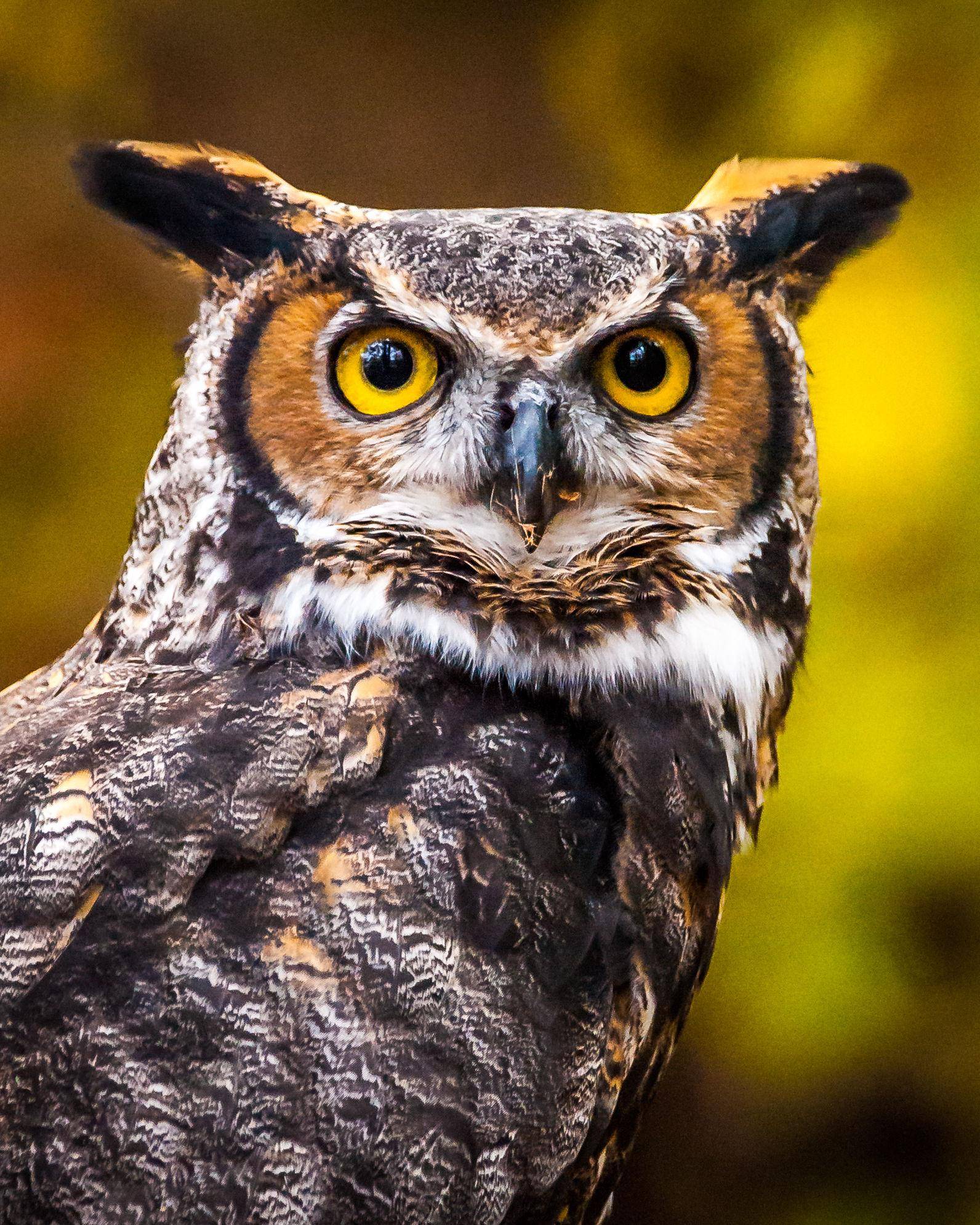
The great horned owl is one of North America’s most adaptable and formidable raptors. With powerful talons capable of exerting crushing force, exceptional low-light vision, and asymmetrical ears designed to pinpoint sound with remarkable accuracy, this owl is engineered for nocturnal precision. Its feathered disk-shaped face funnels sound inward, allowing it to detect the faint rustle of prey beneath leaves or snow.
Unlike many birds that rely heavily on daylight, the great horned owl thrives in shadow. Forest edges, river valleys, suburban woodlots, and even city parks can all become part of its territory. It is not a specialist confined to remote wilderness. It is a generalist survivor — bold, resilient, and comfortable wherever prey is available.
Engineered for Silence: How the Great Horned Owl Hunts Without a Sound
One of the most remarkable features of the Great Horned Owl is something you rarely hear, or rather, don’t hear at all. When a great horned owl flies, it moves through the air with astonishing silence. In the stillness of night, where even the snap of a twig can give away a hunter’s presence, silence is survival.
The secret lies in the structure of its feathers. Unlike many birds whose wing feathers are smooth along the leading edge, the great horned owl’s primary feathers have comb-like serrations. These tiny, saw-toothed edges break up the air as it flows over the wing, reducing turbulence and muffling the sound that normally accompanies flapping flight. Instead of creating a sharp rush of air, the owl’s wings disperse it softly, almost invisibly.
The trailing edges of the feathers are equally specialized. They are fringed and flexible, allowing air to pass through in a way that further dampens noise. Combined with a velvety surface texture across the wing and body feathers, this design absorbs sound rather than amplifies it. The result is a predator that can glide toward prey in near-total silence.
This quiet flight works in partnership with the owl’s extraordinary hearing. Because the owl isn’t generating much sound of its own, it can better detect the faint rustle of a mouse beneath snow or the subtle shift of a rabbit in dry leaves. Silence is not just about stealth, it enhances the owl’s ability to listen.
When we watch a great horned owl cross a live-stream frame at night, it can appear almost ghostlike. There is no dramatic wingbeat noise, no warning flutter. Just a shadow passing through infrared light. That silence is not accidental. It is the product of evolutionary refinement, wings designed not just to fly, but to disappear into the night air itself.
A Surprising Favorite: Why Skunks Are on the Menu
Among the many prey species taken by the Great Horned Owl, one stands out as both surprising and telling: the striped skunk. While most predators avoid skunks because of their powerful defensive spray, great horned owls are one of the few animals that regularly hunt them. In fact, in some regions skunks make up a significant portion of their winter diet.
The owl’s advantage is twofold. First, it attacks from above. Skunks are built to aim their spray toward ground-based threats, twisting their hindquarters toward a predator at eye level. An owl descending silently from the sky bypasses that defensive posture. Second, owls have a relatively poor sense of smell compared to many mammals. Even if some spray is released, it may not deter the owl the way it would a fox or coyote.
Skunks are also active at night, overlapping perfectly with the owl’s hunting schedule. In winter, when other prey may be less available, skunks moving across open fields or along forest edges become accessible targets. For a powerful raptor equipped with crushing talons, they are substantial, high-calorie meals.
Reading the Signs: How to Recognize an Owl Kill
If you’ve ever walked through a field or your backyard and discovered what looks like a skunk’s head left behind, you may have encountered the calling card of a great horned owl. Unlike mammalian predators that chew and scatter remains, owls often consume prey in a more deliberate way.
When feeding on larger animals like skunks, rabbits, or even opossums, a great horned owl may remove and discard the head before consuming the body. The skull contains less muscle and fewer calories compared to the torso and hindquarters. By separating it, the owl focuses on the most energy-rich parts of the carcass, breast meat and major muscle groups, which are especially important during cold months when caloric demand is high.
There is also a practical aspect to this behavior. Fur and bone are not easily digested. Owls swallow much of their prey in chunks and later regurgitate indigestible material in the form of pellets. Leaving behind larger, less profitable portions like the skull can reduce the amount of material they must process internally.
Nature’s Efficiency on Display
Finding a head in the grass can feel unsettling at first. But in truth, it is evidence of a highly efficient predator doing exactly what it evolved to do. Great horned owls waste little. They take advantage of opportunity, maximize nutrition, and move on quietly before dawn.
These remains often go unnoticed unless you know what to look for. A cleanly separated head, minimal scatter of fur, and the absence of gnaw marks all point toward an avian predator rather than a mammal. It is one more subtle clue that the night shift was active while we slept.
Moments like these remind us that the forest, and even our own yards, tell stories long before sunrise. The great horned owl may be unseen, but its presence is written in the quiet evidence it leaves behind.
Courtship in the Cold: Early Nesters of Winter
While winter feels like a season of stillness to us, it is a time of courtship and nesting for great horned owls. As early as January, long before spring buds appear, pairs are already strengthening bonds with duet hooting across their territory. The male’s deeper call and the female’s slightly higher pitch weave together in a quiet but unmistakable declaration: this space is taken.
Great horned owls do not build elaborate nests of their own. Instead, they are opportunists. They frequently claim abandoned stick nests built by hawks, herons, or even bald eagles. In some cases, they may use tree cavities, cliff ledges, or man-made structures. What matters most is elevation, stability, and a commanding view of the surroundings.
Their early nesting schedule gives their young a developmental advantage. By the time spring arrives and prey populations increase, owl chicks are already growing rapidly and demanding substantial meals. It is a strategy rooted in timing, endure the coldest weeks of the year in exchange for a head start when food becomes more abundant.

Great horned owl knocks dad off roost at Hays bald eagle nest
Clash in the Canopy: Owls and Eagle Nests
One of the most dramatic behaviors we have witnessed on our live streams involves great horned owls targeting roosting bald eagles at night. Viewers are often surprised by this interaction. After all, the Bald Eagle is larger and widely regarded as a dominant raptor. But darkness shifts the balance of power.
Eagles are primarily diurnal hunters. At night, their vision is not nearly as effective as that of an owl. When a great horned owl approaches under cover of darkness, it brings with it stealth and sensory advantages that level the playing field. We have seen owls swoop toward nests where adult eagles are roosting, sometimes striking or attempting to displace them in an effort to claim the structure.

Why would an owl risk such a bold move? Timing may provide the answer. During late winter nesting season, prime nest sites are valuable real estate. Rather than build from scratch, a great horned owl may attempt to take over an existing nest that offers height, protection, and stability. These confrontations can be brief but intense, reminding us that competition in the wild does not pause simply because it is nighttime.
For viewers, these moments can feel startling. But they are not anomalies. Similar encounters have been documented on multiple live-streaming eagle nests across the country. They are part of the natural rhythm of overlapping territories and competing breeding timelines.
An Opportunistic Hunter: From Talons to Carcass
Recently, we observed a great horned owl feeding on a deer carcass placed in view of one of our cameras. While many people associate owls strictly with live prey, rabbits, squirrels, skunks, and other small mammals, they are also opportunistic feeders.

Carrion provides a valuable energy source, particularly in winter when hunting conditions can be unpredictable. A frozen landscape can make prey harder to access. An available carcass becomes a practical and efficient meal. Watching the owl tear into the deer with deliberate strength was a powerful reminder of its adaptability.
This behavior may surprise some viewers, but it underscores an important truth about raptors: survival favors flexibility. The great horned owl is not bound by narrow preferences. It hunts when it can, scavenges when it must, and conserves energy whenever possible.

Watching the Night with New Eyes
The great horned owl does not seek attention. It does not perform in daylight for our convenience. It moves when the woods grow quiet and most of us have turned away. Yet through live-stream technology, we are given a rare window into this hidden shift of the natural world.
When we witness an owl testing an eagle’s nest or feeding under the stars, we are not watching conflict for spectacle. We are observing survival strategies shaped by evolution and season. Darkness does not mean inactivity. It means a different cast of characters takes the stage.
The power and mystery of the great horned owl lie in that transition. It reminds us that nature operates on more than one schedule. While the eagles command the day, the owl rules the night. And thanks to the quiet patience of a camera, we are able to see both stories unfold, one after the other, in the same forest, in the same nest, under very different skies.

 Byadmin