Nest Boxes Aren’t Just for Nesting
When most people think of nest boxes, they picture spring: chirping chicks, patient parents, and busy beaks delivering meal after meal. It’s easy to forget that these wooden houses don’t sit empty the rest of the year. To many backyard birds, a well-placed nest box is far more than a nursery, it’s a valuable piece of real estate that can mean the difference between surviving winter nights or not. As temperatures drop and nights stretch longer, those same boxes become quiet, hidden sanctuaries.
What might surprise many bird lovers is just how often songbirds rely on these structures when the weather turns harsh. Nest boxes provide warmth, shelter from wind and snow, and a safe place to roost away from predators. They become tiny winter cabins, offering birds a brief but essential refuge. This seasonal shift from bustling spring nursery to silent winter hideaway is one of the lesser-known yet most fascinating roles nest boxes play in a bird’s world.
At PixCams, we first stumbled into this hidden winter behavior by accident. One cold evening, while checking a live camera feed, we noticed a small shape tucked inside one of our nest boxes. To our surprise, it wasn’t a leftover nest or a late-season chick, it was a Downy Woodpecker settling in for the night. That single observation sparked our curiosity and led us down a path of closer monitoring, experimentation, and discovery. What began as a moment of wonder soon revealed an entire secret life inside the boxes after dark, one that unfolds long after the nesting season ends.
A Nighttime Visitor: The Downy Woodpecker Discovery
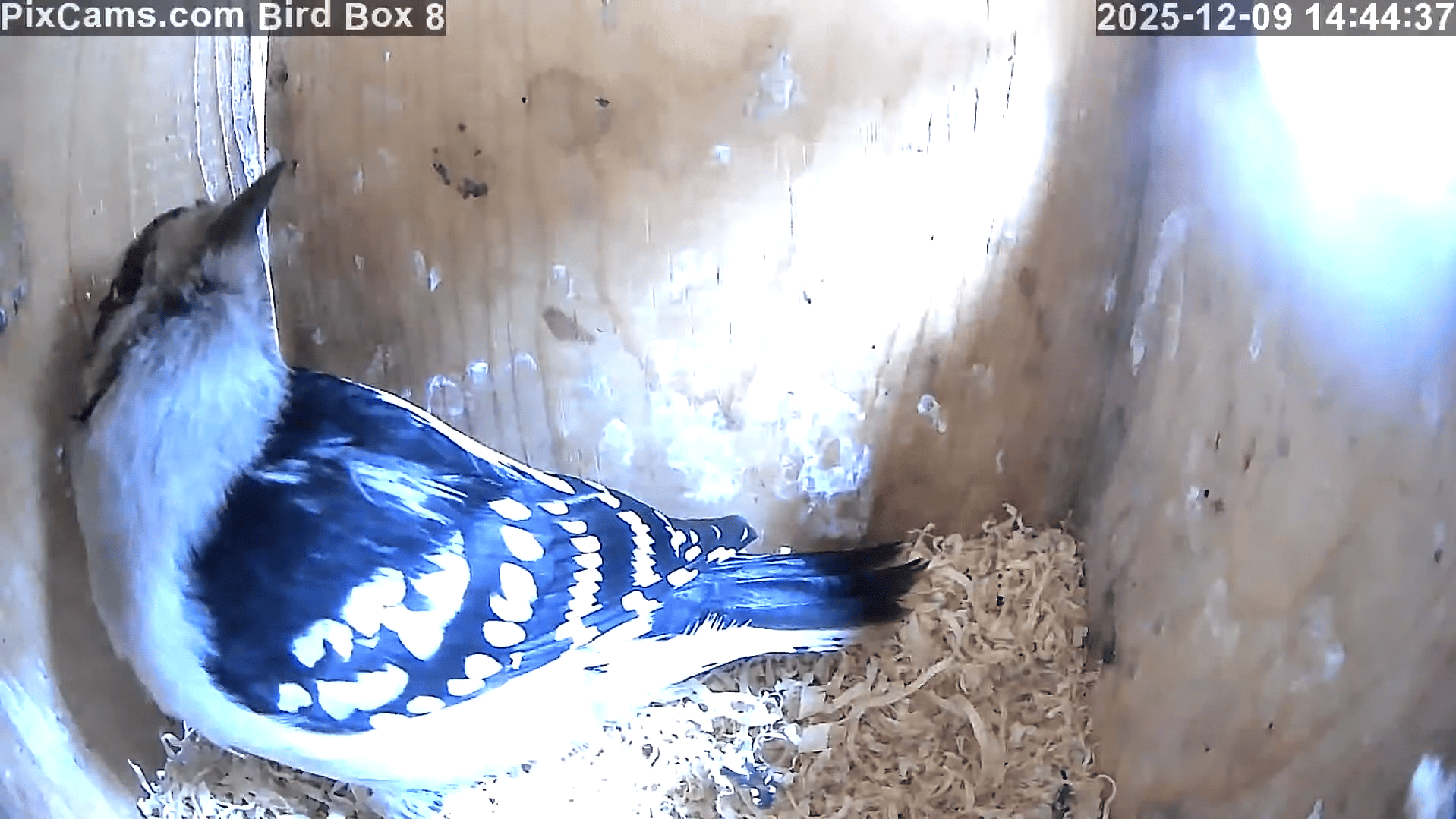
The discovery came during a routine evening check of one of our PixCams nest boxes. The sun had long slipped behind the ridge, and the woods were settling into that quiet, blue-gray stillness of early winter. As we scanned the live feed, something shifted inside the box, just a small movement at first. When the camera adjusted to the low light, there it was: a Downy Woodpecker, calmly perched inside as if it had checked into a tiny wooden hotel for the night. It wasn’t nesting season, and there was no old brood to tend to. This little woodpecker was simply using the nest box as a warm, secure roost.
That moment sparked an idea. Woodpeckers naturally carve out cavities in trees, and those natural hollows always contain some sort of loose material on the floor soft wood dust, chipped bark, bits of debris. Our nest boxes, by comparison, were bare wooden floors. So we added a shallow layer of woodchips to mimic the bottom of a natural cavity, hoping it would make the box feel more inviting and comfortable for our nighttime visitor. The response was immediate: the same Downy Woodpecker returned night after night, settling into those woodchips as if it had claimed the box as its winter suite.
Scaling the Idea
Encouraged by this behavior, we expanded the experiment. As fall settled in, we added woodchips to all of our nest boxes across the property to see whether the effect would repeat. And it did on a scale we didn’t anticipate. Through winter monitoring, we found that around 50% of the boxes were being used regularly by Downy Woodpeckers for nighttime roosting. Some birds even returned consistently to the same box for weeks at a time, suggesting that once they find a warm, insulated roost, they stick with it.
The woodchips make a bigger difference than you might expect. They provide insulation against the cold floor of the box, help regulate moisture, and offer a soft, natural-feeling surface similar to the debris that accumulates in wild tree cavities. In other words, a small, simple addition turned our nest boxes into far more appealing and much more effective winter shelters. What started with a single surprise visitor revealed just how important small habitat tweaks can be for supporting birds through the most challenging time of year.
Bluebirds and Winter Roosting: A Different Approach
While woodchips work beautifully for woodpeckers, bluebirds have their own preferences when it comes to winter shelter. Many bluebird enthusiasts prepare their nest boxes in a different way by lining the bottom with soft, long pine needles. These natural materials create a gentle, cushioned layer that mimics the texture of wild roosting spots. Pine needles offer just the right combination of insulation and airflow: they trap warmth without becoming damp, and they allow moisture to escape so the box stays dry throughout the coldest months. For bluebirds, the feel of pine needles underfoot gives the box a more natural, familiar roosting environment, making it far more inviting than an empty floor.
This thoughtful preparation pays off, especially because of one of the most remarkable winter behaviors bluebirds display: communal roosting. Unlike the solitary Downy Woodpecker, Eastern Bluebirds often gather together on freezing nights, piling into a single nest box in small groups. People have reported opening a roosting box in midwinter to find three, four, or even six bluebirds tucked tightly inside, all pressed together like a cluster of cobalt feathers. It’s a strategy rooted in survival. By sharing body heat in a confined, insulated space, the birds can dramatically reduce the amount of energy they burn just to stay warm.
Communal roosting is one of the reasons bluebirds survive harsh winters so successfully. Each bird contributes warmth to the group, and in turn benefits from the heat of its companions. A well-prepared roosting box with pine needles to soften the floor and hold warmth becomes an invaluable refuge during long, subfreezing nights. This behavior underscores just how important nest boxes can be year-round, offering not just a place to raise young in spring, but a lifeline during winter’s coldest battles.
Why Bluebirds Inspect Boxes in Winter (And What They’re Not Doing)
Every winter, people begin to notice bluebirds slipping in and out of nest boxes on sunny January afternoons or during mild spells in February. It’s an easy behavior to misinterpret. Many assume these early visits mean nesting season is starting ahead of schedule or that the birds are preparing to lay eggs long before spring arrives. After all, bluebirds are known for being some of the earliest nesters of the season so it’s natural to think they might be getting a head start.
But the truth is far more practical and tied to winter survival. Bluebirds inspecting boxes in winter are not looking to nest. Instead, they’re performing a kind of seasonal reconnaissance. These visits help them evaluate potential roosting spots for the cold nights ahead, especially when temperatures plunge with little warning. They’re also checking familiar cavities they may have used in previous years, ensuring the spaces are still safe, dry, and accessible. And sometimes, they’re simply ducking inside to escape sudden gusts of wind, fast-moving snow squalls, or nearby predators.
What prevents them from actually nesting in winter is biology, not lack of opportunity. True nesting behavior is triggered primarily by photoperiod the lengthening of daylight hours and supported by rising temperatures and food availability. Even if a bluebird seems eager while exploring a box in January, its internal clock hasn’t yet flipped to the hormonal cues that initiate nesting. So these inspections are not false starts they’re instinctive winter strategies that help bluebirds prepare for whatever the season brings.
Understanding this behavior matters because it reveals how adaptable and resourceful bluebirds truly are. Winter box checks allow them to locate shelter quickly when conditions turn dangerous, and observing this ritual can give us insight into their seasonal needs. Each visit is a quiet reminder that nest boxes serve a purpose far beyond spring not only as cradles for new life, but as critical shelters that help birds endure winter’s hardest nights.
Surprising Winter Tenants: Flying Squirrels in Nest Boxes
Songbirds aren’t the only creatures seeking refuge when winter settles in. In many areas, Southern Flying Squirrels and occasionally Northern Flying Squirrels will also make use of songbird nest boxes during the colder months. Though small and lightweight, these nocturnal mammals are masters of finding warm, enclosed spaces, and a well-placed bird box can offer exactly what they need to survive frigid nights. They often choose boxes that are mounted higher or positioned near mature woods where their preferred food sources nuts, fungi, and tree sap are abundant.
Flying squirrels are known for their communal roosting behavior, and it’s not unusual to find several curled together inside a single box, forming a furry cluster to conserve heat. This behavior helps them maintain body warmth far more efficiently than roosting alone. Homeowners sometimes discover these unexpected guests while cleaning boxes in late winter or early spring, surprised to find the interior lined with shredded bark, leaves, or soft nest material carried in by the squirrels.
While their presence may temporarily displace songbirds, flying squirrels generally use boxes only during the coldest parts of the year. Their winter visits highlight the broader value of nest boxes as multi-species shelters not just for birds, but for any small wildlife that depends on cavities in times of need. In this way, nest boxes become tiny ecosystems of their own, offering warmth and safety to a wider cast of woodland characters than most people ever realize.
How to Prepare Your Nest Boxes for Winter Roosting
If you want to support wintering birds in your backyard, preparing your nest boxes for cold-weather roosting is simple and makes a meaningful difference. Start by tailoring the interior to the species most likely to use it. For Downy Woodpeckers and other small cavity users, add a shallow layer of fine woodchips, not sawdust, to mimic the natural floor of a tree cavity. For bluebirds, consider lining the bottom with soft, long pine needles, which offer gentle insulation, allow good airflow, and create a natural roosting texture that birds readily accept.
Ventilation is just as important in winter as it is in summer. Make sure the box’s air holes remain open so moisture can escape, but avoid creating direct drafts. Birds are remarkably good at conserving heat in small, enclosed spaces, but cold air rushing through gaps can make even the best roosting box uncomfortable. Take a moment to confirm the box is clean, dry, and free of old nesting material, which can harbor parasites or mold during damp conditions.
Finally, consider the placement of your nest boxes. While they don’t need to be moved far, boxes facing away from prevailing winter winds or positioned where they receive some natural buffering from shrubs, tree trunks, or structures tend to stay warmer and more inviting. A little shelter goes a long way when nighttime temperatures dip into the teens. With just a few thoughtful adjustments, your nest boxes can become safe havens for songbirds all winter long, offering comfort and protection during the toughest part of the year.
Winter Wonders Behind the Box: Watch, Learn, and Lend a Hand
One of the most magical parts of winter birding happens when most people aren’t watching after sunset, when the woods settle and songbirds slip into their nighttime shelters. Through PixCams’ nest box livestreams, you can witness this hidden world unfold in real time. Tune in to see Downy Woodpeckers quietly arriving after dusk, bluebirds inspecting boxes before a cold front, or small flocks huddling together for warmth on the bitterest nights. These simple, routine behaviors are easy to miss in the wild, but through the lens of a nighttime camera, they become some of the most intimate and fascinating glimpses into a bird’s winter survival strategy.
Watching these scenes play out reminds us just how important nest boxes remain long after the last fledgling has taken flight. In the coldest months, these little structures transform into lifelines silent, sturdy havens that give birds a fighting chance against darkness and freezing temperatures. A nest box that once supported a brood of chicks becomes, in winter, a lantern of warmth in the landscape.
As you observe birds using these spaces on PixCams, consider preparing your own nest boxes for winter roosting. A few pine needles or woodchips, a clean interior, and a wind-protected placement are all it takes to turn a simple box into a sanctuary. And when you spot your first nighttime visitor, you’ll feel connected to this quiet side of nature in a whole new way. We invite you to watch, learn, and share your observations because every winter roosting story helps bring the hidden life of our backyard birds into the light.

 Byadmin