An Unusual Visitor at the Feeder
It started with a flicker of pale feathers at the feeder, the kind of moment that makes regular PixCams viewers lean in a little closer. Among the bustling flock of house finches, one bird stood out: a male with ghostly white patches scattered across his normally rosy plumage.

Leudcistic House Finch Captured on Camera!
At first glance, it looked almost like sunlight catching his feathers, but as he turned, the unusual pattern became unmistakable. This week, we’re sharing the clip that caught everyone’s attention and sparked a flurry of comments. What you’re seeing isn’t a trick of the camera, it’s a fascinating pigment condition called leucism, a rare glimpse into what happens when nature’s color palette takes an unexpected turn. Tune in to the video below and join us as we explore the science behind these pale and patchy birds.
What Exactly Is Leucism?
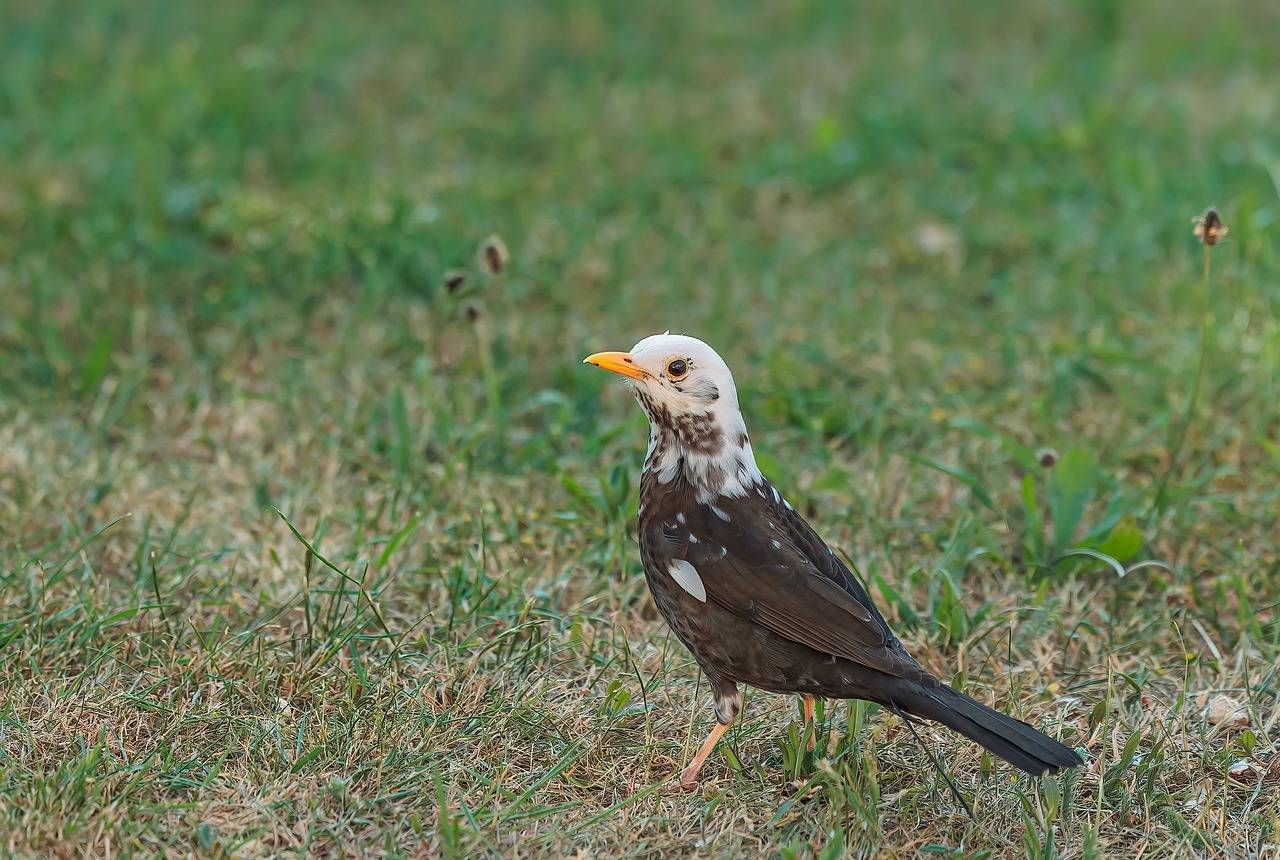
Leucism is a fascinating genetic condition that affects the way a bird’s feathers receive pigment. Unlike albinism, which prevents the body from producing melanin altogether, leucism disrupts the distribution of pigment-producing cells known as melanocytes. These cells either fail to reach certain feathers during development or don’t deposit pigment evenly, resulting in plumage that’s paler than normal or marked with striking white patches. The bird is otherwise healthy, it simply grows feathers that nature forgot to color in.
One of the easiest ways to distinguish leucism from albinism is by looking at the eyes. Birds with albinism typically have pink or red eyes due to the complete absence of melanin. Leucistic birds, on the other hand, maintain their natural eye color, usually dark brown or black, because the underlying pigment cells in the eyes function normally. This eye color clue is often the quickest way for backyard birders to understand what they’re looking at.
Leucism can show up in several forms, which is part of what makes it so intriguing. Some birds appear washed-out, as if someone turned down the saturation on their feathers. Others display patchy white areas scattered across the body, a head streak here, a wing bar there. In many cases, only certain feathers are affected, creating a ghost-like version of the bird’s usual pattern. Every leucistic bird looks a little different, which adds to the excitement of spotting one.
Because leucism is relatively rare, encountering a leucistic bird is always special, a moment that stands out even in the most familiar backyard flock. These sightings give us a chance to appreciate not just the beauty of birds, but the genetic quirks that make each individual unique.
How Leucism Differs From Albinism
While leucism and albinism may look similar at first glance, they are two very different conditions, and understanding the difference helps birders make sense of these rare sightings. Albinism is a complete absence of melanin, the pigment responsible for most of a bird’s feather, skin, and eye coloration. Birds with albinism cannot produce melanin at all due to a genetic mutation that shuts down melanin production entirely. As a result, their feathers grow in pure white, their skin is pale, and their eyes appear pink or red because the underlying blood vessels show through.
These physical traits come with some challenges. Feathers without melanin are far more fragile, which means albinistic birds often experience quicker wear and tear and may struggle in harsh weather. They’re also highly sensitive to sunlight, both visually and physically, which can make daily survival more difficult. For these reasons, true albinism in wild birds is extremely rare.
Because both conditions involve white feathers, it’s easy to see why many birdwatchers confuse leucism with albinism. But a few simple ID tips can help you tell them apart. Look at the eyes first: leucistic birds always retain their normal dark eye color, while albinistic birds have pink or red eyes. Next, observe the pattern of white. Albinism usually makes the entire bird appear uniformly white, while leucism tends to create a patchy or partially pale appearance, almost like a bird wearing mismatched feathers. If you can spot these clues, you’ll be able to identify the condition quickly and confidently the next time a pale-plumaged visitor shows up at your feeder.

Why Does Leucism Happen? The Science Behind the Feathers
To understand why leucism occurs, it helps to start with the tiny cells responsible for a bird’s color: melanocytes. These specialized cells produce melanin, the pigment that gives feathers their rich browns, deep blacks, russet reds, and even contributes to some yellows. During a bird’s early development inside the egg, melanocytes migrate across the skin and into the feather follicles, settling into place before the bird hatches. When everything goes normally, this migration ensures that each feather grows in with the correct coloration for that species.
Leucism happens when this process is disrupted. A genetic mutation or developmental glitch keeps some melanocytes from reaching their destination, leaving patches of feathers without pigment. In other cases, the cells arrive but fail to function properly, depositing little or no melanin. The result can range from a single white feather to large sections of ghostly or diluted plumage. Because the issue lies in pigment distribution, not pigment production, the rest of the bird’s coloring, including the eyes, remains unaffected. It’s a subtle but important difference that sets leucism apart from other color abnormalities.
Although leucism is most noticeable in feathers, it doesn’t always stop there. Areas of skin can also appear pale, and in some individuals the bill or feet may show lighter-than-normal coloration. This variability is part of what makes leucistic animals so striking, no two look exactly alike. And while we often talk about leucism in birds, similar pigment disruptions occur in other species too. From piebald deer to partially white squirrels, the natural world is full of examples where these developmental quirks add unexpected variation to otherwise familiar wildlife. These rare appearances remind us just how much genetic diversity exists beneath the surface of the animals we see every day.

Piebald Deer: A Mammal’s Version of the Same Phenomenon
A few years ago, one of our PixCams trail cameras captured something truly unforgettable, a piebald deer stepping cautiously into view, its coat patterned with dramatic white patches that stood out against the forest floor. The video quickly became a favorite among viewers, not just because the deer was striking, but because piebald individuals are so rare. Their unusual coloration isn’t caused by age, injury, or seasonal changes. Instead, it stems from the same kind of pigment-distribution issue that creates leucistic birds. In mammals, this condition is known as piebaldism, and it follows a remarkably similar biological script.
Like birds, mammals depend on pigment-producing cells called melanocytes to color their skin and fur. In piebald deer, these cells simply fail to reach certain areas during development, leaving patches where no melanin is deposited at all. The deer grows normally, strong, healthy, fully capable of surviving in the wild, but carries a permanent, eye-catching contrast of natural brown mixed with bright, snowy white. The pattern can range from small splashes to large, map-like shapes that cover much of the deer’s body, making each individual uniquely identifiable.
Seeing both a leucistic house finch and a piebald deer across our camera network highlights a powerful truth about nature: these pigment quirks aren’t limited to one species or habitat — they’re part of a much broader story of genetic variation. Birds, mammals, and even reptiles can exhibit these anomalies, offering us rare windows into the complexity of how animals develop. Whether perched at a feeder or wandering through a quiet patch of woods, these unusual individuals remind us how endlessly surprising and beautifully diverse wildlife can be.
Does Leucism Affect a Bird’s Life?
While leucism may be visually striking, it can raise an important question: Does this unusual coloration affect a bird’s ability to survive? In some cases, it can. Birds with large white patches or overall pale plumage may be more visible to predators, especially species that rely on camouflage to blend into their surroundings. A bright or patchy bird stands out more in a world where staying hidden can mean the difference between life and death. In addition, some studies suggest that leucistic feathers may be slightly more fragile than normally pigmented ones, making them more prone to wear over time, though this varies widely by species and individual.
Another potential challenge involves social interactions. Birds often rely on plumage cues when choosing mates, especially in species where bright colors signal health or genetic fitness. While it’s rare, there have been documented cases where leucistic individuals were overlooked by potential mates simply because their unusual coloring didn’t match what the species typically recognizes. However, these instances are the exception rather than the rule, and many leucistic birds breed successfully without issue.
It’s important to reassure readers that most leucistic birds live perfectly normal, healthy lives. Mild or patchy leucism, the kind most commonly seen at feeders, is usually harmless and doesn’t affect a bird’s strength, intelligence, or ability to find food. A white patch on the wing or a pale head doesn’t change the way the bird flies or sings, and many individuals go on to thrive for years. For backyard birdwatchers, spotting a leucistic bird isn’t a sign of trouble, it’s simply a rare and beautiful variation, a reminder that nature always has room for a little surprise.
Seeing the Beauty in Nature’s Rare Surprises
Every once in a while, nature gives us a glimpse of something wonderfully unexpected, a reminder that not all wildlife fits neatly into the patterns we’re used to seeing. Leucistic birds, piebald deer, and other pigment anomalies are small windows into the incredible diversity that exists just beneath the surface of the natural world. These individuals may be rare, but that rarity is exactly what makes them so captivating. They show us, in the most visual way, that life is full of variation, genetic quirks, and adaptations that don’t always follow the rulebook.
Moments like the appearance of our pale-patched house finch offer more than just a unique sighting. They become teaching moments, opportunities to understand the science behind pigmentation, development, and genetics, while also reconnecting us with the wonder that drew so many of us to wildlife watching in the first place. That little finch, with its ghostly feathers, reminds us that every visitor to the feeder carries a story we may never fully know, but can always appreciate.
As you watch your feeders in the coming days or tune into PixCams’ livestreams, keep an eye out for the unusual. A white wing bar, a pale tail feather, a washed-out patch on a bird’s head, these small departures from the norm are invitations to look closer and marvel at the quiet surprises hidden in plain sight. Rare sightings like these bring us a little closer to the secret lives of wildlife, reminding us that nature is as unpredictable as it is beautiful.
And sometimes, those surprises span across species. Whether it’s a white-patched songbird hopping onto a perch or a piebald deer stepping softly through a forest clearing, these flashes of unexpected beauty remind us that nature is full of stories, and every one of them is worth noticing.

 Byadmin