When Watching Nature Becomes Heartbreaking
For 14 years, the Glen Hazel bald eagle nest has been a place of hope, wonder, and connection. Through changing seasons, fierce storms, successful hatchings, and unforgettable fledging moments, this nest has brought thousands of viewers closer to the wild heart of Pittsburgh.
This past week, however, brought something none of us expected.
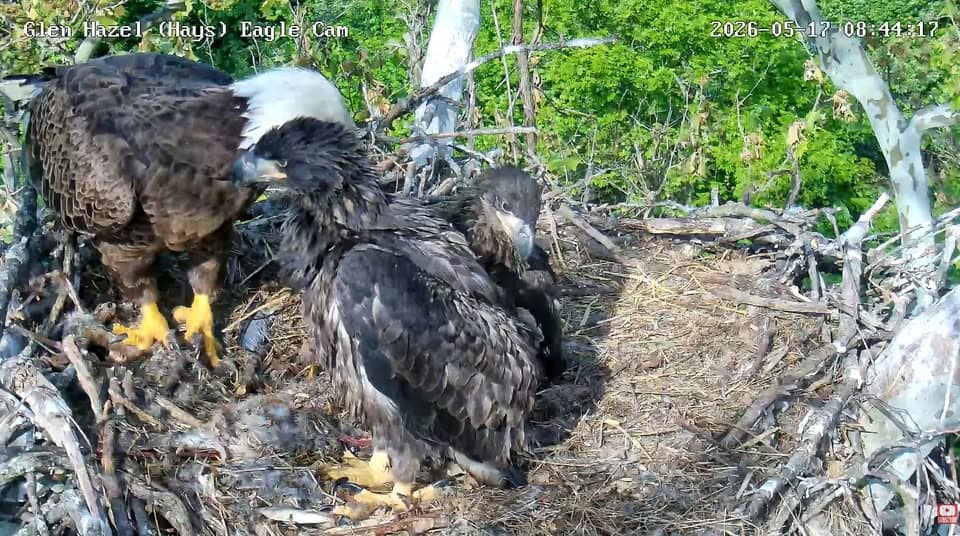
What began as concern quickly turned into heartbreak as both eaglets at the Glen Hazel nest—GH4 and then GH3—showed signs of illness and sadly passed away within a short period of time. For a community that has watched these eagles year after year, this loss has been deeply painful.
In all our years of streaming the Hays/Glen Hazel eagles, we have been blessed with 100% survivorship of eaglets through fledging. While we know nature does not always follow the outcomes we hope for, experiencing a loss like this for the first time has been incredibly difficult for everyone who has grown attached to this eagle family.
The First Signs Something Was Wrong
On the morning of May 15, concerns began to grow when GH3 and GH4 were observed showing possible signs of illness.
Thanks to the sharp eyes and dedication of the Glen Hazel moderator team, those warning signs were quickly recognized and reported. Tamarack Wildlife Center’s Executive Director and Licensed Rehabilitator, Carol Holmgren, who serves as a rehabilitation partner for the Glen Hazel nest, was immediately notified and began closely monitoring the situation.
At the same time, the PixCams team was alerted, and discussions began around possible scenarios, response options, and next steps.
Sadly, despite close observation and hope that one or both eaglets might recover, GH4 passed first. Overnight, many in the community held onto hope that GH3 might improve, but by the following morning, the second eaglet had also passed.
For everyone watching, it was a heartbreaking reminder that even in carefully monitored wildlife nests, not every outcome can be changed.
Why Didn’t Anyone Intervene?
This was one of the most difficult questions many viewers asked—and understandably so.
When people form a connection with wildlife through live cameras, it is natural to want to help when something appears wrong. But bald eagles are one of the most highly protected bird species in the United States, and intervention at an active eagle nest requires both state and federal approval.
The Pennsylvania Game Commission (PGC), Tamarack Wildlife Center, and the U.S. Fish and Wildlife Service were involved in discussions as the situation unfolded.
Federal policy generally allows intervention only when there is a clear human-caused threat, such as fishing line entanglement, ingestion of a fish hook, or another direct human-related injury. In this case, while the eaglets were visibly ill, there was no clear evidence that the cause was human-related.
As difficult as that was for many of us to witness, wildlife agencies determined that allowing nature to take its course was the most appropriate path under current wildlife protections and conservation guidelines.
Sometimes the hardest part of watching nature is understanding that not every life can be saved, even when everyone wishes it could.
What May Have Happened
At this time, no definitive testing was performed, so a confirmed cause of death is not known.
However, based on symptoms, timing, and the progression of illness, experts believe the most likely explanation may have been Avian Influenza.
It is possible the eaglets were exposed after consuming infected prey, such as goslings or geese brought to the nest by the adult eagles. While this remains the leading theory, it cannot be confirmed without direct testing.
The adult eagles may also have been exposed.
Adult birds often have stronger immune systems than nestlings, and there is hope they may be able to fight off any illness if exposure occurred. At this point, close observation remains the most important tool available.
The health of the adult eagles will continue to be monitored carefully in the days and weeks ahead.
A Community That Cares Deeply
One of the most powerful parts of wildlife streaming is the community it creates.
The Glen Hazel eagles are not just birds on a camera feed. Over time, they have become part of daily life for thousands of viewers, people who celebrate hatch days, worry through storms, cheer for first flights, and quietly check in on the nest before starting their mornings.
That deep connection is what made this loss so heavy.
We want to especially recognize the Glen Hazel moderator team, whose attentiveness helped identify the earliest signs of trouble. Their quick action and communication with Tamarack Wildlife Center helped ensure experts were involved immediately.
We also want to thank the broader PixCams community for showing compassion—not just for these birds, but for each other. During difficult moments like this, kindness matters.
Why the Camera Stayed Live
In the midst of grief, many asked why the Glen Hazel camera remained live.
The answer is transparency.
At PixCams, our mission has always been to help people experience wildlife as it truly is, not only during beautiful moments, but also during difficult ones.
Nature can be inspiring, joyful, dramatic, and sometimes heartbreaking. By keeping the camera live, we chose to honor both the eaglets and the reality of the natural world.
Wildlife cameras allow us to witness life as it unfolds, without editing away the harder chapters.
That honesty is part of what makes watching wildlife so powerful.
What Happens Next at Glen Hazel
Our focus now shifts to the adult eagles.
They will continue to be closely monitored as experts watch for any signs of illness, behavioral changes, or unusual activity. At this time, there is hope that the adults remain healthy and resilient.
The nest itself now carries a much different feeling than it did just days ago.
But the story of Glen Hazel is not over.
For 14 years, this nest has reminded us of strength, survival, and the incredible lives of bald eagles living right in the heart of Pittsburgh. While this chapter is one of loss, it is also one of reflection, learning, and respect for the realities of wild lives.
Remembering GH3 and GH4
This week reminded us that wildlife watching is not always easy.
We celebrate the triumphs, but we also carry the losses.
GH3 and GH4 were here only briefly, but they were watched, cared for, and deeply loved by a community that spans far beyond Pittsburgh.
Their story matters.
As we continue to keep watch over Glen Hazel, we do so with gratitude for what these eagles have taught us over the years: resilience, patience, wonder, and the understanding that nature is beautiful not because it is predictable, but because it is real.

 ByBill