Majete Watch: AI-Powered Live Stream Wildlife Detection System
WildWatch Weekly Majete Watch: AI-Powered Live Stream Wildlife Detection System Live Cams Donate Store Facebook YouTube A Reserve That Came Back From the Brink — And a System Built to Protect It There are places in the world where conservation has not just worked — it has transformed an entire landscape. Majete Wildlife Reserve in southwestern Malawi is one of them. And now, thanks to a first-of-its-kind technology platform built by PixCams, Inc., that transformation can be witnessed,...
A Reserve That Came Back From the Brink — And a System Built to Protect It
There are places in the world where conservation has not just worked — it has transformed an entire landscape. Majete Wildlife Reserve in southwestern Malawi is one of them. And now, thanks to a first-of-its-kind technology platform built by PixCams, Inc., that transformation can be witnessed, monitored, and protected in real time, around the clock, from anywhere on Earth.
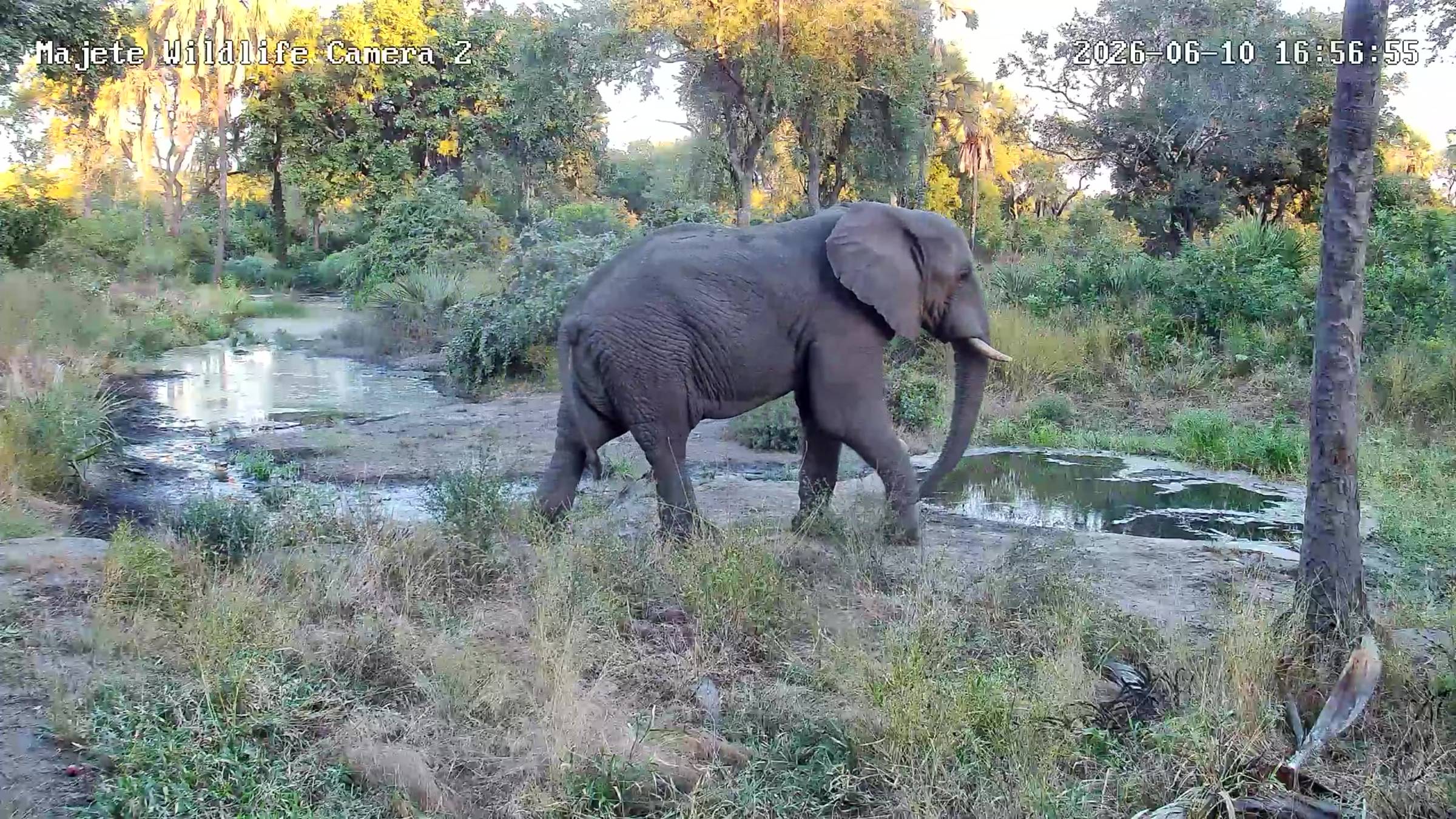
MajeteWatch, https://majetewatch.com/, is a real-time AI-powered wildlife detection and survey system deployed across Majete Wildlife Reserve — and it works in a way that has never been done before in the history of conservation technology. It is not a camera trap. It is not a motion sensor on a post. It is a fully automated, continuously operating intelligence network, running 24 hours a day, 7 days a week, deep inside 700 square kilometers of African bush. And every detection it makes — every elephant, every leopard, every rare bird — is logged, photographed, timestamped, and published to a live public dashboard within seconds of being captured.
This is what it looks like when technology is placed in the service of conservation.
Cape Buffalo at Majete Wildlife Reserve
Majete’s Story: From Silence to the Big Five
To understand why MajeteWatch matters, you first need to understand the place it protects. Majete Wildlife Reserve, located in the Lower Shire Valley of south-western Malawi not far from the city of Blantyre, was established as a protected area in 1955. For decades it thrived. Then, through the late 1970s and 1980s, relentless poaching, charcoal burning, and human encroachment took their toll. By the late 1990s, the reserve was, as one account put it, “a wildlife sanctuary in name only.” Elephants were gone. Lions were gone. Rhinos had been eradicated entirely. A once-rich ecosystem had been stripped nearly bare.
In 2003, everything began to change. African Parks entered into a landmark public-private partnership with Malawi’s Department of National Parks and Wildlife to rehabilitate and manage the reserve from the ground up. What followed was one of the most ambitious and successful wildlife restoration programs in African history. More than 3,000 animals from 17 species were reintroduced over the following two decades — black rhino in 2003, elephant in 2006, lion in 2012, giraffe in 2018, cheetah in 2019, and African wild dog in 2021. Majete became Malawi’s first and only Big Five reserve. Its 2024 aerial census recorded more than 12,400 large herbivores, alongside predators, primates, vultures, and ground hornbills.
The recovery has been so successful that since 2016, Majete has exported over 1,100 animals to help restore other parks across Malawi — including 150 elephants as part of the historic 500 Elephants translocation in 2017. Zebra, buffalo, kudu, sable antelope, and impala roam the miombo woodlands. Elephants bathe in the Shire River while hippos wallow nearby. Lions, leopards, and cheetahs have reclaimed their role as apex predators. Over 400 species of birds — including the Boehm’s bee-eater, the Livingstone’s flycatcher, and four species of vulture — fill the air with sound and color.
Majete is proof that restoration is possible. But what has been rebuilt must also be defended. That is where MajeteWatch comes in.
How MajeteWatch Works: Solar, Satellite, and AI in the African Bush
Traditional wildlife monitoring has always faced the same set of limitations. Camera traps must be physically retrieved to view their footage. Rangers can only be in one place at a time. Population surveys are expensive snapshots — valuable, but limited. For a reserve the size of Majete, full situational awareness has always been out of reach.
MajeteWatch changes that entirely.
At the heart of the system is a network of six PixCams EZ Streamer live-streaming units deployed across strategic locations throughout the reserve. Each unit operates entirely off-grid — powered by solar panels and battery storage — and streams continuous live video to YouTube via Starlink satellite internet. There are no cables. No cellular towers. No dependence on any infrastructure that doesn’t exist in the remote African bush. These cameras stream 24 hours a day, every day, from some of the most inaccessible terrain on the continent.
But the live stream is not just for watching. A Camect AI hub receives all six streams simultaneously and analyzes them in real time using computer vision. The moment an animal, person, or vehicle appears on screen, the system classifies the detection within seconds and fires an alert. MajeteWatch captures a full 1440p snapshot image, logs the camera location, the time, and the detected class, and publishes it to the live public dashboard at MajeteWatch.com — all automatically, all without any human involvement. From detection to dashboard in seconds.
Zebras at Majete Wildlife Reserve
Every image is then processed overnight by MegaDetector v5a — a deep learning model developed by Microsoft AI for Earth specifically for wildlife camera trap analysis — which classifies each image as Animal, Person, or Vehicle with a confidence score, providing a second layer of AI verification on top of the Camect system. And each camera station is also equipped with a BirdNET audio classifier developed by Cornell Lab of Ornithology, which identifies bird species by sound in real time, streaming detections to BirdWeather with species-level identification and confidence scores.
Every single detection — mammal or bird — is stored in a growing searchable database with its timestamp, camera location, species label, snapshot image, and AI confidence score. That database powers the calendar, the species charts, and the monthly survey reports visible on the dashboard. It is building, day by day, into one of the most detailed continuous wildlife monitoring datasets ever assembled for a reserve of this kind.
Why This Matters: Eyes That Never Close
For a reserve like Majete — where the recovery of predator and prey populations must be carefully tracked, where the presence of rare reintroduced species like black rhino, cheetah, and African wild dog must be verified, and where the threat of poaching can never be entirely eliminated — a system that watches continuously and never tires is not a luxury. It is a necessity.
Giraffe’s at Majete Wildlife Reserve
MajeteWatch includes a real-time alert system that notifies conservation staff and rangers the moment a critical event is detected. When a person or vehicle appears inside the reserve, an immediate email alert is dispatched to rangers — including the timestamped snapshot, the camera location, and the exact time of the event. Alerts can be configured to activate during high-risk hours, focusing attention when it matters most. When rare species are detected — a black rhino moving through the bush, a pack of African wild dogs at a waterhole, a cheetah at dusk — rangers are notified instantly, enabling welfare checks, location monitoring, and rapid response if any animal appears distressed.
Traditional wildlife surveys capture a moment. MajeteWatch captures everything. Activity patterns reveal when and where animals are most active, which areas are being used by which species, whether nocturnal species are present, and whether human intrusion events require urgent attention. Over time, trends in detection frequency provide early warning of population changes that would otherwise go unnoticed for months. For a reserve built on the fragile miracle of recovery, that early warning capability is invaluable.
The bird audio detection layer adds yet another dimension. Majete’s extraordinary diversity of over 400 bird species is itself a powerful indicator of ecosystem health. Tracking which species are present, in what numbers, and at what times of year builds a continuous record of biodiversity that researchers and conservationists can use for years to come.
Never Miss a Moment: The YouTube Rewind
One of the most exciting things about the way MajeteWatch is built is that the live streams don’t disappear when you look away. Because each of the six cameras streams continuously to YouTube, the full archive of footage is preserved and searchable — and you can rewind it.
Missed the herd of elephants that passed through at 3 a.m.? Want to go back and watch the leopard that triggered an alert on Tuesday? Curious what was moving at the waterhole during last night’s thunderstorm? Just head to the PixCams African Cams YouTube channel, find the stream you want, and scrub back through the timeline. YouTube’s DVR functionality means the entire live broadcast history is yours to explore.
This transforms the experience from passive observation into something much richer. You are not just watching what is happening right now — you are a participant in an ongoing record of wildlife activity at one of Africa’s most important conservation sites. The dashboard at MajeteWatch.com shows you what the AI has detected and when. YouTube lets you go watch the full moment unfold. Together, they give you a front-row seat to the wild that no safari could ever fully replicate.
One of the most powerful things about MajeteWatch is that it is entirely public. You do not need to travel to Malawi. You do not need a research credential or a conservation background. You do not need to be awake at 3 a.m. when a leopard crosses in front of Camera 4. You just need to visit MajeteWatch.com.
The live dashboard shows every detection as it happens — mammals catalogued by species and camera location, birds identified by sound with audio recordings attached, all mapped across the reserve. The detection calendar shows which days have been most active. The species breakdown charts show what the AI has found most frequently. And for every detection, there is a snapshot image: real photographic evidence of real wildlife, captured by real AI, at a real moment in time inside one of Africa’s most important protected areas.
Researchers can tag detections with the correct species, contributing to the training dataset for a future custom AI model that will identify individual species — elephant, lion, leopard, zebra, impala — directly from camera trap images. Citizen scientists can follow along with the bird detections and contribute to a growing record of Majete’s extraordinary avian diversity. Wildlife enthusiasts anywhere in the world can check in each morning to see what moved through the reserve overnight.
Conservation has always depended on people caring. MajeteWatch makes it easier than ever to care — and to stay connected to a place where caring genuinely matters.
Installing the live streams at Majete Wildlife Reserve
A Living Example of What Technology Can Do for the Wild
MajeteWatch is a PixCams, Inc. initiative, developed in partnership with Majete Wildlife Reserve. It combines the PixCams EZ Streamer off-grid live streaming platform, Starlink satellite connectivity, Camect AI video analysis, MegaDetector deep learning image classification, and BirdNET acoustic species identification into a single unified system that runs autonomously every hour of every day.
No other conservation monitoring system in the world operates quite like this. The combination of off-grid solar power, satellite live streaming, and real-time AI analysis of that live stream for wildlife detection is genuinely unprecedented. It is not a proof of concept. It is running right now, at Majete Wildlife Reserve in Malawi, and the data it is generating is already informing conservation management decisions on the ground.
Majete came back from the brink because people chose to act. To reintroduce. To protect. To stay committed for the long term. MajeteWatch is built on that same conviction — that the wild is worth watching, worth defending, and worth sharing with the world.

 ByBill