A Summer Nursery Hidden Above Our Heads
On a warm summer evening in Pennsylvania, you might notice bats beginning to appear against the fading sky. One by one they emerge from a barn, attic, hollow tree, or other hidden roost and disappear into the darkness in search of insects. What you may not realize is that the place they just left could be something remarkable: a bat maternity colony.
For big brown bats (Eptesicus fuscus), summer is family season. Females gather together in warm, protected roosts where they give birth and raise their pups. These colonies can contain dozens or even hundreds of bats, turning an ordinary barn or attic into a bustling nursery.
And there’s another surprise: during the maternity season, almost everyone in that colony is female.
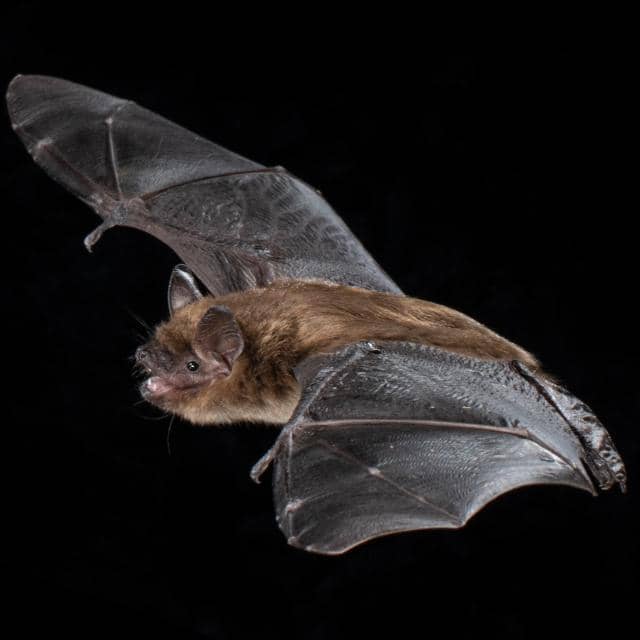
Big brown bats have adapted remarkably well to living alongside people. They can be found in cities, suburbs, farmland and forests, and the Pennsylvania Game Commission calls the big brown bat Pennsylvania’s most common bat.
Why Do Female Bats Form Maternity Colonies?
Pregnancy and raising a young bat are energetically expensive. For a small mammal that must fly every night to find food, staying warm during the day is especially important.
That is one reason females don’t simply scatter across the landscape when spring arrives. Instead, pregnant big brown bats seek warm, protected locations and gather together. Barns, attics and other structures can provide excellent conditions. Penn State Extension notes that hot attics can essentially function as incubators for developing pups.
There is also an advantage to having many warm bodies packed together. Bats can cluster tightly, helping maintain favorable temperatures when outdoor conditions fluctuate. A warm pup grows faster and requires less energy simply to maintain its body temperature.
These maternity colonies are not necessarily random gatherings, either. Females can return to familiar summer roosting areas year after year. What looks to us like a group of nearly identical brown bats hanging from the rafters is actually a complex social community.
So Where Are All the Males?
This is one of my favorite facts about maternity colonies.
The males aren’t invited.
While females gather in nursery colonies during spring and summer, male bats generally live separately. They may roost alone or form much smaller bachelor groups in other locations.
There’s a good biological reason for this arrangement. The warm temperatures that benefit rapidly growing pups aren’t necessarily ideal for an adult male trying to conserve energy. A male can spend his day in a cooler roost, allowing his body temperature and metabolism to fall and reducing the amount of food he needs.
Meanwhile, the females have an entirely different priority: growing babies.
Later in the season, once the pups are grown and the maternity colony begins breaking apart, the sexes begin mixing again. The Pennsylvania Game Commission notes that adult male big brown bats may move into nursery roosts as the young mature and leave.
The Remarkable Birth of a Baby Bat
Bats sometimes seem so different from us that it’s easy to forget a very important fact:
Bats are mammals.
They don’t lay eggs. A mother bat gives birth to a live pup and feeds it milk. In Pennsylvania, big brown bats generally give birth in June, and unlike many of our smaller bat species that typically produce a single pup, big brown bats commonly have two young in a litter.
A newborn bat is tiny, pink, nearly hairless and completely dependent upon its mother. Yet from its first hours of life, it possesses remarkably strong feet and thumbs that allow it to cling to its mother and the surfaces of the roost.
The mother cleans and nurses her newborn, and for the next several weeks the pup grows at an astonishing rate.
That’s important because summer is short.
By the time autumn arrives, that tiny newborn needs to be capable of flying, catching insects and ultimately surviving winter.
Mom Goes Hunting—Baby Stays Behind
Imagine having a newborn baby and needing to leave it behind every night while you go hunting for your dinner.
That’s essentially what mother bats do.
As darkness falls, the adult females begin leaving the maternity roost. Outside, they may spend hours hunting beetles, moths and other flying insects. Big brown bats are particularly fond of beetles and true bugs, including agricultural pests such as June bugs, stinkbugs and leafhoppers.
Back at the roost, the pups remain behind, often packed together in groups. When their mothers return, they must reunite with their own young among a nursery filled with other pups.
Mother and pup use vocalizations and scent to recognize one another. What sounds like a chaotic collection of squeaks to us contains information that allows a mother to locate and care for her own offspring.
Then she nurses her pup before eventually heading out to feed again.
Night after night, this cycle repeats.
From Helpless Pup to Flying Bat
Baby bats don’t stay helpless for very long.
During their first few weeks, pups rapidly gain weight, grow fur and develop their wings. Soon they begin stretching, flapping and climbing around the roost.
Then comes one of the most dangerous moments of their young lives:
the first flight.
A young bat must suddenly learn to do something extraordinarily complicated. Flying requires coordination of wings containing dozens of joints, while simultaneously using echolocation to understand an invisible nighttime world.
Within roughly six weeks, most young Pennsylvania bats are approaching adult size and becoming self-sufficient.
That means the maternity colony changes dramatically between early and late summer. This is actually something citizen scientists can measure. The Pennsylvania Game Commission’s Appalachian Bat Count asks volunteers to count bats leaving maternity roosts early in summer and then count them again later, after the pups have begun flying.
If reproduction has been successful, suddenly there are a lot more bats coming out of that barn.
Our Own Window Into a Wild Bat Nursery
At PixCams, we’re fortunate to have an extraordinary opportunity to watch this entire process unfold through our Big Brown Bat Cam at the Meadowlark Barn, located on property protected by the Westmoreland Land Trust.
The barn is home to a summer maternity colony of big brown bats, and we’ve installed two remotely controlled pan-tilt-zoom cameras inside the barn near the roof ridge where the bats gather. This gives us an incredibly intimate view of behavior that normally takes place in darkness, high above our heads and completely out of sight.
We can watch pregnant females cluster together, mothers groom themselves, pups nurse and young bats begin exploring the roost.
It is one thing to read about a bat maternity colony.
It is something entirely different to watch one living its daily life.
The cameras have given us a rare opportunity to observe these animals without entering the roost or disturbing them.

Then Last Summer, We Saw Something We Never Expected
On June 7, 2025, our cameras captured something extraordinary.
A big brown bat gave birth live on camera.
We were able to watch the mother deliver her pup inside the Meadowlark Barn maternity colony, an event that is incredibly difficult to witness in a wild bat colony, much less record in detail.
The moment demonstrated exactly why we built the Bat Cam in the first place. Wildlife cameras aren’t only about watching animals; they can reveal behaviors that most people, and sometimes even researchers, rarely have an opportunity to see.
Because our cameras operate continuously and can be remotely positioned and zoomed, we happened to be watching when one of the most private moments in a bat’s life unfolded right in front of us.
We recorded the entire event, giving us a remarkable look at the beginning of a big brown bat’s life.
For an animal that many people only know as a dark silhouette flying overhead, watching a mother bat give birth changes your perspective rather quickly.
A Bat That Survived a Catastrophe
There is another reason I find the big brown bat so fascinating.
It has proven to be remarkably resilient.
White-Nose Syndrome is one of the worst wildlife disease events ever recorded in North America. The fungal disease attacks bats during hibernation, causing them to awaken too frequently and burn through the fat reserves they need to survive winter. It appeared in Pennsylvania during the winter of 2008–09 and subsequently spread throughout the state.
The results for some species were catastrophic. The Pennsylvania Game Commission reports an overall decline of about 99 percent among Pennsylvania’s six hibernating bat species, although the severity varies considerably by species.
Little brown bats, northern long-eared bats and tri-colored bats were hit especially hard.
But big brown bats proved much more resilient.
Early Pennsylvania monitoring showed just how striking that difference was. In one Game Commission assessment, Myotis species at monitored summer colonies had declined about 93 percent, while big brown bat colonies remained much more stable, declining about 23 percent from historic highs.
Today, the Pennsylvania Game Commission describes the big brown bat as Pennsylvania’s most common bat.
It would be more accurate to say that big brown bats have persisted and fared far better through the White-Nose Syndrome era than to say they have completely “recovered” from the disease. But their resilience is one of Pennsylvania’s encouraging bat conservation stories.
Why Did Big Brown Bats Fare Better?
Scientists are still studying why some bat species survive White-Nose Syndrome better than others, and there probably isn’t one simple explanation.
Big brown bats are relatively large bats, which means they can enter winter carrying larger energy reserves than many smaller cave bats. Their hibernation behavior and the environmental conditions they use can also differ from species that suffered the greatest losses.
Their flexibility may help in other ways, too.
Big brown bats are extraordinary generalists. They live in forests, farmland, suburbs and cities. They use hollow trees, barns, attics, buildings, mines, caves and even storm sewers. They have learned to exploit an environment radically changed by humans.
That adaptability has helped make the big brown bat one of our most successful bats.
When Summer Ends, Where Does Everyone Go?
By late summer, the nursery’s purpose has largely been fulfilled.
The pups can fly. They’re learning to hunt. They no longer depend entirely upon their mothers.
The maternity colony begins to loosen and eventually disperse.
This is also when the social world of big brown bats changes. Males and females begin interacting again as the mating season approaches. Like many Pennsylvania bats, mating occurs before winter, but females can store sperm until spring, delaying fertilization until conditions are favorable for pregnancy.
As autumn advances, big brown bats move toward their winter hibernation sites. They may use caves and mines, but they also hibernate in buildings and other protected structures. The Pennsylvania Game Commission notes that big brown bats are among the last Pennsylvania bats to enter hibernation, sometimes not settling into winter quarters until October, November or even December.
The summer nursery becomes quiet.
But the story isn’t over.
The following spring, females will emerge from hibernation and the cycle begins again.
Why Maternity Colonies Matter
A maternity colony isn’t simply a place where a lot of bats happen to sleep.
It is where the next generation is created.
Bats reproduce slowly compared with many small mammals. They generally produce only one litter each year, which means losing a maternity colony can have consequences that last for years. Penn State Extension specifically emphasizes the importance of protecting these colonies because house-roosting bats produce so few young annually.
That is why protecting known maternity roosts is so important, and why summer is an especially sensitive time for excluding bats from buildings. What appears to be a group of unwanted bats in an attic may actually be mothers with flightless pups that cannot simply follow the adults outside.
It’s also why programs such as Pennsylvania’s Appalachian Bat Count ask ordinary people to help monitor maternity colonies. Tracking these colonies year after year gives wildlife biologists valuable information about how our bat populations are changing.
The Next Time You See a Bat…
The next time you’re outside on a warm summer evening and a big brown bat sweeps across the sky, consider where it may have come from.
Perhaps somewhere nearby is an old barn.
High beneath its roof, hidden in a narrow space you would never notice, dozens of tiny pups may be waiting.
Their mothers are outside doing what bats have done for millions of years, navigating through darkness, consuming insects and returning before dawn to feed their young.
In only a few weeks, those pups will follow them into the night.
And somewhere in Pennsylvania, another generation of big brown bats will take flight.

 ByBill