Listen to your Backyard Day & Night with BirdNET-Cloud!
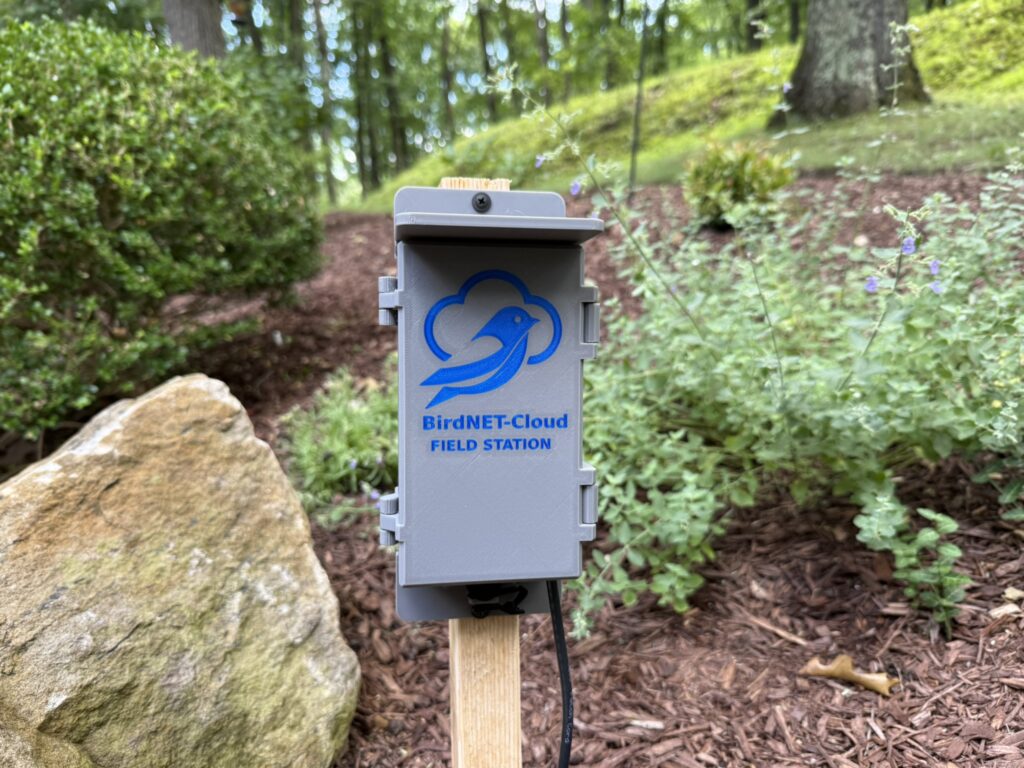
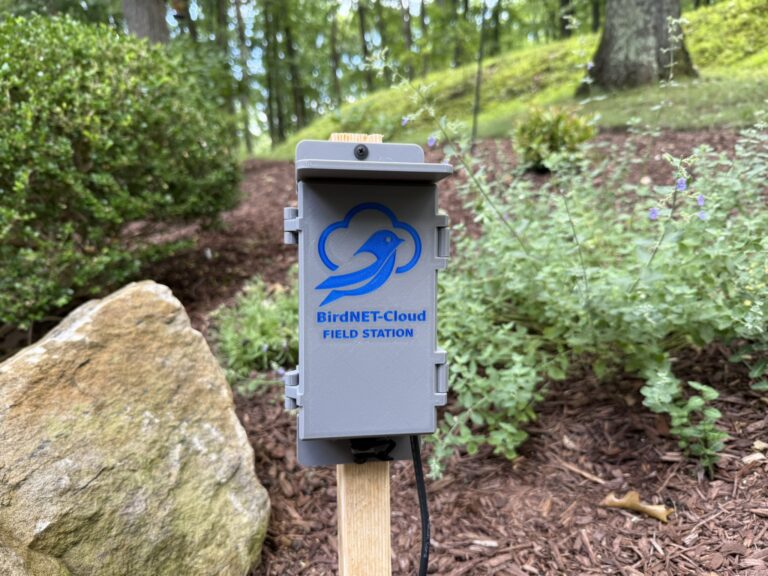
What is BirdNET-Cloud? It’s a free, open platform that turns a Raspberry Pi single board computer into a powerful outdoor bird andbat listening station for your backyard. And now, with support for the Raspberry Pi Zero 2 W, you can build a complete bird listening station for around $30! Unlike your Merlin App this listens outside 24/7! It listens and identifies songbirds, nocturnal migrants, bats echo locating overhead, and streams it all to a dashboard you can watch from anywhere on any device on a web browser.
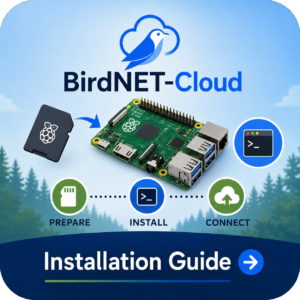
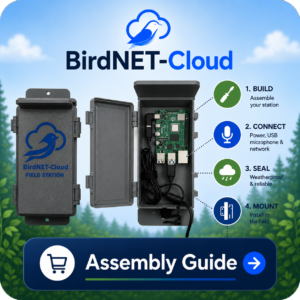
Install the Free software on your Raspberry Pi, then plug in a microphone. Guided setup instructions walks you through every step.
It Listens & Identifies
The station records audio, runs BirdNET to recognize species, and uploads each detection with a spectrogram image and sound WAV file to your BirdNET-Cloud Account.
Learn and Share
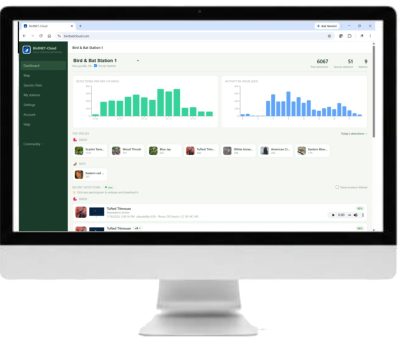
Watch detections come in live on the dashboard, see species stats and daily activity, map your station’s location, and share with your friends and family.
Build the Listening Station YOU Want
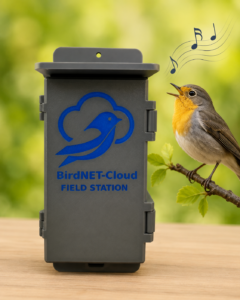
Bird Station
A USB microphone running the BirdNET model, identifying songbirds, raptors, and everything in between all day, every day.
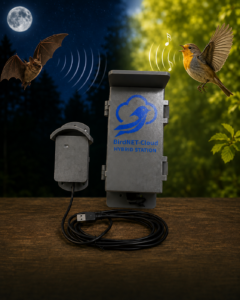
The best of both in one Station – Birds & Bats: a USB microphone captures birdsong through the day, and a AudioMoth microphone listens for ultrasonic bat calls at night. The station switches between them automatically at dusk and dawn, so one unit covers birds and bats around the clock.
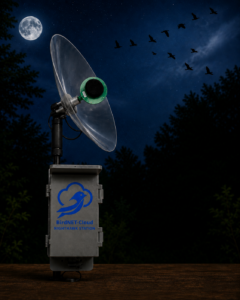
A Raspberry Pi 5 with a skyward microphone running the Nighthawk model detecting the nocturnal flight calls of migrating birds passing overhead at night, a sound that daytime birdsong models miss entirely.
Keep your Raspberry Pi and bring your history with you. Upgrading to BirdNET-Cloud takes a single command, and your detections live safely in the cloud from then on.
Your data can’t die with an SD card— BirdNET-Pi keeps everything on a microSD card that can fail without warning. With BirdNET-Cloud it stores every detection safely off your device, so a dead card never wipes out years of history.
Bring your whole history — A guided importer moves your existing BirdNET-Pi detections into the cloud, so you start with all your data intact, not a blank slate.
Keep your hardware — No new equipment. Your existing Raspberry Pi and microphone become a Cloud station with one command.
Reach it from anywhere — Your dashboard lives on the web, not just your home network. Check what’s calling from your phone, on any network, anywhere — no port-forwarding or VPN.
Share with a link — Open any station to the public with its own page, perfect for friends, donors, and classrooms.
A modern, friendly dashboard — A clean, fast, regularly-updated interface: live detections, species stats, spectrograms, audio clips, maps, and the morning calls laid out by the hour.
Many stations, one place — Run a backyard feeder, a nature reserve, and a station overseas, and see them all together on one map and dashboard.
Less to maintain — The Pi runs a lightweight agent while the heavy lifting and updates happen in the cloud, no full app to keep patched yourself.
Become part of the BirdNET-Cloud Community! Registration is 100% Free, and you’ll instantly receive a welcome email with your migration guide, making it easy to bring your BirdNET-Pi station into the cloud.
Set Up a BirdNET-Cloud Station Today!
BirdNET and BattyBirdNET are released under the Creative Commons Attribution-NonCommercial-ShareAlike 4.0 International License (CC BY-NC-SA 4.0); Nighthawk is released under the Creative Commons Attribution-NonCommercial 4.0 International License (CC BY-NC 4.0). BirdNET-Cloud is an independent conservation project by PixCams and is not affiliated with or endorsed by the Cornell Lab of Ornithology.