No Nest, No Problem: The Remarkable Life of the Brown-headed Cowbird
WildWatch Weekly No Nest, No Problem: The Remarkable Life of the Brown-headed Cowbird Live Cams Donate Store Facebook YouTube The Remarkable Life of the Brown-headed Cowbird Imagine watching a tiny songbird land beside a much larger youngster, carefully placing an insect into its wide-open mouth. The hungry youngster follows, fluttering its wings and begging for another bite. Something about this family doesn’t quite add up. There’s a good chance you’re watching a young Brown-headed Cowbird...
Imagine watching a tiny songbird land beside a much larger youngster, carefully placing an insect into its wide-open mouth. The hungry youngster follows, fluttering its wings and begging for another bite. Something about this family doesn’t quite add up.
There’s a good chance you’re watching a young Brown-headed Cowbird being raised by another species. This familiar backyard bird has one of the most unusual approaches to reproduction in North America: it never builds a nest of its own. Instead, it relies on other birds to incubate its eggs and raise its young. That strategy is just the beginning of its remarkable story.
Meet the Bird Behind the Name
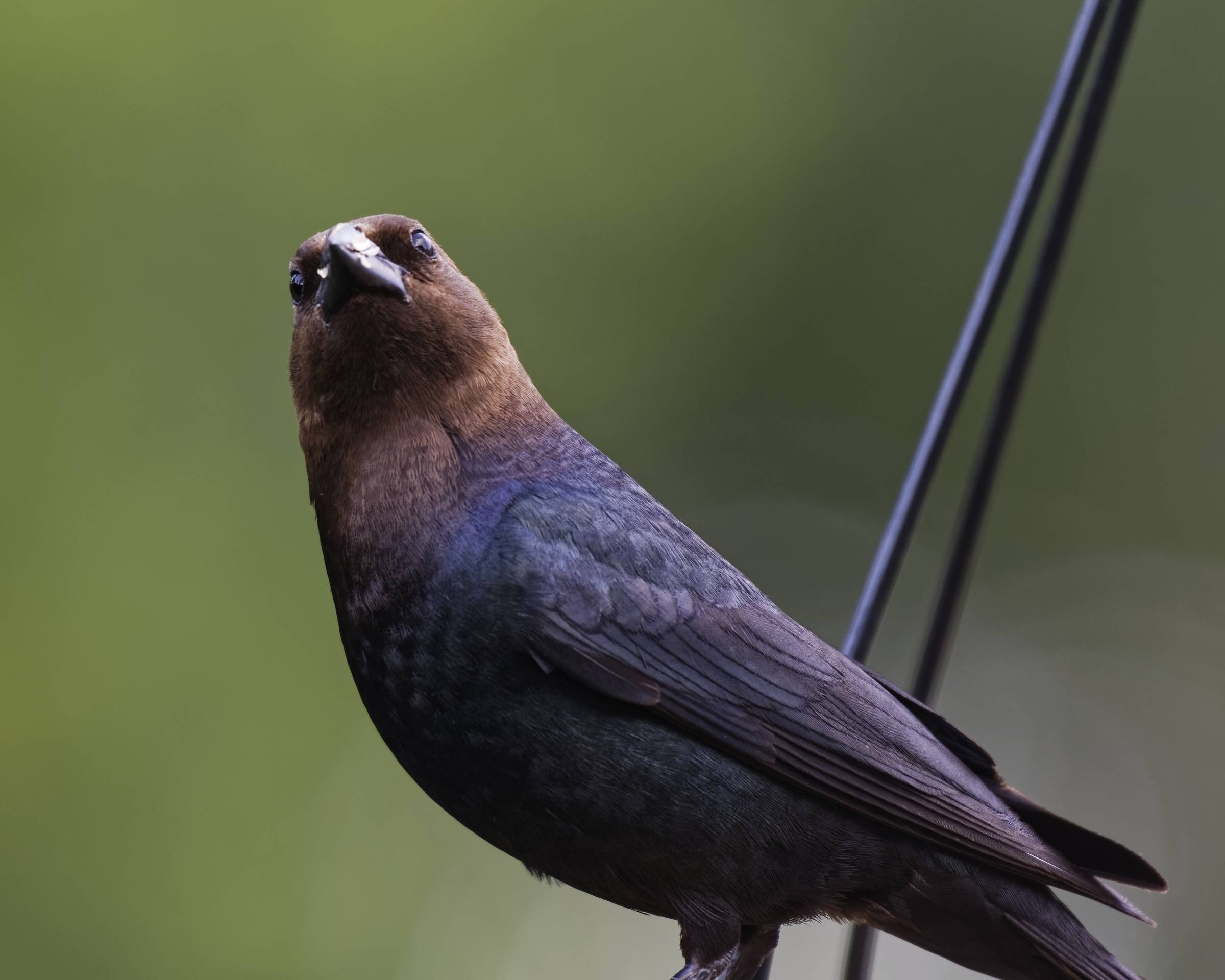
Male Brown-headed Cowbird
The male Brown-headed Cowbird is handsome when the sunlight catches him just right. His glossy black body contrasts with a rich chocolate-brown head, although in poor light he may appear entirely black. Look for a stocky build, a relatively short tail, and a thick, cone-shaped bill that seems almost borrowed from a finch.
Female Brown-headed Cowbird
Females are less conspicuous, wearing muted gray-brown plumage with a dark eye and lighter throat. Young cowbirds look different again, with streaked underparts and a scaly-looking pattern across their backs. Those changing appearances can make identification a challenge, especially when a youngster is tagging along behind a completely different kind of bird.
From Buffalo Birds to Backyard Visitors
The “cow” in cowbird comes from a longstanding connection with large grazing animals. Historically, these birds followed bison across the Great Plains, catching insects disturbed as the enormous animals moved through the grass. They were even known as “buffalo birds.”
Today, you can watch a similar relationship in a pasture. Cowbirds walk near cattle and horses, taking advantage of insects flushed into view. A grazing animal becomes a moving food-finding assistant, doing the work of stirring up a meal.
Human changes to the landscape helped cowbirds expand their range. As forests were cleared for farms, settlements, and other open spaces, new feeding areas became available. A bird closely associated with the plains found opportunities much farther east, including here in Pennsylvania.
A Parenting Strategy Unlike Most Backyard Birds
Most birds devote enormous effort to building nests, keeping eggs warm, and delivering food to hungry chicks. Female Brown-headed Cowbirds take a different path. They lay their eggs in other birds’ nests, leaving the host parents responsible for the work. Scientists call this behavior brood parasitism.
Finding the right nest requires careful observation. A female may quietly watch other birds carrying nesting material or moving repeatedly into a particular patch of vegetation. She may also move through cover to flush a nesting bird and reveal its hidden nursery.
When an opportunity appears, she slips into the unattended nest and lays an egg. She may also remove one of the host’s eggs. Her reproductive effort is spread among nests rather than concentrated in a single home that she must build and defend.
One Female Can Lay Dozens of Eggs
Perhaps the most surprising number in the cowbird’s story is its egg production. A female can lay roughly 40 eggs in a breeding season, sometimes producing nearly an egg a day for weeks. That is a remarkable investment in reproduction for a bird that never incubates an egg herself.
Brown-headed Cowbirds have laid eggs in the nests of more than 220 bird species. More than 140 species have actually been documented raising cowbird young, a distinction that matters, because placing an egg in a nest does not guarantee success. Some hosts reject the egg, and some nests simply cannot provide what a developing cowbird needs.
Why the Cowbird Chick Often Has an Advantage
Life in a crowded nest is competitive, and cowbird chicks often start ahead. Their eggs typically hatch after about 10 to 12 days, frequently before the host’s eggs. Even a small head start can matter when every meal helps a chick grow.
Young cowbirds develop quickly and can become much larger than their nestmates. Their size and persistent begging help them compete for the food delivered by the host parents. For smaller chicks sharing the nest, that competition can reduce their chances of survival.
The outcome is not always the loss of the entire host brood. Some parents successfully raise both a cowbird and young of their own. Still, feeding an extra, fast-growing chick places real demands on the birds doing the provisioning.
Some Birds Refuse the Unexpected Egg
Not every bird accepts a cowbird egg. Some species recognize the unfamiliar addition and remove it. Others respond by abandoning the nest and trying again elsewhere.
Yellow Warblers have an especially fascinating response: they may build another nest layer directly over the original eggs, burying the cowbird egg along with their own clutch. The new structure becomes the foundation for a fresh nesting attempt.
These defenses reveal an ongoing evolutionary contest. Cowbirds benefit from getting their eggs accepted, while hosts benefit from recognizing and avoiding the cost of raising another species. Many hosts, however, accept the egg and care for the resulting chick.
How Does a Cowbird Know It’s a Cowbird?
A cowbird raised by sparrows does not grow up to become a sparrow. But how does it recognize its own species when the adults feeding it look and sound completely different?
Research points to an intriguing clue: the cowbird’s chatter call. Young cowbirds have an innate predisposition to respond to this sound, which can act like a recognition “password.” It helps direct their attention toward other cowbirds and creates opportunities to learn from their own kind.
That connection matters as youngsters become independent and develop their social behavior. Their lives bring together two powerful forces: inherited tendencies that guide them toward cowbirds, and experience that helps them learn how to behave among them. Being raised by another species makes that process especially fascinating to scientists.
Listen for a Gurgle—and Watch for a Bow
Cowbirds have a distinctive voice. Males deliver a short song combining liquid, bubbling notes with thin whistles. Females give a chattering call, and groups can produce an assortment of clicks and whistles that rewards a few minutes of careful listening.
The male’s performance is visual, too. While displaying, he fluffs his body feathers, spreads his wings and tail, and bows forward. Several males may gather and display together, turning an ordinary stretch of lawn or a tree branch into a small stage.
Once you recognize that combination of sound and posture, a bird you previously overlooked becomes much easier to notice.
Where to Look Around Your Home
Fields, pastures, lawns, and woodland edges are good places to watch for cowbirds. They usually feed on the ground, searching for seeds and insects. During migration and winter, they often mingle with other blackbirds and starlings, so a busy flock deserves a closer look.
Check the shorter-tailed birds with sturdy bills. A male’s brown head may become obvious as he turns into the light, while a female can require more patient study. Watching how a bird moves and feeds can be just as useful as looking at its colors.
During the breeding season, watch for an even more memorable clue: a small adult songbird feeding a noticeably larger youngster. A Chipping Sparrow delivering food to a young cowbird is a striking sight, and a chance to see this unusual life cycle unfolding in your own neighborhood. Observe from a distance so the birds can continue their care undisturbed.
A Complicated Place in Nature
It is understandable to feel protective of a small songbird working hard to raise a cowbird. Brood parasitism can have serious consequences, especially for vulnerable bird populations already struggling with habitat loss.
Cowbirds are also native North American birds following an evolved reproductive strategy. Their behavior raises a broader conservation question: how have our changes to the landscape altered the relationships among species?
The Pennsylvania Game Commission notes that breaking large forests into smaller pieces can allow cowbirds access to additional forest habitat, increasing pressure on nesting songbirds. Protecting substantial areas of suitable habitat therefore matters to the larger story.
An Ordinary Bird with an Extraordinary Story
The next time a Brown-headed Cowbird walks across your lawn, pause for a closer look. Watch its efficient search for food, listen for its unusual voice, or catch a male in the middle of his elaborate bow.
Behind that familiar backyard appearance is a life filled with unexpected connections: grazing herds that uncover meals, other birds that provide a nursery, and a distinctive call that helps youngsters find their own kind. The Brown-headed Cowbird reminds us how much there is to discover about the wildlife living right outside our windows.

 ByBill