Painted by Nature: The Incredible Story of Africa’s Painted Dogs
African Painted Dogs are among the most fascinating animals we’ve had the privilege of capturing on our Majete Wildlife Reserve cameras in Malawi. Every sighting is exciting because these remarkable predators are not only beautiful, they’re also one of Africa’s rarest carnivores.
For many people in the Pittsburgh area, however, African Painted Dogs bring back memories of a tragic event. In 2012, a young child lost his life after accidentally falling into the painted dog exhibit at the Pittsburgh Zoo & Aquarium. It was a heartbreaking accident that understandably shaped many people’s perceptions of these animals.
But the truth about African Painted Dogs is far more complex. They are not mindless killers. They are intelligent, social, highly cooperative animals whose survival is increasingly threatened by habitat loss and conflict with humans. This week, we’d like to introduce you to the real African Painted Dog—and explain why every appearance on our Majete cameras is something worth celebrating.
Nature’s Most Successful Hunters
If you were asked which African predator is the most successful hunter, most people would guess lions or cheetahs.
The answer is actually the African Painted Dog.
While lions succeed on roughly 20–30% of their hunts and cheetahs often succeed around half the time under favorable conditions, painted dogs regularly achieve hunting success rates exceeding 70%, making them among the most efficient large predators on Earth. Their secret isn’t strength, it’s teamwork.
Each pack works together with remarkable precision. Some dogs drive prey, others cut off escape routes, while others stay behind to protect the young pups waiting at the den. Every member has a role, and together they can outrun even the fastest antelope over long distances.
Unlike many predators, painted dogs rarely waste energy on failed ambushes. Instead, they rely on endurance, communication, and cooperation—qualities that make them one of Africa’s most effective hunters.
Every Dog Wears a One-of-a-Kind Coat
Their scientific name, Lycaon pictus, literally means “painted wolf.”
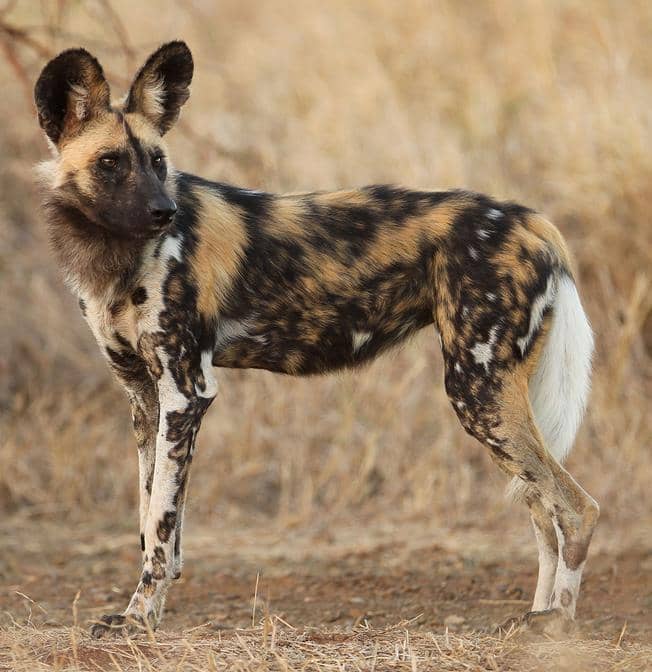
No two painted dogs have the same coat pattern. Each animal’s patches of black, gold, brown, white, and tan are completely unique, much like a human fingerprint.
Those oversized rounded ears aren’t just adorable, they’re incredibly functional. They help dissipate heat during Africa’s hot days while also allowing the dogs to hear one another across surprisingly long distances.
Their colorful appearance also helps pack members recognize one another while running through tall grass at high speed.
Family Comes First
One of the most remarkable things about painted dogs is their family life.
Unlike many predators where dominant animals eat first, painted dogs often allow their pups to eat before the adults. After a hunt, adults will even return to the den and regurgitate food for pups and injured pack members.
The entire pack helps raise the young.
Older siblings babysit.
Adult males bring food.
Everyone participates in protecting the pups.
This extraordinary level of cooperation is one reason painted dogs have become a favorite species among wildlife biologists studying animal behavior.

A Remarkable Comeback in Majete
One reason our sightings feel so special is because African Painted Dogs weren’t always part of Majete.
Decades ago they disappeared from the reserve as wildlife populations collapsed from poaching and habitat degradation. After African Parks partnered with Malawi’s Department of National Parks and Wildlife to restore Majete, thousands of animals were reintroduced to rebuild the ecosystem. African painted dogs returned to Malawi in 2021 after roughly 60 years of absence, and the population has since begun breeding successfully. The reserve has already celebrated multiple litters of pups, a remarkable conservation milestone.
Today, Majete has once again become home to elephants, lions, leopards, cheetahs, black rhinos, giraffes, and African Painted Dogs. Watching these animals roam the reserve is witnessing one of Africa’s greatest conservation success stories.
Why Are They Endangered?
Despite their incredible hunting ability, African Painted Dogs remain endangered.
Only a few thousand individuals survive across Africa, with roughly 700 breeding packs remaining. Their biggest threats are not natural predators but people. Habitat fragmentation, snaring, diseases spread by domestic dogs such as rabies and canine distemper, and conflicts with livestock owners continue to reduce their numbers. Because each pack requires enormous territories, even protected parks can struggle to support healthy populations.
Conservation organizations now often prefer the name “Painted Dog” rather than “Wild Dog.” The newer name helps distinguish them from feral dogs and encourages people to view them as one of Africa’s unique and endangered wildlife species rather than as pests. This shift has gained support among conservationists and wildlife enthusiasts alike.

Captured Live by MajeteWatch
Our cameras in Malawi give us a front-row seat to one of Africa’s greatest wildlife recoveries.
Every time a pack of painted dogs trots past one of our cameras, we’re reminded why conservation matters. Just a generation ago, scenes like these would have been impossible in Majete.
Through our MajeteWatch project, viewers around the world can witness these incredible animals living exactly as they should—wild, free, and thriving in their natural habitat.
These moments are more than beautiful wildlife videos. They’re evidence that conservation works when people commit to protecting habitat, restoring ecosystems, and giving endangered species another chance.
The next time you see African Painted Dogs on one of our live cameras, take a moment to appreciate what you’re watching. You’re seeing one of the world’s most remarkable predators, and one of conservation’s greatest success stories, running across the same landscape where they had once disappeared.
Watch the Majete Reserve African Cameras LIVE Here
https://pixcams.com/majete-wildlife-reserve/

 ByBill