Talking Turkey: How a Wild Bird Became the Symbol of Thanksgiving
WildWatch Weekly Talking Turkey: How a Wild Bird Became the Symbol of Thanksgiving Live Cams Donate Store Facebook YouTube How the Wild Turkey Became the Symbol of Thanksgiving Every November, millions of Americans gather around the dinner table to celebrate Thanksgiving, and at the center of many of those tables sits a turkey. From holiday decorations and greeting cards to school crafts and Thanksgiving Day traditions, the turkey has become synonymous with this American holiday. Thanksgiving...
How the Wild Turkey Became the Symbol of Thanksgiving
Every November, millions of Americans gather around the dinner table to celebrate Thanksgiving, and at the center of many of those tables sits a turkey. From holiday decorations and greeting cards to school crafts and Thanksgiving Day traditions, the turkey has become synonymous with this American holiday. Thanksgiving is even affectionately referred to as “Turkey Day.”
But have you ever wondered how this particular bird became so closely associated with Thanksgiving? Was turkey actually served at the first Thanksgiving? And how did a native North American bird become one of the most recognizable symbols of American culture?
This week, we’re taking a closer look at the fascinating history, surprising abilities, and remarkable conservation story of the wild turkey.
Was Turkey Really Served at the First Thanksgiving?
The Thanksgiving celebration we traditionally associate with the Pilgrims took place in Plymouth, Massachusetts, in the autumn of 1621. The three-day harvest gathering brought together English settlers and members of the Wampanoag people.
Interestingly, there is no definitive historical evidence that turkey was served at this gathering. The surviving firsthand account mentions that the colonists went hunting for wildfowl and that the Wampanoag brought five deer to the celebration. The wildfowl could have included turkeys, ducks, geese, or other native birds.
Wild turkeys were abundant in the region at the time, so it is certainly possible that they were part of the feast. However, the traditional Thanksgiving dinner we know today, complete with turkey, mashed potatoes, cranberry sauce, and pumpkin pie, developed much later.
How the Turkey Became a Thanksgiving Tradition
By the 1800s, turkey had become a popular choice for large holiday gatherings throughout the United States. Unlike chickens, which provided eggs, or cows, which provided milk, turkeys could be raised primarily for their meat. They were also large enough to feed an entire family and their guests.
In 1827, American writer and editor Sarah Josepha Hale published her novel Northwood, which described a New England Thanksgiving feast featuring a roasted turkey. Hale spent decades advocating for Thanksgiving to become a national holiday, helping popularize many of the traditions we recognize today.
In 1863, President Abraham Lincoln proclaimed a national Thanksgiving observance during the Civil War. As the holiday became more established, the turkey increasingly became its centerpiece.
Over generations, the association became so strong that it is now difficult to imagine Thanksgiving without the image of a turkey.
Benjamin Franklin and the Turkey
One of the most popular stories about the wild turkey is that Benjamin Franklin wanted it to become America’s national bird instead of the bald eagle. While this makes for an entertaining story, it isn’t entirely accurate.
In a private letter to his daughter in 1784, Franklin criticized the bald eagle’s character and praised the turkey as a more respectable bird and a true native of America. He also admired its courage, suggesting that a turkey would not hesitate to defend its territory.
However, there is no evidence that Franklin formally proposed the turkey as America’s national bird.
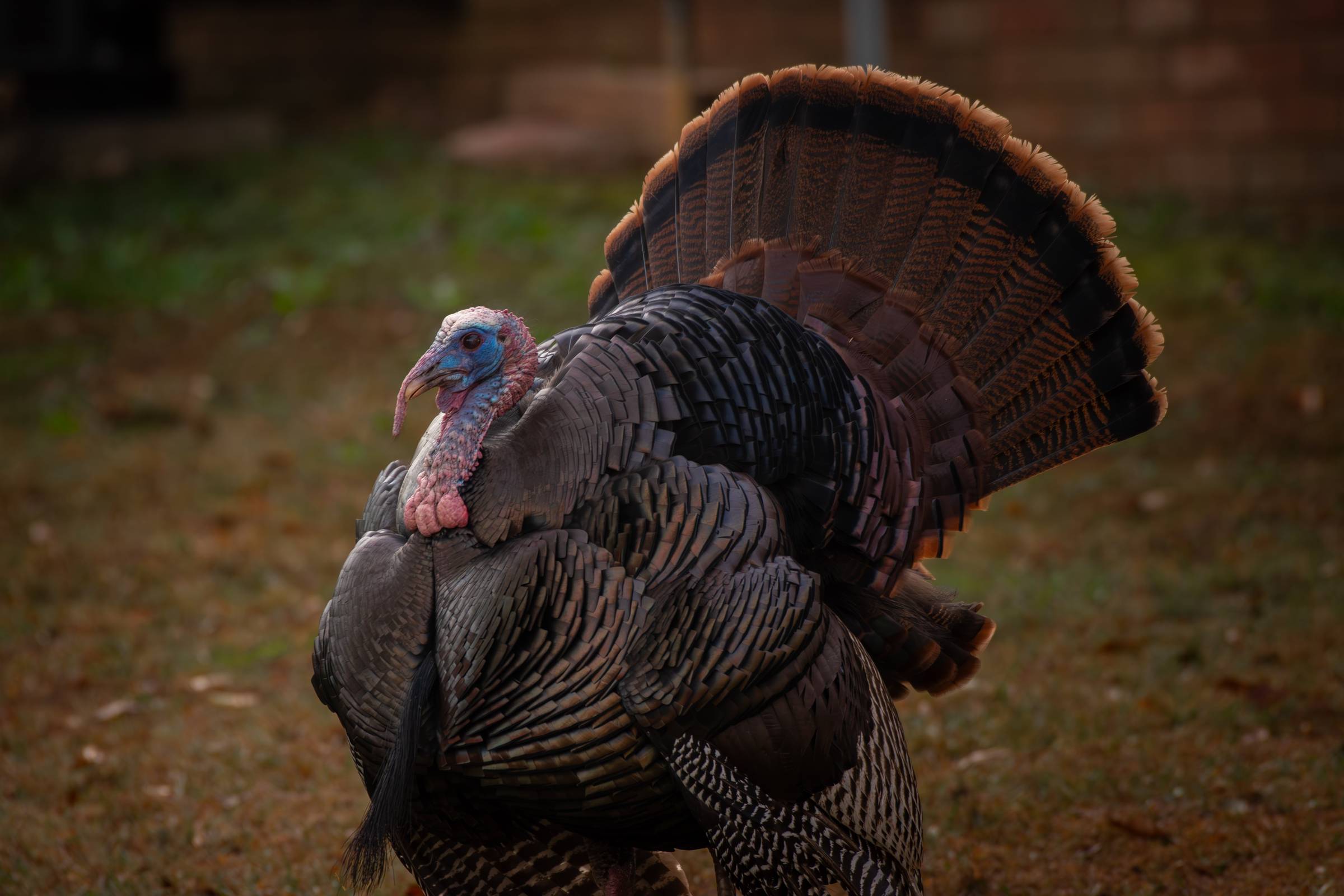
Nevertheless, anyone who has watched a large male wild turkey strutting through the woods, displaying its feathers and confidently confronting other animals, can probably understand Franklin’s admiration.
The Wild Turkey: A Remarkable Native Bird
The wild turkey (Meleagris gallopavo) is one of North America’s most impressive native birds. Although we often associate turkeys with farmyards and Thanksgiving dinners, their wild relatives are remarkably intelligent, athletic, and well adapted to life in the forest.
Wild turkeys have excellent eyesight, a keen sense of hearing, and the ability to detect movement from considerable distances. Despite their large size, they are surprisingly fast runners and powerful short-distance flyers.
Unlike many domesticated turkeys, wild turkeys can fly at speeds approaching 55 miles per hour in short bursts and often spend their nights roosting high in trees to avoid ground-based predators.
Male turkeys, known as toms or gobblers, are famous for their elaborate courtship displays. They spread their tail feathers into a magnificent fan, puff out their bodies, drag their wings along the ground, and produce their distinctive gobbling calls to attract females.
Their feathers also have a beautiful iridescent quality, displaying shades of bronze, copper, green, and gold when illuminated by sunlight.
Why Do We Call It a Turkey?
Interestingly, the turkey is native to North America, not the country of Türkiye, historically known in English as Turkey.
When European explorers brought domesticated turkeys from the Americas to Europe during the 1500s, the birds became associated with existing trade routes and with other imported birds that Europeans already called turkey fowl.
Although the exact origins of the name are somewhat complicated, the name eventually stuck.
It is one of the more unusual examples of how exploration, international trade, and mistaken geography influenced the names of animals we know today.
One of America’s Greatest Wildlife Conservation Success Stories
Perhaps the most remarkable part of the wild turkey’s story is how close it came to disappearing from much of its native range.
When European settlers arrived in North America, wild turkeys were widespread across much of the eastern United States. However, centuries of unregulated hunting, widespread deforestation, and habitat destruction caused their populations to decline dramatically.
By the early 1900s, wild turkeys had disappeared from many areas where they had once been abundant.
Fortunately, wildlife conservation efforts, regulated hunting, habitat restoration, and programs that captured and relocated wild turkeys helped reverse this decline. State wildlife agencies and conservation organizations worked for decades to restore turkey populations throughout their historic range.
Pennsylvania was part of this remarkable recovery. Today, wild turkeys can once again be found throughout much of the Commonwealth, from remote mountain forests to suburban neighborhoods and rural backyards.
The recovery of the wild turkey remains one of America’s great wildlife conservation success stories and demonstrates what can be accomplished when people work together to protect wildlife and its habitat.
What Are Wild Turkeys Doing Around Thanksgiving?
While we are busy preparing for the holidays, wild turkeys are preparing for the challenges of winter.
During the fall, turkeys spend much of their time searching for acorns, beechnuts, seeds, berries, and other available food sources. They often gather into flocks, which provide additional protection from predators.
Unlike many of the birds we feature in WildWatch Weekly, Pennsylvania’s wild turkeys do not migrate south for the winter. Instead, they remain in our region year-round, adapting their feeding habits and movements to changing weather conditions.
On our PixCams wildlife cameras, we frequently have the opportunity to watch wild turkeys feeding, traveling in groups, interacting with white-tailed deer, and displaying their fascinating social behaviors.
Watching these birds in their natural environment gives us an entirely different appreciation for an animal that most people associate with a holiday dinner.
A Different Reason to Be Thankful
This Thanksgiving, as we gather with family and friends, perhaps we can take a moment to appreciate the remarkable bird that has become the symbol of this holiday.
The wild turkey is more than a Thanksgiving tradition. It is a native North American species with a fascinating history, extraordinary survival abilities, and an inspiring conservation success story.
Its return to our forests is a reminder that wildlife populations can recover when we make the effort to protect them. It also reminds us how fortunate we are to have such an incredible diversity of wildlife right here in our own backyards.
The next time you see a flock of wild turkeys crossing a field, wandering through the woods, or making an appearance on one of our live wildlife cameras, take a moment to appreciate these remarkable birds.
They have certainly earned their place in American history.
From all of us at PixCams, we wish you and your family a very Happy Thanksgiving!

 ByBill