

If you've ever stood outside on a clear autumn night and heard a faint seep drift down from the dark, you've heard a nocturnal flight call (NFC) — the little contact notes that migrating warblers, sparrows, and thrushes give as they stream overhead by the thousands. Most of that migration happens at night, out of sight. We've been working on a BirdNET-Cloud station that lets you hear and identify it, and we're excited to share the first build.
The station runs the Nighthawk model on BirdNET-Cloud to detect and classify NFCs in near real time. The hard part of NFC monitoring has always been the microphone — these calls are extremely faint, so you need a very low-noise mic and a clean signal path. Here's how we solved that simply and affordably.
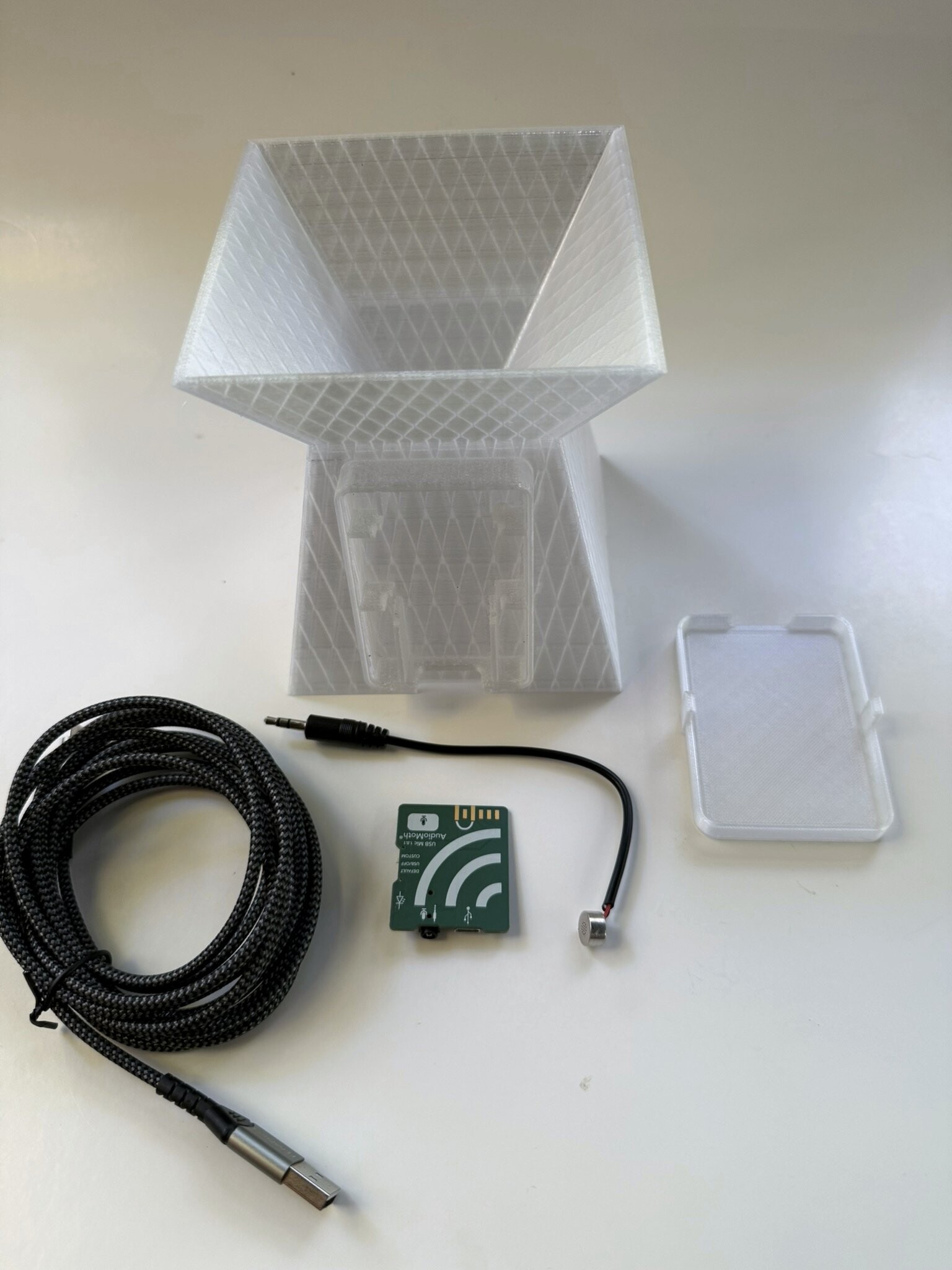
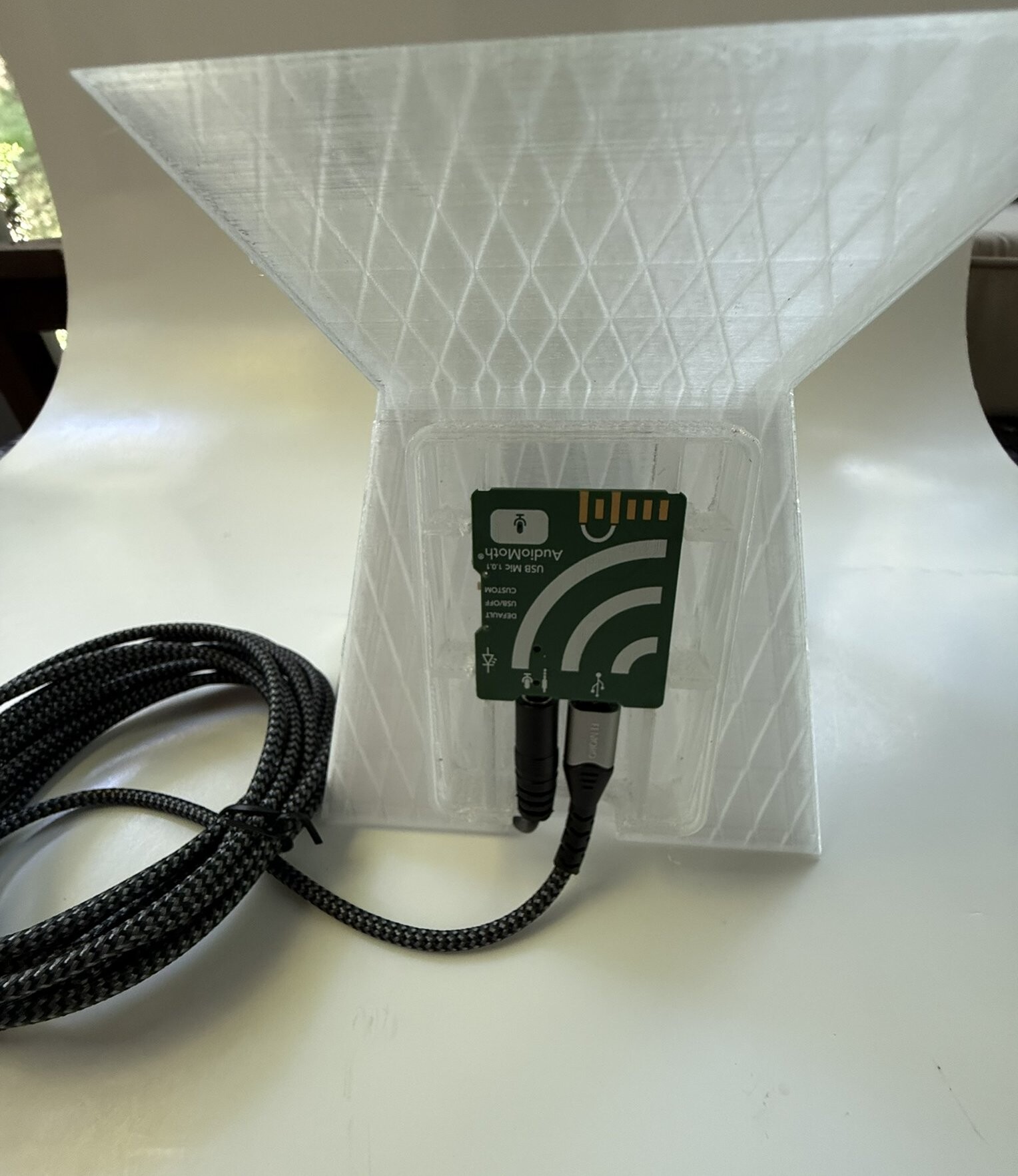
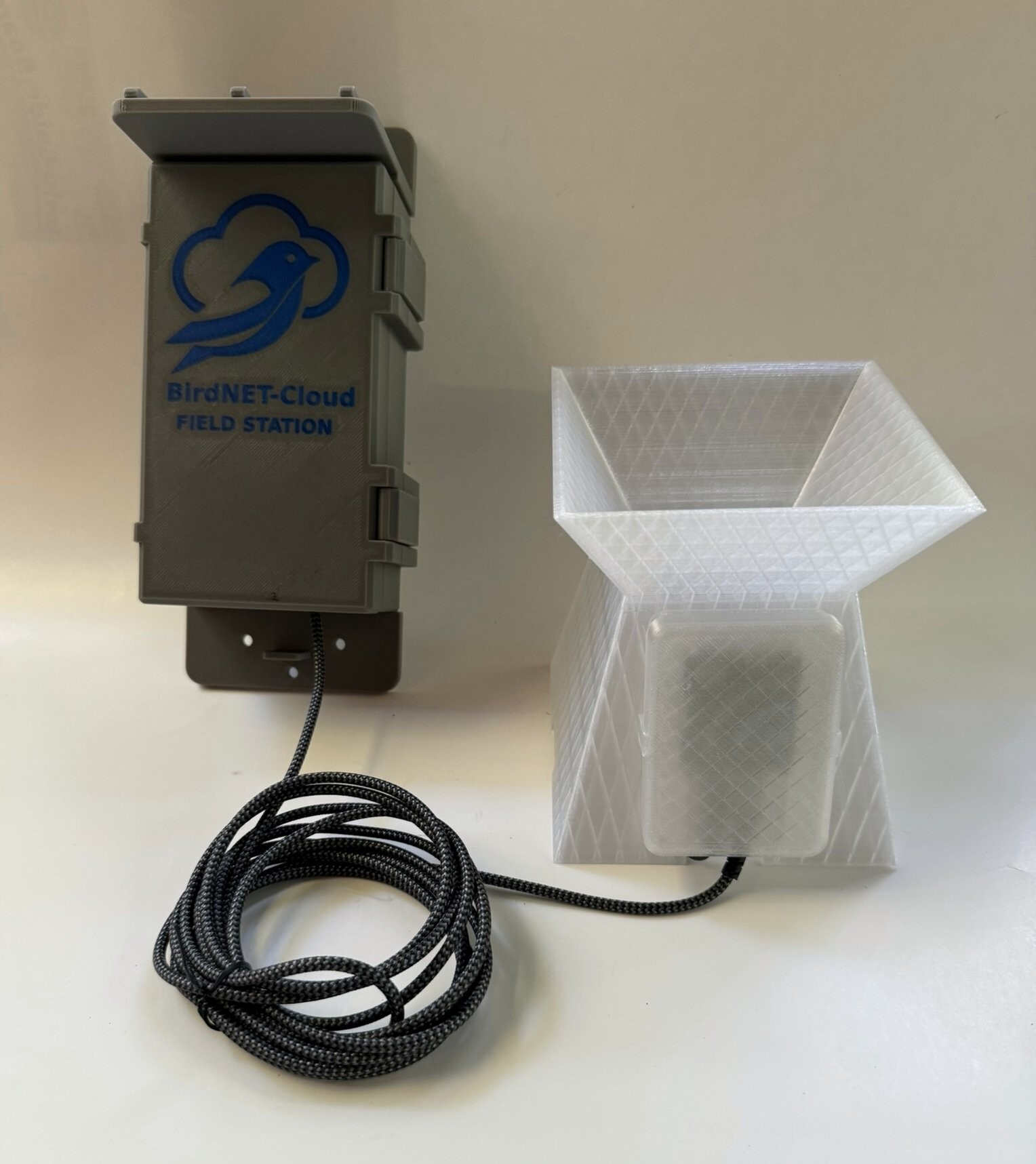
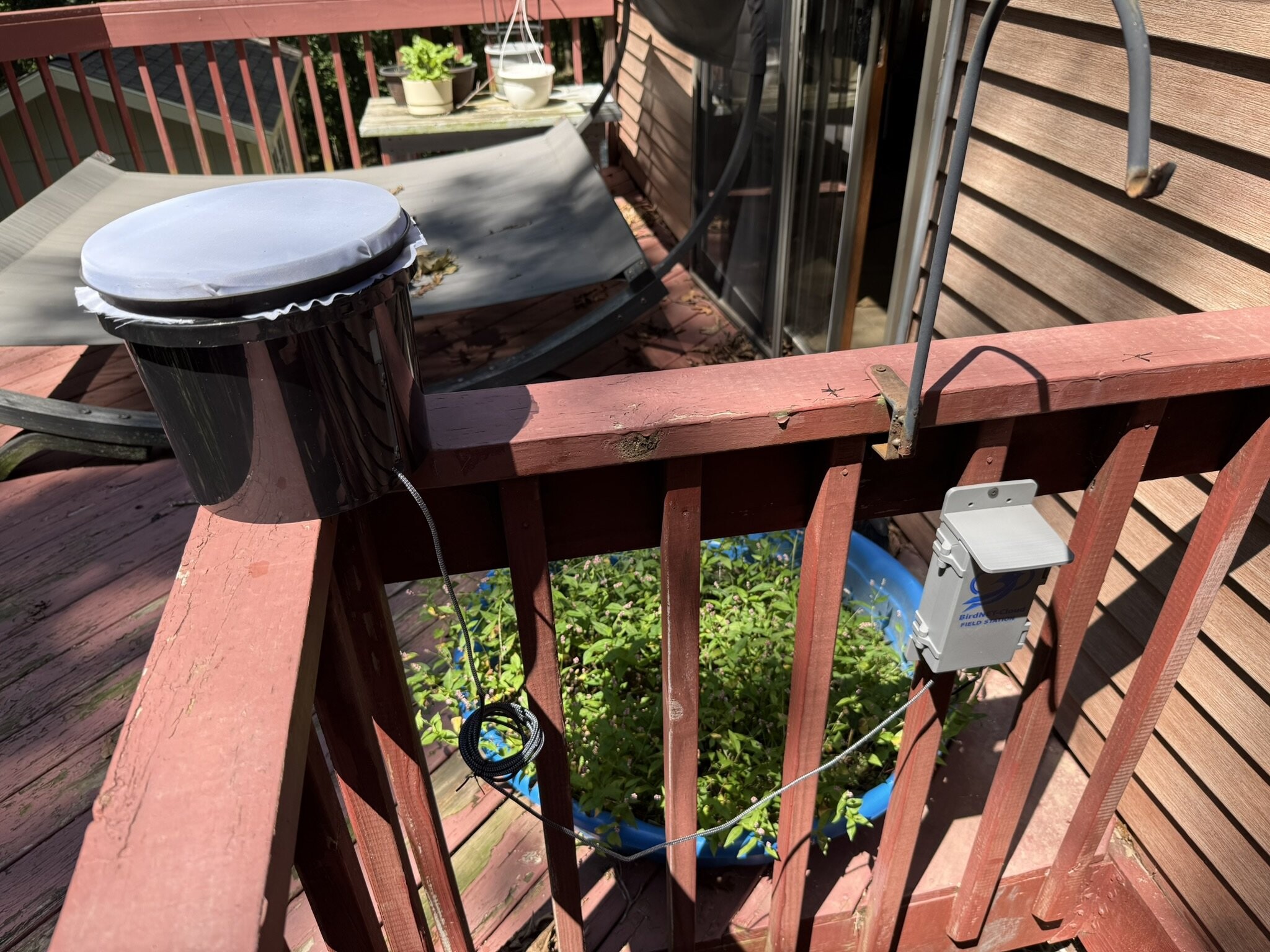
The microphone. We paired a premium low-noise electret capsule — the same element used in Bill Evans' well-known Old Bird 21c night-flight-call microphone (oldbird.org/mike_home-DIY.htm) — with an AudioMoth USB Microphone. The capsule solders to a short 3.5 mm pigtail that plugs into the AudioMoth's plug-in-power input, and the AudioMoth does double duty as the preamp and the analog-to-digital converter. That means a single USB cable runs from the microphone straight to the Pi — no analog preamp board, no separate USB sound card, and no long analog cable run to pick up hum. The signal is digital from the very first stage, which is exactly what faint-call detection wants.
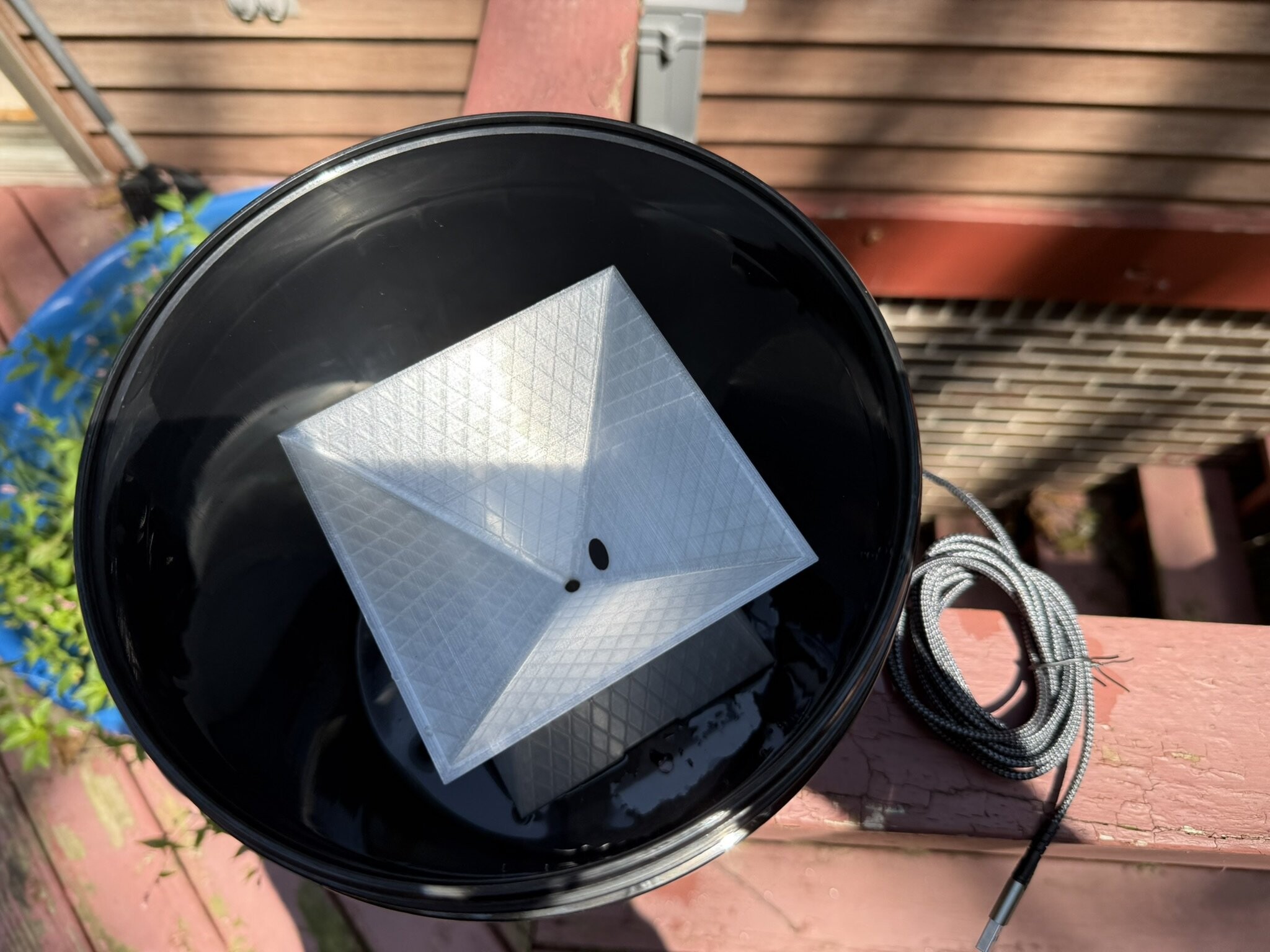
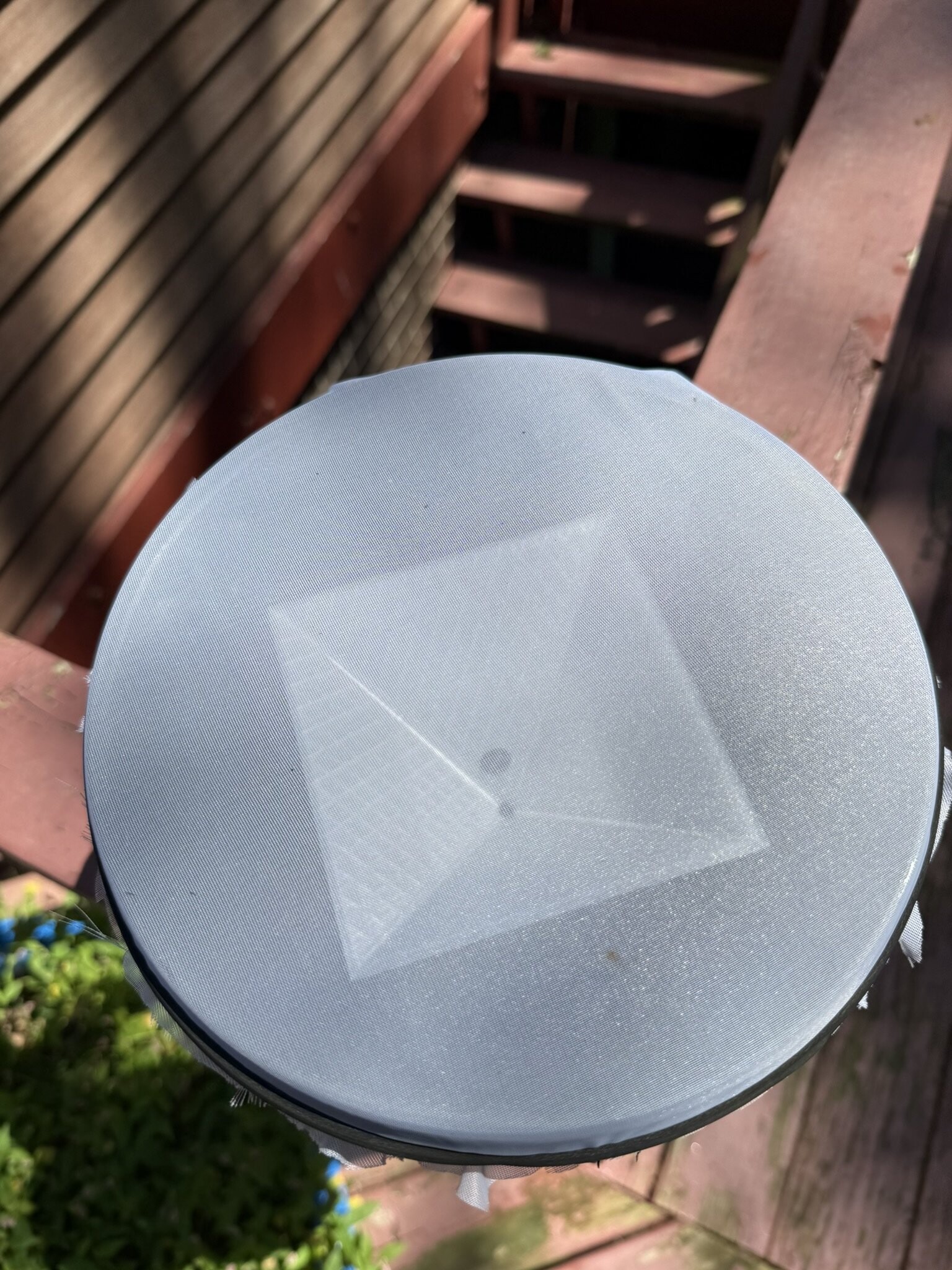
The housing. We designed a 3D-printed pyramid that holds both the capsule and the AudioMoth, and the whole thing drops into a bucket the same way the Old Bird design does — the bucket sheds rain and shields ground-level noise while the mic looks up at the open sky. We weatherproof the capsule opening with an ePTFE breathable membrane (the kind used to vent car headlights), so it stays dry but acoustically open. Only the USB cable leaves the enclosure.
Parts list:
- A BirdNET-Cloud station (Raspberry Pi) running the Nighthawk model
- AudioMoth USB Microphone (Open Acoustic Devices / GroupGets)
- A low-noise NFC electret capsule (the Old Bird 21c element)
- A 3.5 mm pigtail lead
- A 3D-printed pyramid (we'll share the print files)
- A bucket + ePTFE breathable membrane for weatherproofing
- One USB cable
A few setup tips: configure the AudioMoth USB Microphone at 48 kHz with gain around medium (check a spectrogram and back it off if it clips), mount the bucket with a clear view of the sky, and keep it away from constant noise sources like AC units, water features, and busy roads.
We're running this alongside our reference setup for the next several nights and will post spectrograms and detection counts as they come in. If you've been wanting to add night migration to your BirdNET-Cloud station, this is a straightforward, rugged, low-cost way in — and a huge thank-you to Bill Evans and Old Bird, whose microphone work makes it possible.
Who's interested in building one? Drop a reply and we'll get the print files and a step-by-step assembly guide posted.
See our Nighthawk Public Station Here: